BBC UX&D’s new 'GEL' design website goes live

David Bailey
Creative Director, Global Experience Language
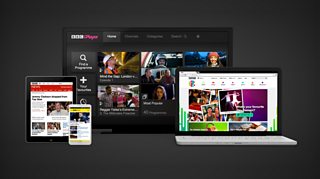
In recent years, the BBC’s online service has moved from desktop-rooted consumption to a multi-platform experience for everyone, everywhere. Be they on the sofa in front of a connected TV, or the bus clutching a mobile device. UX&D's Global Experience Language (GEL) underpins the design of the BBC's many websites and platforms and Creative Director David Bailey talks about the launch of a new GEL site.
What is GEL?
The first BBC web page was published in 1997. We had boundless enthusiasm for this new medium and certainty that the internet was important. But we were growing organically and unsustainably. Within a few years we had around 470 sites. And we needed a more effective approach. Hence the introduction of GEL, a shared experience language and framework used across all BBC digital services. GEL standardises the design of common interactions and defines the foundational elements such as the grid, iconography and use of fonts. As a result, we now have a much smaller number of sites – and thanks to GEL, all of them share consistencies in the way they work, look and feel.
In 2010 we published a website showcasing GEL. Due to limited resources we were not able to build with a content management system. This meant we couldn’t update the site’s content. Given web design’s rapid rate of change, the site and it’s content began to date instantly. Meanwhile there was increasing need for GEL guidance which gave rise to many internal sharing and storage solutions. A new entropy threatened, albeit behind the scenes.
A new GEL website
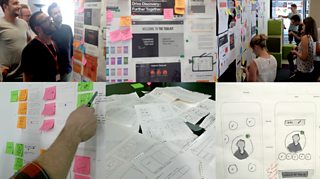
In 2014 we began to rethink our website. Our goal was a site that would assist and inspire the digital design community. We started by researching our audience. How would they use it? What should it provide? Who else might it benefit? The site would need to be constantly updated – so the need for a content management system was a given. We knew the resulting experience had to work on every level, so we spent a lot of effort on the technical solution, editorial (the quality of writing and content) and the information architecture (how content was structured). We also wanted to strip back the front-end styling to a more “bare bones” presentation. So our small GEL team set out on it’s quest.
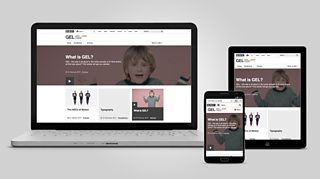
With perseverance and the borrowing of technical skills from colleagues across BBC Digital, last year we began to publish our first beta pages. We’ve since been testing and iterating like crazy. And today I’m proud to announce the official launch of our new responsive website. Take a look: www.bbc.co.uk/gel/beta
What does it do?
The site provides two core services. Firstly, the publishing and maintaining of our Guidelines. These are collaboratively authored by designers across a range of products. This shared ownership ensures a design pattern’s reuse. Reuse affords us more time for innovation as opposed to remaking the same pattern over and over again. But GEL, like any language, is constantly evolving. Our new site provides “living” guidelines which document a pattern’s evolution. This means our designers can be sure they’re using the most up-to-date information.
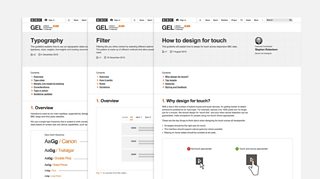
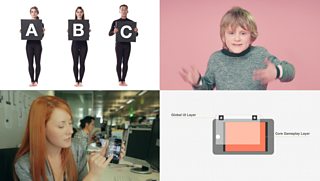
The site will also showcase the great work we do in BBC UX&D. The Articles section features our own editorial content with short films explaining our department’s approach and creative methods.
Who is the site for?
Most immediately the GEL website will benefit our design teams by enabling them to move faster and further, together. It will also aid understanding of our work for colleagues across the BBC, and beyond. This website is for anyone creating online experiences. Its content will grow to become a substantial design resource anyone can draw from.
What’s next for GEL?
For the BBC to remain a vital public service in an 'internet-first' world of constant change it needs to become more flexible and efficient. GEL will determine an appropriate degree of consistency to accommodate this. We are focussing on how sites can be built and function the same, as opposed to just looking the same. This presents significant technical and cultural challenges, but once addressed will increase our efficiency in providing excellent digital services.
So welcome to our new GEL website. This is the start of what will become a comprehensive resource documenting the development of our design language, whilst simultaneously increasing the BBC’s creative efficiency.
