Commas still count but don’t over-regulate to punctuate

Mark Shea
is the College's manager of English language development
Following the kerfuffle over apostrophes that I wrote about in a previous blog, the humble comma is the latest battleground in a war that is ostensibly about punctuation but which I believe is actually about attitudes towards change in general.

But then the British newspapers picked it up. The Times ran a piece with the dramatic headline Why the comma is heading towards its own full stop (subscription needed) and an opinion piece which was largely supportive of the ideas expressed in the Slate.com article.
The Independent followed suit with The comma may be dying out, says US professor, while the Daily Mail ran the snappy The death of the comma? US academic claims punctuation mark could be abolished from English language with ‘little loss of clarity’.
The articles all have a slightly hysterical ‘what is the world coming to?’ air about them, but in general seem to be reasonably fair accounts of the academics’ arguments. However, I found the comments below the line far more interesting than the articles themselves. Here, there was little balance, a lot of pomposity and a great deal of invective - much of it directed at Americans who deign to express opinions about the English language.
There’s nothing like language to bring out the snob in us - and the xenophobe. This is what really interests me. Why is it that language in general and punctuation in particular elicits such extreme reactions?
Well, such ‘colonic irritation’ is nothing new. Some very famous people are said to have been sensitive about punctuation. George Bernard Shaw reportedly once wrote to TE Lawrence on his overuse of colons: "Confound you and your book: you are no more to be trusted with a book than a child with a torpedo."
And I’ve always taken this quote: “I was working on the proof of one of my poems all the morning, and took out a comma. In the afternoon I put it back again,” to mean that Oscar Wilde took punctuation very seriously indeed (it could also be read as an indictment of his work ethic I suppose).

For certain people, those with a ‘zero tolerance’ approach to punctuation, there is a right way, and it is immutable and incontestable. They will defend this position with something approaching religious zeal. I believe these people fundamentally misunderstand what language is, how it works, and how punctuation has evolved historically.
To continue the religious analogy, the scripture of their creed - their Ten Commandments - is probably William Strunk Jr’s The Elements of Style. Published in 1918, this book sets out rules of English usage, principally for use by (US) university students. I think it gives generally good advice - by which I mean its recommendations are very similar to those I was taught at school. Concerning commas, for example, it instructs the writer to “enclose parenthetic expressions between commas” and to “place a comma before and or but introducing an independent clause”. But Mr Strunk’s advice should not be described as ‘rules’. He did not descend from Mt Sinai with the word of God inscribed in stone. Nor did the comma begin its existence in 1918.
Today's punctuation marks began as a guide for reading aloud, rather like the marks in musical notation. Different marks would break a piece down into sections and indicate how long the next section was likely to be, and hence how deep a breath the reader would need to take. This gives us the modern system of commas, semicolons, colons and full stops.
With the invention of the printing press in the 15th Century, the written word became more accessible and was no longer intended principally as a script to be read aloud. Several new punctuation marks were invented and punctuation developed conventions that had little to do with the mechanical process of reading aloud, and more to do with syntax and semantic organisation. Modern punctuation, therefore, has two uses: it provides a degree of grammatical information and works as a guide to the rhythm of the sentence.
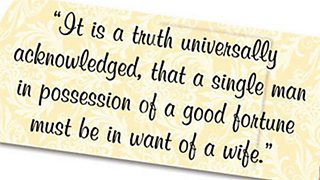
However, when we write for the BBC we need to maintain consistency across our output, so we need to adopt a convention on the use of commas. What I think we need is a set of guidelines which are easy to remember and allow the writer to avoid the most commonly criticised ‘mistakes’, but don’t restrict him/her too much in terms of style. So, here are my tips:
Don't:
- put a comma between a subject and a verb
- forget one of a pair of commas used to separate additional information
- use a comma to join a pair of sentences
- copy newspaper headlines and use commas instead of conjunctions
- write overlong sentences with hundreds of commas - unless you're a famous writer.
Doubting Thomas’s apostrophe? Teacher knows best
Grammar, spelling, punctuation: BBC News style guide
More journalistic writing skills
Blogs about language and grammar by BBC News style editor Ian Jolly
