Transgender issues in the media: ‘Improving picture, still a way to go’

Jennie Kermode
Chair of campaigning charity Trans Media Watch
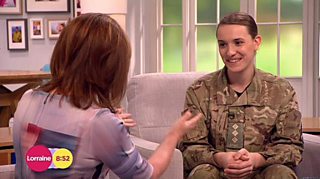
Hannah Winterbourne, the British Army’s first transgender officer, talks to Lorraine Kelly on ITV Breakfast
In April 2010 my charity Trans Media Watch published research showing that 70% of transgender people found media representations of people like them to be overwhelmingly negative. Five years later, though many are still deeply dissatisfied, the picture has changed.
Far more positive stories are being published or broadcast. Neutral stories are notably more respectful than they used to be. The accuracy of reporting has improved and a wider range of trans identities is represented. So how did this happen?
As an organisation working in a sector where there are many other battles to fight (around issues like access to services, legal recognition and challenging hate crime), we are sometimes asked why we focus on the media.
The answer is simple: the media can help to change public attitudes. It’s the most effective way to educate people on trans issues and show them that we’re human beings who just want to be free to get on with life like anybody else. But just as the media influence the public, the public influences the media, and media organisations need to stay on their toes to keep up with a changing society.
It’s good to see things like the New Statesman’s recent trans week and the “media conversation about all things trans”, being organised this month by BuzzFeed’s Meredith Talusan, helping to raise awareness.
Back in August 2013, the BBC - among others - got on the wrong side of the public in its reporting on Chelsea Manning, who had just come out as trans. We received a huge number of requests to step in, and only about 40% of them were from trans people.
A number of journalists had already contacted us for advice on the story - asking whether or not they should use Chelsea’s old name and what pronouns (he or she) they should use when referring to her. So we contacted the BBC programmes that were getting it wrong and explained why their pronoun choice was problematic. They didn’t change what they were doing immediately - they said it would be too confusing for readers and audiences. Since then, however, many BBC journalists and producers have made a significant effort to improve.
Is the public really confused by these changes? We tend to think people are smarter than that. Reporting on trans issues was certainly confused when we first came on the scene. Pronouns were used almost at random and terms like ‘trans woman’ were used to refer to people transitioning from male to female and from female to male.
It was a mess, so we made a simple proposition: you’re going to need to settle on one set of words at some point, so why not make it the one that trans people themselves are comfortable with? Our website provides guidance on language and other ways that journalists can ensure they handle these issues sensitively.
This became the starting point for a change in many journalists’ approach. They realised that it didn’t have to be difficult to talk about trans issues sensitively. They also began to realise that there are many more trans stories out there to tell than the traditional, mocking take on individuals transitioning between gender roles.
Away from news reporting, one programme which has broken away from that narrative is the BBC’s new sitcom Boy Meets Girl. This was a result of a project specifically designed to bring trans-themed comedy to the screen. We met with senior comedy commissioners who admitted they’d never considered laughing with us rather than at us. But trans people have a sense of humour too and, given the absurd questions we often get from strangers, well, you have to laugh.
Comedy is also important because it’s all about challenging stereotypes, and that can help us show audiences that being trans isn’t a lifestyle choice. It’s not about sexuality and it can’t be summed up by the old cliché about being trapped in the wrong body (we’re in our own bodies; some of us just need to change them a bit to stop feelings of distress).
Broadening the narrative like this helps people recognise that there’s no one simple form of being trans. Not everybody identifies with the gender they were labelled with at birth, and some people don’t identify as male or female.
Research shows us that the younger generation - people now in their teens and twenties - increasingly take this for granted, and are simultaneously breaking the old rules that told them how they ought to dress or what they should set out to achieve in life. Once we stop worrying about how to be ‘real men’ or ‘real women’, we all have more room to be ourselves.
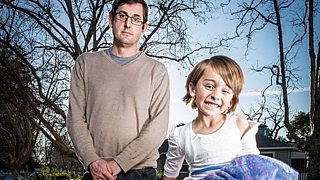
Factual output like Louis Theroux’s recent BBC Two documentary on trans kids (above) and Lorraine Kelly’s series of ITV Breakfast interviews with trans guests (top image) is also an important part of recognising and adjusting to this cultural change.
There’s still a long way to go. We look forward to the day when we no longer have to deal with issues like the Sun’s recent treatment of politician Emily Brothers, or get complaints about handling of trans issues by Woman’s Hour. But there’s no doubting that the media has come a long way.
All we want is to see trans issues handled with accuracy, dignity and respect - in other words, according to traditional media values.
Trans Media Watch is a charity whose volunteers work to improve media coverage of transgender and intersex issues @TransMediaWatch.
Jennie Kermode is a journalist, author and web content director at Eye for Film.
Reporting transgender issues: Blog by Stuart Hughes
Reporting on children: Advice from BBC social affairs correspondent Alison Holt
