
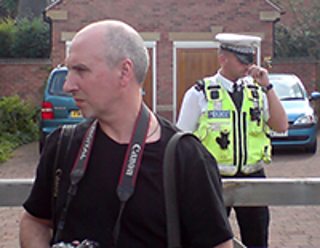
The answer is, yes I can, provided I have a reasonable excuse. This clarification of Section 58A of the Terrorism Act 2000 appeared on the Downing Street website, so we can assume it came from the top. But it raises as many questions as it answers.
A reasonable excuse covers "legitimate journalistic activity", but who decides what constitutes legitimate? And why should anyone require a "reasonable excuse" to pursue a legal activity?
According to Number Ten, you're OK if you're covering a demonstration for a newspaper. But what if you're not affiliated to a media organisation, a student, or a private individual intending to use the pictures on your blog?
And what does "likely" mean in this context? What happens if the protest turns nasty or the police officer in charge takes a dislike to your hairstyle? Would you be likely to be allowed to carry on taking pictures or be moved on and, perhaps, your memory card confiscated?
Number Ten issued its statement in response to a 5,794 signature e-petition: "We the undersigned petition the Prime Minister to clarify the laws surrounding photography in public places"
That followed concern from professional as well as enthusiast photographers that they could be criminalised for no good reason. Their concerns appeared to be borne out by cases where police constables and PCSOs (Police Community Support Officers) came down heavily on photographers.
Since January 2009 the debate in the trade press has spilled out into the mainstream media. The Daily Telegraph'sAlex Singleton has blogged about the issue, warning that the Downing Street response will do nothing to reassure photographers. Instead, he reckons "the mess will only get worse".
