Small communities can have a big impact on your journalism

Blair Hickman
is community editor at ProPublica
Last week marked the first anniversary of the ProPublica Patient Harm Facebook group, a crowdsourcing experiment that has changed the way we view community-powered reporting. To celebrate we are taking stock of what we have learned along the way.
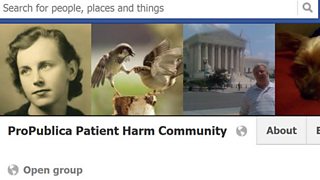
So we decided to launch one - all for the benefit of informing our investigation into patient harm. These efforts now include:
- a Facebook group with more than 1,650 members
- a patient questionnaire that has generated 300 tips
- a medical provider questionnaire that has received nearly 100 responses
- community content on ProPublica.org, which has discussions, expert Q&As, profiles, resources for patients and related coverage.
The benefits of building this community early, publicising our investigation as we go, have been huge.
We now have an original database of patient sources, a network of providers willing to offer their expertise, and a readership for the results of our investigations long before they are published. Group members advise each other on the challenges that accompany patient harm, sometimes even crowdsourcing tips on hospital safety in real-time - meeting ProPublica’s mission of achieving impact in a new, bottom-up, grassroots way.
This community strategy has worked well because we developed it for a long-term investigation and targeted it at a niche group with a wealth of knowledge to share. Here are the headlines of how we did it:
Research existing communities
Building a community takes significant time. So if an active space already exists, consider going there. Ask your sources what communities they participate in. Here’s a list of some of our favorite research tools for finding groups (LinkedIn is especially good for finding groups of experts).
Know your target audience
Crowdsourcing and community-building efforts work best when they target niche groups of people who are passionate and knowledgeable about a common subject. People concerned with patient safety, for example, could be placed into three brackets: patients or families who have experienced harm, patient advocates and medical providers. Each has different interests and perspectives but the overall community succeeds because each can find a meaningful way to participate. Knowing your target audience also makes it easier to create content that’s valuable specifically to them. Adding value is a key part of building a successful community.
Organise your sources
We create ‘callouts’, or online questionnaires, to collect specific data points about our communities. Callouts are one of our most valuable social tools because they organise social data (which is often messy) in a sortable, searchable way that lets us collaborate with other journalists. For a full rundown on how callouts can boost your reporting, see this advice from my colleague Amanda Zamora.
APIs are also a valuable way to structure social data and organise your sources. For instance, we’ve created a script to download data from our Facebook group through the API.
Feed your community
Creating content - stories, explainers, Q&As - specifically for your community provides more opportunities to engage new members and reward existing ones with valuable content. In the early days of our patient harm project we kept an editorial schedule just for the group and wrote posts and hosted discussions entirely on Facebook.
Listen
This sounds simple but many people skip this step. When people fill out your callout, read it. When they comment on your article or in your group, pay attention. Every comment, particularly if you spot themes, could potentially turn into a story. When people in the Facebook group expressed frustration that the media wouldn’t tell their story, we created a two-partseries explaining what healthcare journalists were looking for when considering stories.
Participate
Again: sounds simple, but often forgotten. Imagine going to a party where you only know two people. You survey the scene, make small talk and, as people get to know you, conversations become more in-depth and trust builds. As people online see you contribute, they begin to recognise you as an expert on a subject and they’re more likely to share their own stories. This is true for communities you build, and communities you participate in - whether on Facebook or Twitter. Participation increases your reputation.
Searching social media? Don’t miss what’s hiding in plain sight
Social media and internet tools: course available to BBC staff only

