The media and Google: a changing balance of power

Charles Miller
edits this blog. Twitter: @chblm
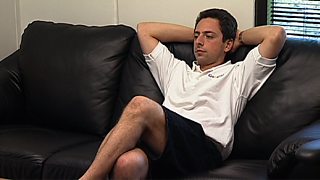
Sergey Brin, accessible in 2000
That was how I found myself, with presenter Michael Lewis, interviewing Google’s co-founder Sergey Brin. He had dropped out of Stanford the year before and the company had just received its first serious investment.
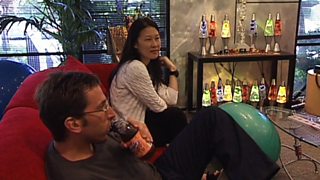
Google reception area
Brin was confident and serious. As well as doing our interview, he was happy to come to a dinner we were setting up to film Silicon Valley luminaries talking informally about prospects for the internet.
Three years later I called Google again - this time for a Money Programme I was making. I spoke to the same head of communications, David Krane, whom I’d met on my first visit. He actually remembered me, and agreed to my request for more filming since I was “an old friend” of Google’s. But things weren’t quite as open. This time neither Sergey nor his co-founder Larry Page could see us - although we did get an interview with Sheryl Sandberg who was happy to demonstrate Google’s amazing new money-making system, Adwords.
The balance had shifted. Now the world knew about Google and it had more media requests than it could deal with. Instead of paying Google a compliment by including it in our programme, now Google was doing us a favour by agreeing to take part.
The final chapter (so far) in my Google history came two years later, in 2005. I was making another Money Programme, called The World According to Google. Yes, a whole programme about the company. Surely we could get an interview with Larry or Sergey on that basis? No, apparently not - not even for an old friend. To be fair, Google did line up an impressive selection of its other staff for us to interview, including Marissa Mayer, now the head of Yahoo.
But the days when there was a frisson of excitement that a BBC film crew had arrived were long past. For Google, the media had changed from a potential source of free publicity to an occupational hazard. Everyone was polite and for less experienced staff being interviewed was still at least a medium-sized deal. But Google was growing exponentially through its own efforts: any appeal for media access on the basis of the few million viewers our programme was likely to get was met with a courtesy which thinly disguised, I imagine, a snort of derision.
The journey from small business craving publicity to big business to which the media craves access is one that’s constantly played out in Silicon Valley and other sectors of the economy.
The most successful companies can afford to act like top music stars, restricting information and access in order to build interest and appetite for their products. Apple is famous for its inaccessibility and dictating its own terms to the media. Almost the only thing that can be filmed is its executives on a conference stage engaged in selling the products. That’s good for Apple, and if it’s not what the media wants, too bad. When I rang to propose a BBC documentary about the company, the PR man stopped me in my tracks with a crisp “let me give you four reasons why that won’t be possible...”
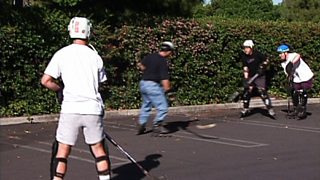
Roller hockey in Google car park, Brin with back to camera, 2000
So did I just get lucky in landing an interview with Sergey back in 1999? No, the balance of power really was on our side back then, as I recently had confirmed when I read former Google staffer Larry Edwards’s entertaining memoir I’m Feeling Lucky.
Around the time I filmed Sergey, Edwards recounts, Google found itself in “a classic chicken-and-egg conundrum: the media wouldn’t talk to Google because Google wasn’t a company people were talking about”. PR boss Cindy McCaffrey remembers that “in late summer ’99, we had such a hard time getting anyone to return our calls or to take us seriously”.
So that was why my requests were so warmly received! No wonder Sergey fitted in with our plans. He even let us film him playing roller-hockey in the company car park (which would only be filled with fancy new cars after the IPO four years later).
If I’d had my wits about me I would have only agreed to film him on condition that he’d do a second interview 10 years later, if Google was still in business.
Charles Miller wrote about how a movie got access to film at Google in a previous post.
The programmes referred to are:
The Future Just Happened (July 2001)
Dot Coms Bounce Back (February 2004)
The World According to Google (January 2006)
