Lee Rigby murder coverage: Important public interest ruling by Ofcom

Fran Unsworth
is deputy director, BBC News and Current Affairs
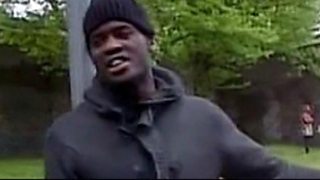
The Woolwich incident was of course the murder of Fusilier Lee Rigby by Michael Adebolajo (above) and Michael Adebowale. Mobile phone video footage taken only minutes after the attack showed one of the killers, hands covered in blood, clutching a knife and a machete, speaking directly to camera. It was first shown by ITV at 6.20pm; on Channel 5 News a few minutes later; and on the BBC News Channel at 7.02pm. Sky and al-Jazeera also showed some of it.
Other footage showed the victim lying on the ground, helicopter shots of the scene and the police arresting the killers. Ofcom received nearly 680 complaints that the material was too graphic and distressing, insensitive and disrespectful to the family of Fusilier Rigby, and gave one of the attackers a platform to explain and justify his actions. Many of the complaints expressed concern at the effect on children watching.
You can see a summary of the finding, but it’s the powerful and principled arguments that Ofcom lists for doing what we all did that every journalist should remember: “It is important that broadcast journalists can report the news of what has occurred as freely as possible…” and “…we considered we should take particular note of the significance of the right to freedom of expression in this case…”, and “Ofcom considers it a fundamental duty of news programmes to inform the public on matters of public importance, so that informed debate can take place.”
Of course we have to think carefully about the context. The public interest in reporting terrorism on the streets of Britain doesn’t mean we can just set aside the horrific nature of the pictures. The incident happened in the afternoon and we were covering it at the most sensitive time of day.
What are the audience expectations of our programmes? Have we appropriately limited what we are showing bearing in mind this is pre-watershed programming, on air at a time when children are home from school? And, vitally, have we warned viewers that what they are about to see might shock and distress them, and have we done that adequately?
Ofcom says that all the broadcasters, TV and radio, did do enough in their pre-watershed programming to ensure their output complied with the Broadcasting Code. And it saw no need to consider any complaints about post-watershed output. But it went on to issue some guidance encouraging us to use explicit warnings before broadcasting such distressing material in future.
Finally, the regulator looked at complains about BBC News at Six two days later, when it carried a report showing newly emerged footage of the arrest of the two attackers. They had been shot in the legs - the sound of the gunshots could be heard clearly - and were seen surrounded by police officers. The Six used the shaky mobile phone material taken from high above the scene as a headline, and showed it again both at normal speed and slowed right down in the package five minutes later.
Once again Ofcom considered that the audience expected the news to be reported fully and that the material was of public interest, so no code breach. The warning before the package was enough, but Ofcom issued guidance reminding us that headlines, which by their nature can’t include a warning, need to be carefully chosen. These are welcome findings, showing that our regulator supports responsible journalism in the public interest.
Ofcom clears news coverage of Lee Rigby murder
Lee Rigby murder: How events in Woolwich unfolded
