BBC Journalism Fellowships 2011/12
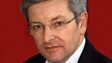
Jonathan Baker
is head of the BBC College of Journalism
Tagged with:
We are looking for applications from right across the BBC Journalism divisions for two prestigious fellowships which are supported by the BBC:
- The University of Michigan Fellowship
- The Reuters Fellowship at Oxford University.
These opportunities are open to all senior journalists across BBC Journalism. However, the BBC's financial support for the fellowships has been reduced, so please make sure you read all the details of how they will work this year before applying.
Both fellowships offer a great opportunity for an experienced journalist to take time out from the day job, get new insights, and bring something back to the BBC.
1. The University of Michigan Fellowship. Closing date 13 June 2011
The Knight-Wallace Fellowship at the University of Michigan offers a four-month placement for BBC staff at the largest research university in the world. We are looking for applicants for one semester, to begin in either September 2011 or January 2012.
The Fellowship is designed to give the successful applicants "a broader perspective, nurture intellectual growth, and inspire personal transformation". While there, you study to complete the project you have outlined in your application form and select classes from the full range of courses offered at the University of Michigan. Additionally, prominent journalists and leading academics give twice-weekly seminars.
Typically, 12 American Fellows are joined at Michigan by six international colleagues.
As a Knight-Wallace fellow, you will get the opportunity to travel to Buenos Aires and Sao Paolo (December 2011) or Istanbul and Ankara (March 2012).
Past BBC fellows include:
Steve Titherington, Alicia McCarthy, Alf Hermida, Pam O'Toole, Andrew Whitehead, Sue Nelson, Joanne Episcopo, Caroline Finnigan, Mike Baker, Peter Burdin, Patricia Whitehorne, Charlie Partridge, David Edmonds, John Cary, Joanna Mills and Maurice Walsh.
The project
The programme of research undertaken should be relevant to your work as a BBC journalist. For example, it may be related to a specialist or topical subject or the changing nature of journalism.
To apply
To be eligible to apply, you must be a BBC journalist on a continuing contract who can demonstrate a successful career history and show the potential to make the most of this investment in you and your job.
The successful candidate will need to take unpaid leave (up to a maximum of three months) or a career break in order to take up this opportunity. Your BBC salary will not be paid during the time you are in the United States, nor will the BBC pay your travelling expenses. However, the Fellowship carries a stipend of $35,000 and covers all academic fees, health insurance and one international trip.
Before considering an application, you should ensure that your line manager is willing to support you, and to release you at the appropriate time. It is also important that you understand the implications of taking a career break in terms of its effect on your pension.
Selection will be based on career history, management endorsement, proposals for study and final interview. A BBC panel will select a candidate to recommend to Michigan for final approval.
To apply, please download and complete the application form.
Note that the form requires you to submit two separate papers of 1,500 words and 500 words respectively, and that if you are selected to go forward for consideration by Michigan you will be asked to provide examples of your work.
When you have completed the form, send it to Alison Lobo (telephone extension 02 26043) at the BBC College of Journalism, Room 2406, BBC White City Building, White City, 201 Wood Lane, London W12 7TS - BY 13 JUNE 2011. DO NOT send it direct to Michigan.
Please get in touch with Jonathan Baker, Head of the BBC College of Journalism, if you have any questions.
2. Reuters Institute for the Study of Journalism - Journalist Fellowship Programme.Closing date 13 June 2011
Background
The Fellowship provides mid-career journalists with the opportunity to study and research (for three to four months) a work-related project that will broaden their academic horizons as well as being of benefit to the BBC. The programme brings together experienced journalists from around the world to study at the Reuters Institute for the Study of Journalism, University of Oxford.
This is an opportunity to study in Oxford for one term in the academic year 2011/12. The successful applicant is expected to be a resident during the period of study.
A contribution to accommodation expenses will be paid, and tuition fees will be met by the BBC College of Journalism. The team at Reuters will help you to find a suitable place to live.
Recent BBC Fellows include:
Ric Bailey (2010/11), Emma Jane Kirby, Giang Nguyen (2009/10) and Jeremy Hayes (2008/09).
Dr David Levy, Director of the Institute, has this to say about the relationship with the BBC:
"The Journalist Fellowship Programme at Oxford has now been established for more than a quarter of a century and over that time has attracted more than 400 journalist fellows from around the world. The BBC fellowship is an immensely valuable part of the Oxford programme.
The BBC features prominently in the international, comparative research, discussion and debate of journalism that is at the heart of the Institute's activities. The international journalist fellows typically know about the BBC and want to learn more or include it in their research projects. Equally, BBC journalists can learn a huge amount from the Reuters experience, through the chance to move outside their comfort zone, engage with journalists from around the world, and have their ideas challenged through exchanges with other journalists and experts.
That experience, the network of fellows they will establish, and their excellent research projects, give BBC journalists a great deal to take back to the BBC."
The project
The programme of research should be relevant to your work as a BBC journalist. For example, it may be related to a specialist or topical subject or the changing nature of journalism.
Fellows are asked to produce a major piece of writing of between 8,000 and 10,000 words. Candidates will also be expected to show how their research could be used by the BBC when they return to work. It's important to remember that you will have only months to complete this project, so ensure it is realistic and achievable.
Fellows are given access to Oxford University and Green Templeton College facilities and services, and are assigned their own academic adviser to help them with their project. They also take part in seminars and other special events involving distinguished speakers.
To be eligible to apply you must be a BBC journalist on a continuing contract who can demonstrate a successful career history and show the potential to meet this investment in you.
The successful candidate will need to take unpaid leave (up to a maximum of three months) or a career break in order to take up this opportunity. Your BBC salary will not be paid during the time you are in Oxford.
Before considering an application, you should ensure that your line manager is willing to support you, and to release you at the appropriate time. It is also important that you understand the implications of taking a career break in terms of its effect on your pension.
To apply, you need to complete the application form, which
- details your career history
- provides a supporting statement from your manager endorsing your application and confirming your release for three months
- outlines your proposed research topic. This should indicate a planned approach to your research and the sources you might seek to use.
Selection will be based on career history, management endorsement, proposals for study and final interview.
This form should be sent to Alison Lobo (telephone extension 02 26043) at the BBC College of Journalism, Room 2406, BBC White City Building, White City, 201 Wood Lane, London W12 7TS - BY 13 JUNE 2011.
Help and support
Here is the link to the Reuters Institute site but ignore the section on 'How to Apply' as we have our own selection process as described above.
Please get in touch with Jonathan Baker, Head of the College of Journalism, for further details.
