#smsldn: Brazilians are naturals for social media

Marcia Menezes
is the director of g1.com.br, the news website of the Brazilian media group Globo.
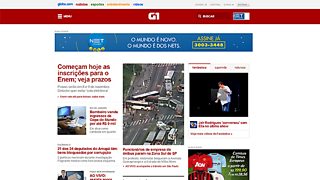
Globo's G1 website
For all these reasons, social media in Brazil is a kind of citizen journalism, with contributions, comments, sharing, interaction and posts.
Within the established media, our mission is to improve our relationship with our audience, Brazilian citizens. We are creating experiences to engage the population, trying to make our calls to action and content relevant and useful for them.
With continuing deficiencies in Brazilian public services and infrastructure, local journalism via the mainstream media is a way for people to complain - and sometimes the most effective way. We are exploring ways to make use of that Brazilian sociability and eagerness to help people solve problems. On the Globo news website G1.com.br, for instance, we have created interactive maps to amplify individual voices.
One example is our ‘water leakage interactive map’. The context: there was little rain last summer in São Paulo and the city was (and still is) in danger of suffering a water shortage. Everyone was complaining on social media about leaks in the water system that were making the situation worse.
We drove this conversation to our map, asking people to share pictures and videos about leaks in their neighbourhood. Then the water company used the map to repair more than 700 reported leaks. Globo's local TV newscast aired the results.
Another example: a shortage of teachers was an issue identified by parents of students in São Paulo. To portray the problem and its dimensions, we created an interactive map where people could identify schools that lacked teachers. The local government is using the information to try to solve the problem.
These social and local multimedia actions have increased in the past few years as G1.com.br was established in newsrooms in 52 cities. Globo is the first Brazilian media group to have web newsrooms in each of the 26 states and in the federal district. We can now talk closely to every citizen. Besides interactive maps, we make polls in real time and encourage comments and the sharing of links through our mobile platforms.
We pay attention to mobile platforms because of the high number of Brazilians who own a mobile phone. Bem Estar, for example, is a morning TV show about healthy lifestyle choices. We´ve created a second-screen experience for web and mobile devices to promote interaction and engagement with the show on TV.
Launched in 2006, G1 is the leading news portal in Brazil with 27.3 million unique visitors in March 2014 and 49% market share (source: Comscore). The portal provides comprehensive coverage of Brazil and the latest news in international affairs, business, politics, cars, jobs, education, science, technology, tourism, health and culture. With 500 journalists in all states, G1 produces updated and relevant local news and gives national visibility to important issues. In addition to the exclusive content in text, video and graphics, the reader can see videos that were aired on Globo's TV newscasts and on the Globo News cable channel.
