Komla Dumor’s legacy to journalism was to make Africa ‘like anywhere else’
Joel Kibazo
is an African Development Bank executive and former BBC and FT journalist
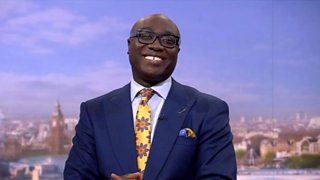
Instead the outpouring of grief, particularly across Sub-Saharan Africa, at his sudden death on 18 January is not only testament to the fact that in journalism he found his true calling but also that he became the focal point for those in and out of Africa trying to make sense of the changes taking place on the continent. Komla not only became the face and narrator of the story of Africa today - he was quintessentially part of the story.
For years if not generations, Africa, particularly Sub-Saharan Africa, was viewed and reported on as if it was part of ‘another world’: one in which viewers, listeners and readers were invited to gawp at the latest natural disaster - brutality visited upon its people by military coups and wars, and the sheer failure of governance in many of its countries.
Much of what was being reported was indeed true, but over the past 25 years there has also been another Africa: a continent where the number of educated people have risen sharply, democracy and good governance have returned, and there is a burgeoning middle class. And above all Africa has become a place where its diaspora has been attracted back to take advantage of the abundant opportunities and contribute to the sharply growing economies.
This was the Africa of Komla Dumor: a continent where the bad, the ugly and brutal happens but also a continent with a bright future and strong economic prospects at a time when much of the world continues to grapple with economic challenges following the sharp downturn of 2008.
Reflecting on what made Komla stand out, Claire Bolderson, a former BBC journalist and presenter, put it succinctly: "This wasn't an outsider poking around in Africa with the kind of ‘wow look at that’ curiosity that's hard to avoid. This was an African who knew and loved his continent, warts and all, and could make it seem entirely normal that in a place once all but destroyed by genocide he could be discussing agri-business and government investment incentives."
But his way of telling the story also had much to do with why he connected. He put himself at the centre of the story - not by showing off or trying to impress the viewer or listener but as a way of signalling his empathy with the people and situations he was reporting on. He had grown up seeing the villages in Nigeria, and had ridden on the back of motorbikes on the streets of Accra. He was the neutral reporter on a football game who was also an ardent fan of the Black Stars of Ghana, just like any Ghanaian or fan of their national team. He was simply one of us.
Yet at the same time the Harvard graduate knew when to switch persona, knuckle down and do the research necessary to conduct a solid interview. I remember him calling me to discuss an impending interview with Bill Clinton before boarding a plane for Dar es Salaam to talk to the former president. Behind the big smile and charm was a lot of hard work.
Komla Dumor made Africa like anywhere else: complex, loveable, frustrating, yet at the same time vibrant and full of nice people. In fact, all things that could just as easily be said about Italy, India, Argentina, the United States and elsewhere.
That in my view is his greatest contribution to journalism and the understanding of the continent of Africa.
Joel Kibazo is now director of external relations and communications at the African Development Bank, based in Tunis. He also contributes to the BBC African Viewpoint blog
Tributes to Konla Dumor from around the world
Tribute by BBC World Affairs correspondent Mike Wooldridge
BBC colleagues remember a man who became ‘the face of Africa’
‘We have lost a star’: Tribute by author Chimamanda Adichie
