‘Jihadi John’: How BBC News exposed his identity

Lucy Manning
is a special correspondent for BBC News
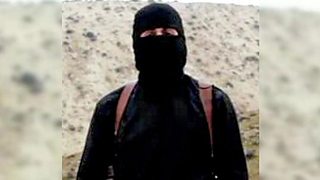
His was an identity that had been speculated about for months, and known only by UK and US authorities and some fighting in Syria.
We had been looking at who 'Jihadi John' might be for weeks, even tracking down those connected to the Portuguese footballers from London who the papers thought might be linked to him.
But we discovered another tit-bit of information about who Jihadi John might be that led us to believe we might now be able to identify him. We pored over reports of legal proceedings involving terror suspects, old newspaper reports and court papers. We had bits of the jigsaw but certainly not all of it.
We became convinced it was one man who we thought fitted the bits of information we knew. So we went door knocking - families, contacts, work places - but we soon discovered this wasn't the right man.
Then we identified a second man who was part of the same network. Again, some digging, some more questions, until we came to the conclusion that this wasn't the right man either.
We went home deflated. We knew we were close: looking in the right area; at the right networks. We also knew by this stage that the Washington Post was investigating. We were aware it might break the story at any time.
The treasure trove of information that my BBC News colleagues in the Home Affairs unit have built over the years proved invaluable. In one of the documents the name of one the men we’d been looking at appeared alongside another name: Mohammed Emwazi. This was Jihadi John, we thought. Finally, we confirmed it was him.
There were then numerous discussions with the senior editorial team about the wisdom of putting this information on air: the work of the police and security service, the distress to the families of the murdered hostages and the safety of the Emwazi family all had to be weighed up. The decision was made to broadcast.
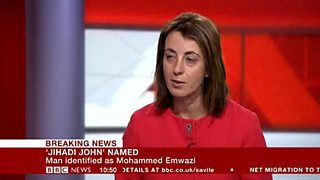
There has been much comment in the media bubble about the timings of the BBC’s and Washington Post’s story. On such a sensitive story this shouldn't matter. But for the benefit of the media bubble, we broke it on air at 10:50 GMT; the Washington Post story went online at 10:51. We tweeted it at 10:50; the Washington Post, 10:53.
When the Daily Mail reported the Washington Post had it online at 09:45 this was the US time - afternoon in the UK - after it had updated its story.
And we know The Washington Post published its story after the BBC because the BBC alerted the paper that it was about to break the news, and then it followed the BBC after receiving this information.
There is no doubt it had a much more comprehensive investigation than we did and had found out more. It was a great investigation. But in terms of the name, the address, the age and extremist links, there is no question that we broke this, got it from our own sources and absolutely did not lift it from the Washington Post story, which was published while I was on air (below).
The Washington Post’s executive editor Marty Baron told the Times: "Judging from time stamps and alerts, it appears that we published the identity of 'Jihadi John' at roughly the same time as the BBC."
For our team including Ed Campbell and Becky Kelly this was, in many respects, probably the most stressful story we have worked on.