College of Journalism launches four more international language websites

Najiba Kasraee
editor of the BBC Academy's language websites
As with all of our foreign language sites, they aim to put BBC Global News language services’ in-house style, standards and best practice on record - and, as part of BBC’s public purpose, share that resource with journalists around the world.
The new sites focus on three main areas: BBC values, language and journalistic skills. The skills category has advice on television, radio and online production, presentation, writing, social media and much more. A BBC values section covers impartiality, truth and accuracy, independence, public interest, accountability and law.
At the core of each website is language: how to ensure impartial and accurate language and the all-important art of translation. Images and illustrations have been chosen to reflect individual cultures and our target audiences, as well as the work of the relevant BBC language services themselves.
The College of Journalism’s Burmese site
(If your browser doesn’t render the Burmese font correctly, try another browser)
This is a particularly timely launch for Burma where media organisations can now publish without prior approval from the Press Scrutiny and Registration Department, although self-censorship remains an issue. Drawing on interviews with BBC and other journalists in the UK and Burma, the site offers guidance on accuracy in news and ways to resist self-censorship.
There is practical advice on how to produce and present multiplatform programmes to deadlines. And in a language where one small mistake in the grouping of letters can lead to major misunderstandings, the special language category looks at some of the common pitfalls in translation, as well as issues around the creation of new scientific words, foreign names and the importance of correct pronunciation.
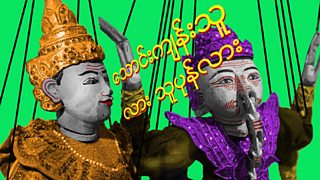
In Burmese the smallest typographical slip can, for instance, turn ‘royal army’ into ‘stupid army’. Or a harmless sentence like ‘two brothers on a horse were going to the village for a wedding’ can become ‘two brothers were going to a village to marry a horse’. Misplacement of one small character translates the term for ‘ceasefire’ to ‘stand and swear’. All worth avoiding. (The image above illustrates impartiality in the Burmese language, using the example of 'insurgent' versus 'rebel')
And this is the first BBC site to use Zawgyi - the most up-to-date font and compatible with Facebook and Google Talk.
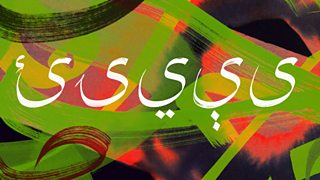
Five versions of the Pashto letter Ye
Pashto is spoken in Afghanistan and a large area of Pakistan. The new site’s language section gives substantial guidance on impartiality and accuracy as well as the use of standard Pashto. The standard language used in the Afghan media is the modern unified version created by the Afghan Academy of Science more than 60 years ago, yet many journalists still need guidance in using it.
Practical advice also covers Pashto grammar, spelling, and pronunciation. For instance, the language has five different sounds for one letter, ‘Ye’ (shown right). Each version is differentiated by extra dots, a different order of dots, signs, and a ‘tail’ added to the character. Writing the letter without the proper signs can change the meaning dramatically, turning singular to plural, ‘place’ into ‘love’ or ‘joyfulness’ into ‘yogurt’.
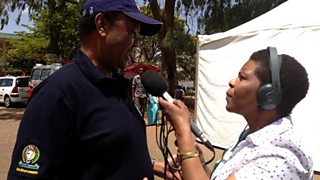
Zawadi Machibya of Swahili Service interviews Tanzanian ruling party politician
The Swahili site, structured like the others around values, skills and language, has a pronunciation sub-category that alerts presenters to the different dialects and pronunciation in Kenya and Tanzania. For example, a slight vocal variation can change the word ‘effect’ to ‘embarrass’.
The language category gives further advice on how to be aware of foreign influences on the Swahili language. Among the content in the skills section is how to write for television, what it takes to become a television presenter, and how to create interest in a sports story.
Here, editors and BBC Vietnamese reporters advise in the skills section on how to promote local stories via Facebook - the main form of social media in Vietnam - and how to verify material on social media.
The language category focuses on impartial language, translation, pronunciation, and also ways to cater for a wider audience.

These latest four websites bring the number of new College of Journalism international language sites to 11 - including Arabic, Chinese in Simplified form, Chinese in Traditional form, Hausa for Nigeria, Persian, Russian, and Urdu for Pakistan (they were all previously micro-sites).
In the past five years the College of Journalism has created 27 language websites or micro-sites, all of which are free to audiences around the world. We will be launching four more websites in summer 2014: in French, Hindi, Indonesian and Turkish.
Access the College of Journalism’s free language sites
College of Journalism launches four more language websites
Impartiality in practice and the duty to say it straight
What anyone can learn from the BBC guide to journalism in Persian
