Freedom of information: be careful what you ask for

Martin Rosenbaum
is a BBC News specialist in FOI and executive producer in BBC Political Programmes
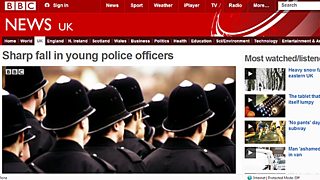
Police officers are not getting younger; on average they are getting older. That is revealed by data we obtained from the Home Office using Freedom of Information.
Any journalist who often makes FOI requests gets used to being told that the material you want isn’t held by the public authority or that it could only be retrieved at excessive cost.
This can be frustrating - especially when on the surface it would seem to be useful data that the authority would benefit by analysing - but experience confirms that FOI is only of use for information which is already held.
You can’t use it to force a public authority to create new information. This is one of the practical lessons that requesters have realised about how FOI works.
However, what about the converse situation: where authorities are going to the trouble of collecting certain sets of data but for some reason are not then publishing them? This is where FOI should really make a difference.
We discovered that the Home Office asks police forces in England and Wales for a wide range of different data but some of the figures collated about police personnel matters are not then routinely released - for example, on the ages and disabilities of police officers.
Through a FOI request, we then obtained the statistics that the Home Office had collected from the individual forces.
It turned out that the disability data was too inconsistent and unreliable to derive much from it - although that fact in itself was interesting. But the figures about the age profile of the police in England and Wales revealed some very striking facts. The widely discussed fall in overall police numbers has actually been concentrated in the younger part of the force.
Between 2009-10 and 2011-12, the number of officers over 40 stayed more or less the same. But the number aged 26 to 40 fell by 7%, and the under-26s plummeted by nearly half - from 9,100 to 4,800. The main cause is the financial squeeze on the police which has resulted in restrictions on recruitment.
This remarkable change adds a new dimension to the debate about police numbers and seemed to come as a surprise to some of the newly elected police commissioners who were contacted by The World This Weekend.
It raises issues about the representativeness of the force and its ability to police young people, who are disproportionately both perpetrators and victims of crime. It can also hardly help with the concerns over the level of physical fitness among police officers.
For journalists using FOI, it exemplifies one of the most important lessons that experience of the law has taught us since it came into force in 2005. Adopt a frame of mind which focuses on the information that is actually recorded – not so much thinking outside the box as inside the filing cabinet or hard drive.
A good place to start with this is the blank form. Get a copy (using FOI if necessary) for the topic you’re researching and then you can see what data is collected.
For example, if you’re looking at road accidents, get the blank form that the police fill out after they are called to an accident. Then you will know what information they actually record and therefore what you can realistically request.
There’s no point asking public authorities under FOI for figures they don’t hold, no matter how much you think they should hold them. But as for the material they do collect but don’t publish - now that could contain an important, interesting and available story.
