Fear of strikes? Look at the numbers

Michael Blastland
is a journalist, author and creator of the BBC Radio 4 programme More or Less
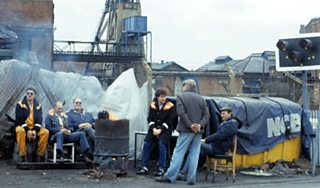
The miners' strike
"In the 12 months to March 2011 there were 145,000 working days lost from labour disputes, the joint lowest cumulative 12-month total since comparable records began in the 12 months to December 1931."
1931. Not for 80 years, and probably longer, has it been this quiet.
Even when we all pulled together during the Second World War, industrial relations pulled apart with more apparent antagonism than now.
The spirit of the Blitz? There were a million days lost to strikes in the six months from September 1939 to March 1940.
It's hard to convey how historically tiny the current number is.
The trouncing of the unions by Maggie? The doffed caps of the 1950s? The boom years of the 1960s? All amply more strike-bound than 2010-11.
And how big was the working population in 1931? In all, you begin to wonder if this could be the most strike-free period in Britain's entire modern economic history. You could almost wonder if the last time there was less striking was when it got you transported.
And yet... I've been collecting media predictions of the coming winter, spring, summer or autumn of discontent for the past three years. They started with a vengeance in 2008, when the Labour government's economic difficulties loomed large and certain newspapers wished to remind us of the party's history. Soon everyone joined in. The imminent strike-fest continued through the recession, enlivened by issues like bankers' bonuses, rising unemployment and falling real pay. Times have taken a genuine turn for the worse for many. But the dog just refused to bark - not that this stopped the speculation.
The data invites the question of whether the unions really have the muscle, or workers the appetite, for mass strikes, and, if not, why not? But are these questions seriously pursued by the media? What about the shape of the workforce now - the more contracted-out, more feminised, more part-time, less unionised, apparently less politically militant; maybe even more cooperative workplace, where you see Honda and Mini agreeing unpaid leave, even if through gritted teeth? Or maybe people are just powerless, penniless and scared to death?
Who knows? Which seems like an open goal for serious journalism. Whatever the reason, might it not pay substantial investigation? Mervyn King, Governor of the Bank of England, said not long ago that he was amazed there wasn't more anger about the economy. That's an interesting point. Why not? It suggests who-knows-how-many potential stories about what might be going on in the UK labour market to explain why it's so quiet.
More data, anyone? Figures from the past 20 years do not add up to the working days lost to disputes in the single year of the winter of discontent in 1979, despite the fact that the workforce has grown substantially.
In fact, the past 20 years are nearly equalled by one month in 1979 (September). Just possibly, something profound has happened to industrial relations. But mostly what you hear is strikes, with examples offered as proof of the tinderbox, and seldom much sense of how proportionately miniscule they've been. Interviews take the form: 'Is there anything aggressive you'd like to say to a cowering nation, Mr Union Boss, to show how important you are?' Both sides line up to play macho - and journalism, by and large, cheers them on.
I exaggerate, of course, but not much. And it is true that it could all blow up. I'd be the last to rule it out - on the basis that you should never predict, especially about the future. So I don't insist we're in harmony - I'd just like a bit more open-minded enquiry. Does anyone think we should have just a little, incy wincy look at the outrageous possibility that perhaps, just perhaps, this remarkable data suggests times have changed?
And then, if a minister says that talk of strikes can be damaging to Britain's economic competitiveness, we could ask him why he doesn't just stop talking when there is so little striking to talk about.
And, if the GMB does strike, can someone compare the data before calling it the 'summer of discontent'?
