Pakistani TV’s race for ratings is a viewing sensation
Sajid Iqbal
is an Urdu media analyst with BBC Monitoring
The new BBC Urdu TV programme Sairbeen is marking its second month on the popular Pakistani channel Express News. Sajid Iqbal looks at the ratings-obsessed media market into which it has launched:
The segment, which aired during an edition of Hum Sabh Umeed Se Hain, a successful weekly sitcom focusing on Pakistani politics and society, was based on a hypothetical situation: what would happen if programme-makers had access to ratings meters on set?
Viewers were first shown a respectable-looking chef presenting a cooking programme. The chef is a woman - unlike the rest of the world, where male chefs tend to predominate, a chef hosting cooking programmes on Pakistani channels needs to be a woman if you want your programme to succeed.
As she started reading her menu, the camera cut to the ratings meter, where the indicator needle was barely moving. "Cut, cut!" we hear the producer shout from behind the camera. "This won’t do. You will have to show a bit more energy," he urged the presenter through the talk-back.
The chef changed her intro and started a second take. This time the ratings meter flickered, but the producer was still not satisfied.
By the fifth take the presenter had had enough. She turned a bowl full of flour over her head and, covered in white from head to toe, looked right into the camera. The ratings meter rose with every passing moment until it reached its peak.
The set might not be real, and the situation hypothetical, but the sitcom's producers were not exaggerating in their portrayal of the mad race for ratings in Pakistan. And it is not restricted to any one genre of TV programmes. You can see it across the entire spectrum - from talk shows and soap operas to breakfast programmes.
For instance, there was outrage in January 2012 when Maya Khan, a breakfast show host for Samaa TV, raided public parks in Karachi and chased and questioned young couples who were apparently dating there, provoking allegations on social media that they were engaging in moral policing.
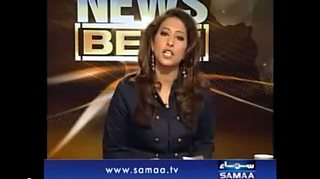
In January 2011, Samaa TV's management sacked Meher Bukhari, anchor of its popular talk show News Beat, (pictured top) following a wave of public criticism. No specific reason was given for her sacking at the time, but it was generally believed that she had been accused of provoking the murdered Punjab governor Salmaan Taseer into describing the country's blasphemy laws as "black laws".
Taseer was killed by his own bodyguard, Mumtaz Qadri, who, in comments aired later on Samaa TV, justified his actions by saying that Taseer was a blasphemer and so deserved to be punished.
In July 2012, Hamid Mir, anchor of Capital Talk, a prime time political talk show on Geo News, invited a controversial mechanical engineer, Agha Waqar Ahmad, on to his programme. The engineer claimed that he could run a car using water, an assertion welcomed in some quarters as a miracle solution for Pakistan’s energy woes, but strongly disputed by the scientific community.
And earlier this year Maria Zulfiqar Khan, host of a talk show on Express News, raided a Chinese massage parlour at a private residence in Lahore and accused the women working there of being prostitutes. Accompanied by the police, Khan and her Baat Say Baat programme crew threatened the employees with arrest, rifled through their purses and cross-examined them about their work. The women’s faces were caught on camera despite their repeated requests not to be filmed.
I have no access to a ratings meter but have no doubts about the success of this recipe for sensationalist programming. A video clip featuring two female politicians hurling accusations at each other can attract about a million hits on YouTube, in contrast to a few thousand hits for the average political talk show.
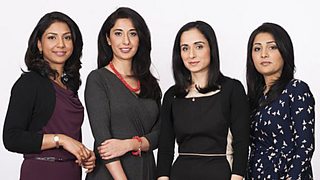
While confirmed audience figures are still to be published for fledgling BBC Urdu TV, early feedback, including from channel advertisers, seems positive. They may have to rely on the exclusive or investigative reports that have been the hallmarks of BBC Urdu's online offer to help them stand out from the crowd.
