How BBC Radio Leicester uncovered Richard III

Lucy Collins
is news editor at BBC Radio Leicester
After what may go down in history as the city’s most memorable 48 hours, BBC Radio Leicester news editor Lucy Collins draws breath to catalogue the station’s marathon Richard III coverage:
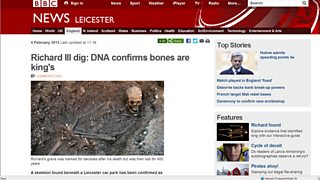
Could the remains of King Richard III really be buried under a car park in Leicester city centre? Following an archaeological dig in summer 2012, it looked increasingly likely.
The possibility was raised at a press conference at the beginning of September, and from that point on the team at BBC Radio Leicester had to think about how it would cover the story if the last of the Plantagenets had been found - on our doorstep!
We ran stories through the winter discussing where the bones should be interred, if they were his. Our Mid-Morning programme linked up in a simulcast with Radio York and we argued about where he should be laid to rest, long before the row erupted for real. The issue was even raised in the House of Commons by a local MP.
The announcement was due to be made at 10am on a Monday morning at the University of Leicester. The world’s media were expected to descend on the city, and we knew we would be battling with every outlet to hear from the key figures first. There was always a worry that we would be beaten to our own story by someone with no connection to Leicestershire.
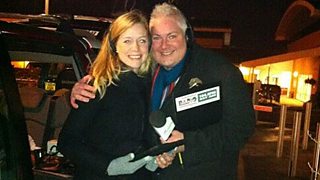
We decided we needed to be at the university for the morning of the announcement. We could report on the arrival of the media circus, look ahead to the big reveal and take the press conference live. But what else could presenter Jonathan Lampon and producer Emily Anderson (pictured below, as excitement mounted early on Monday morning) pack into three hours of the Breakfast Show? And what about the first hour of Mid-Morning?
We allocated reporters to put together features a week in advance. We came up with a Question Time/Horrible Histories take on the War of the Roses. We had a timeline. We looked at the impact Richard III had had on the city and county - visiting schools, roads and pubs which had been named after him. And we produced some ‘Ye Olde’ news, sport and travel bulletins which reflected life in Leicester in 1485. We even recorded bespoke jingles with medieval recorder music underneath them to use on the day.
In addition, we brought in one of our presenters to go and record a long-form interview at the site of the Battle of Bosworth which we could use on the day and within a documentary. We were already thinking about the documentary!
On the day itself we had two teams in place: one for Breakfast and one for Mid-Morning - each with a producer, presenter, reporter, desk driver and studio producer. We also had an engineer on site. We had quite a logistical challenge with this outside broadcast, so I can’t over-emphasise the importance of doing a recce in advance. Because of the constantly changing nature of press conferences and OBs, we had to have a back-up plan.
We had more features than we needed - just in case. The extra reporter on site was there to find guests, which meant the producer could focus on the presenter and the sound of the OB. This was useful at 7am, and essential before and after the press conference.
Everyone wanted to talk to the experts who had been involved in the dig, and having an extra pair of hands meant we had a good chance of getting them. Back at base, we had a reporter to pull together the material from the press conference and the interviews that followed.
We took the whole press conference live. It was an hour long, but it was the only thing to do. It was history in the making and the ears of the world were listening.
During the conference, we had one person live tweeting what was said, and another tweeting pictures of the key speakers. That day we tweeted more than 100 times. Some of our tweets were retweeted more than 50 times.
One final note for producers of big events like this. Throughout Breakfast and Mid-Morning, our presenters had our history programme presenter on hand to give his thoughts on the day and what was said. He was able to give another dimension to programmes and was an extra voice if we need to fill time. If you can find a ‘presenter’s friend’ they are invaluable.
