Be careful what you say: it's a very public medium and your comments will be there forever. One day they may come back to haunt you.
Yes, the television documentary can be treacherous.
In late 2007, BBC2's Money Programme looked at a new internet phenomenon called Facebook, in a programme it called Facehooked.
Facebook had opened to all users at the end of the previous year, and was, said the Money Programme,"the internet sensation of the moment". There were already over 7 million UK users and 50 million worldwide.The film profiled some 'hooked' users: not just London trendies, of which it had two examples, but - gasp - older people who lived in Burnham-on-Sea and liked quilting.
Presenter Max Flint showed how he registered as a user ("this is against my better judgment to be honest") and talked to some experts about the hype.
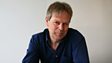
Among them, Andrew Keen, author of The Cult of the Amateur.
Oh dear, Andrew. Do you regret having said this?
"People are hyping these absurd business scenarios ... the idea that Facebook can become the internet ... then this thing will be worth $100b. It's ludicrous, it's cloud cuckooland."
Or this?
"I guarantee you this time next year, there'll be another Facebook, a post-Facebook ... that will have caught these kids' imagination ... they can all switch overnight."
Today, Facebook has 500 million active users, and this week it received the ultimate big business seal of approval in the form of an investment from Goldman Sachs, which valued it at £50 billion - over seven times its value just three years ago when Keen made his comments. Facebook estimates its income last year at $2 billion. Its founder, Mark Zuckerberg, was Time magazine's Person of the Year (above).
Of course, internet history is littered with businesses which were once thought unstoppable and then nosedived. But a Financial Times editorial yesterday headlined "It's not bubble 2.0" argued that this was not another 'Netscape moment' - referring to the browser company that went public in the late 1990s internet boom and was soon overtaken by Microsoft's rival product.
But who knows what the future holds for Facebook? Bookmark this page, Andrew Keen, because you may yet have the last laugh.
As for the Money Programme, it didn't make explicit predictions, but Max Flint's piece to camera reporting on his Facebook experiment put him firmly in Keen's camp. Five weeks after registering, he admitted: "In the last two days, well, this is the first time I've logged on to be honest. I think I'm face-bored."
OK, here's my hostage to fortune: with money from Goldman Sachs, Microsoft and other ultra-dependable sources already invested, Facebook won't go off the boil at least until after a public flotation, probably next year.
And after today's investors have made their money back - and much, much more - Facebook will be hard to dislodge. As market leader, it will naturally attract customers because it will offer the best chance of finding other people they know.
Similarly, rival auction sites didn't have much of a chance once eBay established itself as the marketplace with the most buyers (great for sellers), and the most sellers (great for buyers).
One more thing: if you want to contact Andrew Keen, he says the best way is via Facebook, where he has 726 friends. But he is no more favourably disposed toward the company: he is now complaining that Facebook has no right to remain private.
Next Andrew Keen pronouncement to remember (his Facebook page, 30 December): "One day, I predict, Mikhail Khodorkovsky will be elected President of Russia."
Or more likely as President of Facebook?
