Sochi: Expert insights on eve of Winter Olympics

Cathy Loughran
is an editor of the BBC Academy blog
Off piste, there are internal and external politics, gay protests, regional and ethnic tensions, terrorist threats, alleged human rights abuses, those eye-watering staging and construction costs, claims of mass corruption - even dog culling.
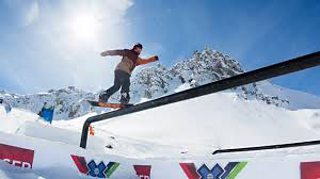
On the slopes there are UK hopes for a record medal haul, a whole new set of emerging, daredevil heroes, the dual spectres of safety and doping, the critical sporting performance of the host nation, and that scary new slopestyle skiing event.
BBC journalists in Salford and London were given an eve-of-games briefing from BBC Russian Service producer Anastasia Uspenskaya, Kyrill Dissanayake of BBC Monitoring and BBC Sports News correspondent Andy Swiss: what to expect, what to question, what to bear in mind and what to look out for from ‘the most expensive Olympics in history’. Here are a few of their insights:
Costs
The Sochi Games are being widely reported as costing more than $50bn, although President Putin and the Russian authorities cite a figure of $6-$7bn. The $50bn claim is supported by evidence released by leading anti-corruption campaigner Alexey Navalny. Other Russian opposition figures estimate $30bn may have gone to corrupt officials.
Uspenskaya was in Sochi late last year: “Putin says the total is $6-$7bn. I spoke to someone who had built a mountain road [for the Olympics] that cost $7bn. In November I was brought to a sanatorium that had been built for the Russian Federal Tax Service, but they were calling it an Olympic venue. They said it was a ‘renovation’ but to me it looked like new build. People there had no answer to my challenge over that.”
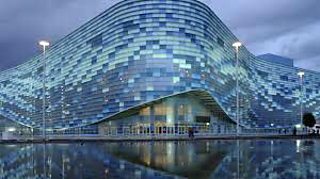
Why would Russia spend so much? The BBC Monitoring expert had no doubt: “Soft power.” The same motivation was probably behind Russia’s hosting of a whole raft of sporting events - some, like the 2013 Rugby Sevens, surprising ones, said Dissanayake. (Others included the 2013 IAAF World Athletics Championships, this year’s first Formula One race in Russia, the upcoming 2018 Fifa World Cup and the 2019 Winter World University Games in Kazan.)
Security
Security fears around Sochi were intense even before December’s suicide bombings in Volgograd (now thought to have been carried out by Islamist militants based in Dagestan). The combined 40,000-strong security force of police and troops deployed since January around Sochi is twice the number mobilised for London 2012. So could the terrorist targets be elsewhere?
“That’s certainly the concern in the Russian media and on social media,” Uspenskaya said.
Dissanayake added: “After Volgograd, the feeling on social media was that the city had been left exposed because so much was focused on Sochi. I’ll be surprised if anything happens at the Olympic venue but not surprised if it does in Moscow or Volgograd.”
Human rights
In terms of the treatment of Sochi residents whose homes or land were required to build the equivalent of a new European city, reported cases fall into two categories, said Uspenskaya. There are those who’ve been ‘relocated’ and offered new houses - many of whom complain they’ve not been compensated nearly enough. A second big group of people have been forced out of their homes, which have then been demolished.
“A woman called Angela brought us to the ruins of a three-storey house that had housed five families. She’d been away from home when the bulldozers arrived. The house was on a hill with panoramic views and close to Putin’s official residence and the best beach. The court decision to demolish was taken in her absence and she’s still fighting for her rights.”
People like Angela have been handed bills of up to 3m roubles (£60,000-£70,000) to cover demolition costs. If they can’t pay their land is confiscated to pay the debt, Uspenskaya said.
Sport
UK Sport has given the British Winter Olympics team a target of between three and seven medals, having won just one gold in 2010. So it could be a record-breaking year - and the Brits in contention are surprisingly good at some surprising events, said Andy Swiss.
His medal hopes and ones to watch included Lizzy Yarnold and Shelley Rudman on skeleton bob (the 100mph ‘tea tray’), short track speed skater Elise Christie, curling’s Eve Muirhead and slopestyle skier James ‘Woodsy’ Woods. The story of disabled athlete Tatyana McFadden - abandoned in a Russian orphanage and adopted by a US family - is bound to captivate Sochi watchers, said Swiss, who also tipped visually impaired UK skier Kelly Gallagher for gold.
In the wake of Michael Schumacher’s skiing accident and the death of Georgian luge competitor Nodar Kumaritashvili at the 2010 Games, safety will be centre stage, as will doping, Swiss said: “There was no major scandal last time but Russia has a poor doping record.” Any positive testing close to home would be a “disaster” for the host nation.
Would BBC reporting of issues like corruption allegations and gay protests have any impact on the BBC’s reporting of the Games in Sochi? “Once you’re inside the Olympic venues it’s something of an unreal world,” Swiss said. “Once we’re there I don’t think we’ll notice any difference.”
