
What do you know about cholera?
The cholera outbreak in Nigeria has so far led to the deaths of more than 300 people with a further 6,000 cases reported in the past three months.
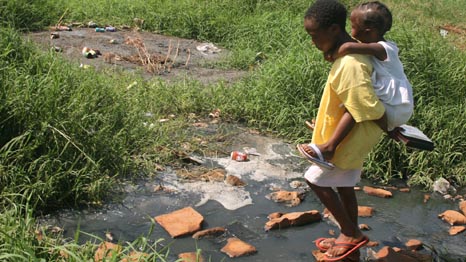 Health authorities say the epidemic could threaten the entire country and doctors are monitoring outbreaks in 12 of Nigeria's 36 states.
The spread of the disease is being blamed on heavy seasonal rains and the scarcity of clean water and proper sanitation, outbreaks have also been reported in Cameroon, Niger and Kenya.
In an Africa Have Your Say health special, we're asking, how much do you know about cholera and how it is spread? Are deaths preventable and if so how? Can cholera be eradicated?
If you would like to debate this topic LIVE on air on Wednesday 1 September at 1600 GMT, please include a telephone number. It will not be published.


Comment number 1.
At 03:06 1st Sep 2010, George Oyeho wrote:Cholera or no cholera, the subject of water and sanitation in Africa and other developing world is a hazard. The dreams and strategic plans with all donor aids allegedly intended to fund water and sanitation has been erased out of citizens' mind. Promise upon promise on water and sanitation, and electrification are lost dreams to the masses. So, I want to say that the politicians and governments have failed in their social contract with the electorates. Planned and controlled developments from the top seem to have faled and it is time we rethink of direct community investment to allow the villages to make choice and direct their development with support of all the stakeholders. But we may want to first build capacity and infrastructure at the villages to enable them take the task through partnership and shared responsibility.
Complain about this comment (Comment number 1)
Comment number 2.
At 11:03 1st Sep 2010, Israel Ambe Ayongwa wrote:From what I understand, millions of dollars are disbursed by the Global Fund for health to African countries to cater for outbreaks like this. But what happens to all these funds and how they are used remains a mystery because outbreaks occur, we are always caught wanting in terms of infrastructure, medical personnel and medication. I daresay it all boils down to how funds are appropriated.
Complain about this comment (Comment number 2)
Comment number 3.
At 13:53 1st Sep 2010, Adams wrote:Of cuase cholera is a preventive disease, we know this is a water born disease from dirty conterminated water. If we can provide clean drinking water to the population and educate the population about the risk of cholera outbreak we can surely prevent it.
It is the duty of any goverment and all the primary health provider to prevent, educate and contain cholera when it breaks out.
Complain about this comment (Comment number 3)
Comment number 4.
At 14:50 1st Sep 2010, SJP2008 wrote:Cholera is preventative but when developing countries are forced by the DONORS to privatize their water, it becomes too expensive. Water is not a commodity, it is a Human Right. There was a Cholera outbreak in the UK some years ago after the water had been provatized, and yes people died there too. It is the duty of all African Countries to provide clean and free water. It is the duty of all donors to respect Human Rights. We need to follow Bolivia, where the water was privatized but the Civil Society protested and succeeded.
Complain about this comment (Comment number 4)
Comment number 5.
At 16:00 1st Sep 2010, sulaimon wrote:[Personal details removed by Moderator]Cholera is preventable only when people have assess to clean water and take personal and environmental hygiene serious. The bacteria that cause the disease thrive well in dirty environments.
Again, governments need to educate the people especially those in the rural communities on the disease and how to prevent its spread. In addition, the governments should also educate the people on first aid approach when the disease surfaces.
Death can be prevented to a high degree when victims are given first aid attention such as giving them ORAL REHYDRATION THERAPY ( a solution of salt and sugar in appropriate quantities) and seeking medical treatment afterwards without delay. This helps in reducing further loss of water in the body through watery stooling and vomitting. It will also help restore lost nutrients before treatment comes.
The disease can be eradicated when all favourable conditions that can trigger it are addressed. Goverment should provide clean drinking water to the people and put medical infrastructure in place to attend to emergencies. Personal hygiene and environmental hygiene should also be maintained by the people as well.
From Sulaimon Alamutu, Lagos, Nigeria.
Complain about this comment (Comment number 5)
Comment number 6.
At 13:47 2nd Sep 2010, 70667 wrote:In the slams of Kampala, and some outskirts which marginally escape the name 'slam', cholera is a disaster which has the luxury to chose when it wants to strike.
Year-in year-out (usually after an outbreak), nothing remarkable is done to address the root causes of the disease. We all know we need properly designed toilets in every home; well planned water delivery systems; enforcement of proper settlements, but nothing is done about it.
Part blame also lies with the under privileged of our communities for failing to observe some basic family hygiene practices; outbreaks usually start from their neighborhoods.
Complain about this comment (Comment number 6)
Comment number 7.
At 19:31 2nd Sep 2010, Nwoye Igweagu wrote:The posible outbrake will offer our government ministers another opportunity of making millions if not billion of dollar and euro from international bodies who will send money to help safe the situation. And as usual the money will be spent on luxury vehicles and mansions by our officials.Another easy way of making wealth which our ministers must not allow to pass by.
Complain about this comment (Comment number 7)
Comment number 8.
At 09:29 3rd Sep 2010, senesie kamara wrote:dear bbc,cholera is a deadly disease that has been killing us here in africa,for the pass decade,weather you are an adult or not,infact,is even worse when children incounter this disease,our problem here is,our authories,they have to do something,by making sure that our water should be well taken care of,thats the only way cholera will be reduce in our communitys.
Complain about this comment (Comment number 8)
Comment number 9.
At 15:50 3rd Sep 2010, Ebenezer wrote:" Cholera can be simply and successfully treated by immediate replacement of the fluid and salts lost through diarrhea. Patients can be treated with oral rehydration solution, a prepackaged mixture of sugar and salts to be mixed with water and drunk in large amounts. This solution is used throughout the world to treat diarrhea. Severe cases also require intravenous fluid replacement. With prompt rehydration, fewer than 1% of cholera patients die.
" Antibiotics shorten the course and diminish the severity of the illness, but they are not as important as rehydration. Persons who develop severe diarrhea and vomiting in countries where cholera occurs should seek medical attention promptly."
"What is cholera?
Cholera is an acute, diarrheal illness caused by infection of the intestine with the bacterium Vibrio cholerae. The infection is often mild or without symptoms, but sometimes it can be severe. Approximately one in 20 infected persons has severe disease characterized by profuse watery diarrhea, vomiting, and leg cramps. In these persons, rapid loss of body fluids leads to dehydration and shock. Without treatment, death can occur within hours.[Personal details removed by Moderator]
Complain about this comment (Comment number 9)
Comment number 10.
At 16:32 6th Sep 2010, muhammed lamin hydara wrote:African presidents should stop spending there wealth on politics and provide people with clean and save drinking water should be there top most priority in other societal benefit is better off.
Complain about this comment (Comment number 10)
Comment number 11.
At 16:47 6th Sep 2010, muhammed lamin hydara wrote:This comment was removed because the moderators found it broke the house rules. Explain.
Complain about this comment (Comment number 11)