
What is at stake in the Tunisian elections?
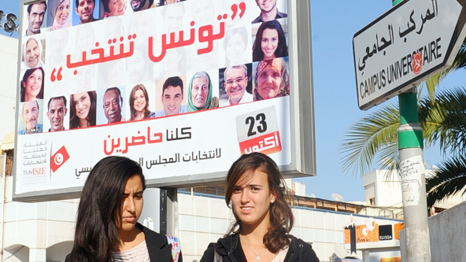
Tunisians will go to the polls on Sunday to vote in their first elections since the ousting of former President Zine el-Abedine Ben Ali in January.
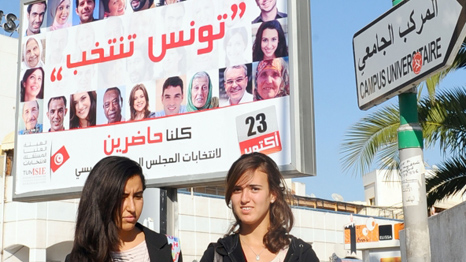
Tunisia is where the Arab Spring began and the vote for a constitutional assembly is being watched closely by other nations like Egypt and Libya.
Events in Tunisia also inspired protest movements across sub-Saharan Africa, including those in Uganda, Malawi and Senegal.
How did the toppling of one president change things for the rest of the continent?
Did events in Tunisia change the way Africans see the act of protesting? Were you inspired by events in Tunisia?
What, if anything, can other countries learn from Tunisia's example?
If you would like to debate this topic LIVE on air on Wednesday 19 October at 1600 GMT, please include a telephone number. It will not be published.


Comment number 1.
At 16:52 19th Oct 2011, Mzee Freddie wrote:The changes in Tunisia have not had a uniform impact in the way Africans see the act of protesting. Much as there is lack of democracy across the continent, the extent for North Africa is in a class of its own. There are countries that are accomodative, and have taken significant steps towards democracy on the continent. For these the impact of the events was insignificant
Complain about this comment (Comment number 1)
Comment number 2.
At 23:19 19th Oct 2011, Joey A wrote:The people seem to learn but those in power do not.
Complain about this comment (Comment number 2)
Comment number 3.
At 00:07 20th Oct 2011, yemti ndienla wrote:like their protest in january which inspired other protest movements around the world, Tuniaians should show scence of maturity and vote in peace to show the world that the problems in their country were not caused by Tunisians but their outsed leader Zine el-Abedine Ben Ali
Complain about this comment (Comment number 3)
Comment number 4.
At 01:09 22nd Oct 2011, yaamako wrote:Freedom to exercise the right to choice is at stake here!
Complain about this comment (Comment number 4)
Comment number 5.
At 07:55 23rd Oct 2011, Hiruu wrote:The countries of North Africa and Sub-Sahara Africa have very little in commen, so I'm not sure this is applicable in much, other than as with the Occupy Wallstreet protest, there is a global push for better governments. The one country in the region, who worked with Africa, Libya, is going fundamentalist pretty soon.
Complain about this comment (Comment number 5)
Comment number 6.
At 19:02 23rd Oct 2011, Tayo Olayiwola wrote:This is great opportunity for Tunisian to start from the start. It is an opportunity to institutionalize rule law and empower women. Tunisia initiate Arab Spring Revolt they should demonstrate further to Arab world and Africa that they are ready to lead the continent into new era. I wish them a successive conduct of the elections.
Complain about this comment (Comment number 6)
Comment number 7.
At 19:59 25th Oct 2011, Artur Freitas wrote:The benefit to the whole continent has been to see that dictators can be defeated and free and fair elections can work in Africa.
Complain about this comment (Comment number 7)
Comment number 8.
At 02:25 26th Oct 2011, Makonnen wrote:The driving force for the Arab Spring is the unemployed Educated Young and this is what is stake for which other African leaders should learn. The Era of leadership Now is to Serve and Not to be Served
Complain about this comment (Comment number 8)
Comment number 9.
At 10:47 26th Oct 2011, Tadzeadamu wrote:The BBC team did not ask anything about Cameroon elections . You did not care. Did you?
Complain about this comment (Comment number 9)