
Don’t ask me why, but I had the sudden thought: Strictly will happen again next year. And the year after. And the year after that, even unto the next Labour government, even beyond the year they celebrate the 50th anniversary of HS2 and people ask, “What exactly was Bake-Off?”
Strictly Come Dancing will outlive me, and you. It might actually outlive the BBC itself.
It is that powerful a product.
Yes, I thought, compared to the might of Strictly, we are all just flashes in the eye of time. And I imagined myself, as a current contestant, giving advice to those who follow me onto the show, perhaps people not yet born.
So eight thoughts follow, aimed at some future person wondering whether to take up the offer of a place.
1. Strictly is the biggest show the BBC has ever created.
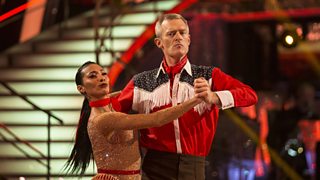
After my first foray onto that famous floor, where my meticulously-rehearsed cha-cha-cha turned into a passable impression of a man rushing down the stairs in a blazing house, I emerged shell-shocked and saw the Olympian Iwan Thomas. “That,” I said, “was bigger than doing the first ten minutes of the general election programme.”
The decorated sprinter replied, “No, it was even bigger. It was bigger than an Olympic final.”
A week later he was run out of town, and we watched him disappear in our fake tans and false eyelashes with the blood cooling in our veins.
So do not say yes to Strictly if you have a nervous condition or are scared by an audience thirty times louder than any starter pistol.
2. Wait. Strictly is bigger than Morecambe and Wise?
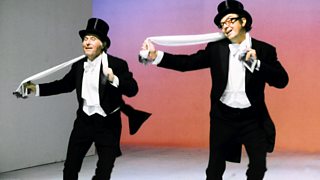
Ernie Wise and Eric Morecambe
Indeed so. Eric and Ernie had 22 million viewers but the environment was less competitive. There was no YouTube, no Netflix. Two other channels instead of two hundred. Morecambe and Wise were also not sold to 53 other countries from Finland to Kazakhstan. Four years ago President Obama rescheduled a speech on Libya to avoid clashing with the American Strictly. I don’t recall Nixon doing that for Eric and Ernie.
3. When you join Strictly, you become a celebrity.
Get used to this and do not resist it. I’m afraid I wasted a few weeks determined to remain a journalist and not a star. On my first visit to the Elstree studios, I asked a stout woman in a security uniform where I could get something to eat.
She pointed to the white marquee attached to the back of the Strictly set. “Sir, that is the star bar for the celebrities.”
“Right,” I said, assuming she was in the habit of imparting irrelevant information to strangers. “And what about me? Where do I go?”
I simply had not understood that, after 27 years of news broadcasting, a person could be elevated to a household name simply by being publicly abused by Craig Revel-Horwood for dad-dancing.
Enjoy it when it happens.
4. This will be the closest you get to understanding politics.
Anyone who watches the show can see that it is not a purely technical contest. The judges score on ability, but the audience vote with their hearts.
However, it is very hard to work out where the two intersect. For example, in 2014 Dave “Hairy Biker” Myers stormed along as the loveable amateur for weeks until the viewers decided he was unfairly taking the place of more competent dancers and pulled the plug on him. Similarly, the über-cool Pixie Lott was the finest dancer of her year but somehow failed to connect with the audience and was brutally defenestrated. Gabby Logan was voted out early when she drifted into view at the back of a camera shot doing stretching exercises, which gave the off-putting subliminal message: “I am taking this very seriously.”
So the programme combines the votes of the judges and the audience to see who wins. And that complicated space between being technically effective, and being liked is where politicians operate every single hour of the day. I wish I could define it better, but the joy of it is that I can’t.
Probably the best way to sum the issue up is this: the programme is not judging you on what you do. It is judging you on who you are.
5. You will make friends for life.
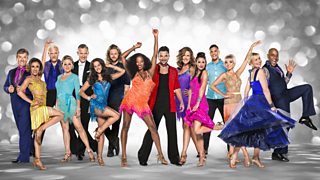
Friends for life - Strictly's class of 2015
The camaraderie between the celebs is akin to a hostage situation. After a few weeks on the show I realised that I have exchanged hugs with (for example) Katie Derham and Peter Andre that express more than any perfumed letter or lovers’ argument. In a condition that seems to mirror Stockholm Syndrome, I have grown an unrequited adoration for Craig Revel-Horwood as I watch the sheer speed of his executions. “As for your hands,” he told one hapless celeb, “they were spatulistic.”
The night Jay McGuiness danced that incredible jive from Pulp Fiction he wandered into the costume room and was surrounded by me, Daniel O’Donnell and Ainsley Harriott. We understood what he had done because we knew, from our own experience, that the impact of the live dancefloor will flush 30% of your technique on the spot. So we congratulated the star of The Wanted with pats on the back and heartfelt sincerity.
Something powerful passed between us. Jay said in nothing in reply. He simply turned and walked out of the room. As he left I realised he was crying.
There is an allowable amount of luvvie behaviour: even the most tragic effort will be described as brilliant by your fellow contestants when you get back to the balcony, because we all have the reflex to spread encouragement. But before you say, “It’s not life or death, why would you feel any of this so strongly?” be aware of what the question says about you. Dancing is more than dancing. It is about baring the soul through the body. A person who does that and is rejected suffers a mortal wound.
6. You will hurt.
In the third week, I discovered the muscle that runs from my calf, under my left ankle, into the base of my foot. I have never previously heard of the peroneus brevis, but after fifty years of unstinting service it made its presence felt in the most excruciating way by going on strike against the Charleston, the madcap 1930s dance which involves a slicing in-and-out heel motion. My ankle swelled up. I took anti-inflammatories and had it taped; it swelled down. Next I launched into the jive (left foot on tiptoe; kick twice with your right toe pointed; try to hit right heel on buttock; replace right foot behind the left, all in half a second) and within fifteen kicks had torn something at the back of my right thigh. Like I say, you will hurt.
Get used to it.
7. Your children will despair.
So you want to dance because you have two young daughters? Think again. The initial excitement of “my dad’s on Strictly”, is quickly replaced by the realisation: he’s a bit of a muppet, really, isn’t he?
After my first dance a woman who had sat next to my brother in the studio confided, “I think Tim really enjoyed it. He was laughing all the way through.”
My young daughters are certainly enjoying watching their father, but only in the way you enjoy watching a distant tornado tear the roofs off houses. Part of what keeps them captivated is the sense that I might spin off the stage while carrying my dance partner above my head. Strictly drives them behind the sofa in a way that no episode of Doctor Who can. And because, like political careers, the contest nearly always ends in tears, I can’t see how we end up in credit after all this.
8. You will lose yourself, and find yourself, simultaneously.

Jeremy with dance partner Karen Clifton
This is the biggest one. You have not entered the contest because your attitude is "Whatev," you have entered to better yourself and maybe even to win. Straightaway you discover that there are dancers you will never beat, so you are left with the simple aim of self-improvement. But the process begins with destruction.
No one learns to play the piano without first acknowledging that they cannot play. I had to put myself in the hands of Karen Clifton, my pro dance partner, and tell her to save me. She replied that she could keep me in the contest if I did exactly what she said. It led to a bizarre argument after a studio rehearsal for dance two, where she said I had thrown my footwork by winking at a camera. "You don't wink unless I tell you to," she told me.
Which is when I understood why they call it Strictly.
Jeremy Vine is a presenter on BBC Radio 2 and Strictly Come Dancing contestant.
- Week 8's Strictly Come Dancing contest will be broadcast on BBC One, on Sat 14 Nov at 6.50pm, with the results show on Sun 15 Nov at 7.20pm, and will also be available on iPlayer
- Keep up to date with the dancers progress in It Takes Two on BBC Two, Mon-Thu 6pm, Fri 6.30pm
- Take a look behind the scenes at Elstree on the Strictly Come Dancing website
- Read Christopher Nundy's blog about filming Strictly Come Dancing in 360 degrees
