I was disappointed when I read an article in the Daily Telegraph on Tuesday this week describing the BBC's television arts output as, variously, ‘unimaginative' and 'middle brow'.
Rupert Christiansen's article focused in on the current run of BBC One's Imagine, which has so far featured two critically acclaimed documentaries with leading British artists - Howard Jacobson and Antony Gormley. The latter was described elsewhere in The Daily Telegraph as the BBC 'at its cerebral best'. The third and no less acclaimed film in the current season, My Curious Documentary, went out on Tuesday night and follows the stage adaptation of The Curious Incident on the Dog in the Night-Time, focusing on the research around children and autism that informed the production.
The article also talks about an 'erosion' of the BBC Proms this year, which is plain wrong. The BBC broadcast the same number of Proms as in previous years on radio and television. And let's not forget: who else but the BBC would host the biggest broadcast festival of classical music in the world, with television coverage on Thursday, Friday, Saturday and Sunday nights for eight weeks, and every Prom live on Radio 3?
I think what Rupert Christiansen means by 'middle brow' is our commitment to putting the arts in the mainstream - after all, there are few countries in the world where intelligent profiles of living heavyweight writers and artists feature on the nation's most popular television channel. This is true also of Simon Schama's brilliant series The Face of Britain, which recently concluded on primetime BBC Two – and is still available on iPlayer. And also of our single play The Dresser, starring Sir Ian McKellen and Sir Anthony Hopkins, which went out on BBC Two last week.
But these mainstream productions are just one element of a much more rounded arts commitment at the BBC. Over the last three weeks, Artsnight on BBC Two has seen Lynn Barber interviewing conceptual artist Marina Abramovic, Josie Rourke (artistic director of the Donmar Warehouse) talking to Abi Morgan and Erin Brockovich about the hero in popular culture, and George the Poet delivered an entire episode in verse, focusing on black talent.
Meanwhile, on BBC Four, BalletBoyz took us behind the scenes of the world of contemporary dance and their own practice in a new documentary. And last Monday night, John Cooper Clark delivered an essay on de Quincey's Confessions of an Opium Eater. We've also just released one of our most innovative and experimental projects - a feature length archive film entitled Fear Itself by young filmmaker Charlie Lyne - as a special commission on iPlayer.
Only last month, our poetry season - Contains Strong Language - had at its heart a terrific profile of Ted Hughes, featuring a great deal of 'original research', and which, in bygone days, would have been a central film in any run of Monitor or Omnibus. As, indeed, would AN Wilson's Return to Larkinland - a thoughtful and provocative re-assessment of a major poet by a major living writer.
The Dresser, incidentally, is just the flagship of our much broader On Stage season. This Monday, the BBC English Regions put out eleven documentaries simultaneously on BBC One, celebrating the everyday heroism and challenges of regional theatres across England - from Liverpool Everyman to The Curve in Leicester. It was a huge and coordinated push from teams across the country, but the result was that over three million people watched a documentary about a theatre close to them. Who else but the BBC could and would do something on this scale? And, something we've never tried before, a series of one-act plays from innovative, independent theatre companies - including Gecko and Common Wealth - will go out Live From Television Centre on BBC Four this coming Sunday. These plays aren't 'middle brow': they're about the experiences of teenage Muslim boxers or what it's like to go on stage with Tourettes Syndrome. 'Unimaginative? Tell that to the directors, writers, actors and technicians who are rehearsing with white-knuckle intensity as I write.
I've only touched the edges. This week Clara Amfo is authoring Artsnight, Dominic Sandbrook is continuing his BBC Two series on British culture since the Second World War, and David Hare is in conversation with Mark Lawson on BBC Four. Look at the television schedules from the 1960s or 1970s and I think you'd be hard-pushed to find a month featuring such a range of imaginative and fascinating arts programming - both mainstream and eclectic - as this last one.
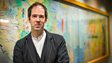
Jonty Claypole is Director of BBC Arts.
- Keep up to date with the corporation's Arts coverage on the BBC Arts website
- Follow BBC Arts on twitter
- Like BBC Arts on Facebook
- Read Jonty's blog 'Our plans to celebrate Shakespeare's life and works
