
5 Live and Match of the Day football commentator Conor McNamara covered two FA Cup 3rd Round matches last weekend. In this post he explains how he goes about enhancing the listener's experience of 'the beautiful game' using the camera on his phone, its microphone and social media.
The job of a football commentator is to paint a picture for those who are not at the event. As a commentator, I want the audience to feel the atmosphere and visualise the play in their own heads. So, making use of social media, I like to complement the words I say on air with photographs from the games I commentate on. There are a few reasons for this.
The photos prove that you are really there - they provide credibility. It sounds obvious, but we live in an age where many broadcasters add on their commentary while sat in a studio somewhere. I feel that showing visual proof that you are at the event helps build the listeners trust in you. They can see that you have a very clear view of what is going on. The audience can trust that you are conveying the real experience.
We are very privileged in BBC Sport to be granted access to many places the public does not get to see: tunnels in football stadiums; training grounds; interviews with the players. Photos on social media help to share this personal insight - they give behind the scenes access.
I believe that social media has become the "Radio Times of our generation". There are so many choices out there for the audience, how do we ensure they know about our coverage? By posting photographs from sporting arenas we remind people about of our coverage of it and where they can find it. Insodoing, we signpost our coverage.
Working for BBC Radio 5 Live and Match Of The Day, I’m lucky enough to attend Premier League matches every week. It is arguably the best league in the world. However, without hesitation I would name The FA Cup 3rd round as my favourite weekend of the football calendar.
The attraction is the imbalance: The professional superstars against those further down the football chain. Sometimes it’s teams made up of players who do ‘real’ jobs during the week. The prospect of elite millionaire footballers up against butchers, bakers and candlestick makers is what entices us all back every year for the 3rd round.
It’s often about redemption. Footballers who were let go as youngsters by top flight teams getting a chance to show they could have made it in the big leagues. The bounce of a ball, a gust of wind, a slice of luck… They’ll take whatever they can if it means the chance of beating one of the big boys.
Our job in BBC Sport is to convey this excitement and genuine drama. This year my two games over FA Cup 3rd round weekend saw brave efforts by Sheffield Wednesday and AFC Wimbledon, even if ultimately they failed to overcome illustrious opponents.
Of course, lightning will not always strike, but that does not take away the cup’s magic. Sheffield Wednesday took the lead away from home at Manchester City, and held that lead for almost an hour, before the class of the Premier League Champions finally told.
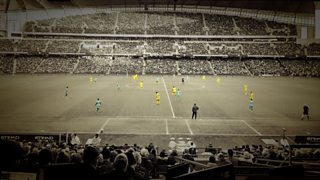
Sheffield Wednesday (in yellow) against the might of Manchester City
As a club, Sheffield Wednesday are no minnows. Their players are full time professionals, but the gulf in class compared to the billionaires of Manchester City was illustrated just a few months ago when Sheffield Wednesday lost 7-0 to City in the League Cup.
My first photograph was taken while the visitors were still in the lead. I like how the stands look huge, an indicator of the might they were up against. And yet, the winning goal for Manchester City did not come until the very last minute of the game.
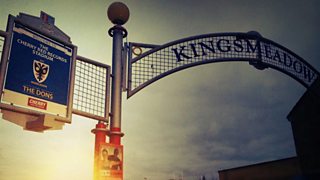
Arriving at Kingsmeadow Stadium – Twenty times fewer seats than Liverpool’s Anfield Stadium
My commentary on Monday night featured a far greater gulf in talent. Three Divisions and over 70 league places separated AFC Wimbledon and Liverpool. Also thrown in the mix was the FA Cup history between the sides. The Old Wimbledon famously beat Liverpool in the 1988 final.
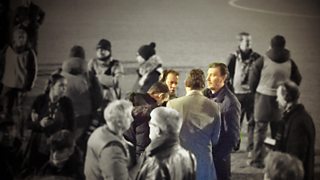
Mark Pougatch interviewing Dave Beasant, Lawrie Sanchez and Martin Keown on the pitch
My third photograph shows our presenter Mark Pougatch on the pitch before kick-off, interviewing Wimbledon’s two main heroes of 1988: Dave Beasant, who saved the penalty that day, and winning goalscorer Lawrie Sanchez.
I’m often asked about the colour reduction style I use in these photos. I’m not a proper photographer, I don’t use a proper camera. These images were all taken on my phone.
The trouble with photos taken on phones is that you don’t have the ability to zoom-in like the professional snappers. In order to attract the eye to the part of the photo I’m focusing on, I leave that area in colour, and washout everything else in black and white.
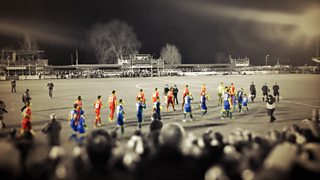
Wimbledon and Liverpool players walking out
Commentating on a game of football is the fun part of this job. The “work” part is the preparation and homework you must do in advance.
Here are my notes from the AFC Wimbledon v Liverpool game:

This system is heavily influenced by the football stickers I used to collect in my youth. I use stickers because we don’t get confirmed team line-ups until one hour before kick-off. Instead of having to write out the teams in their formations, I can simply stick the players’ details down on my sheet in the positions that they will play. If a substitute comes on during play I simply stick him over the player he has replaced.
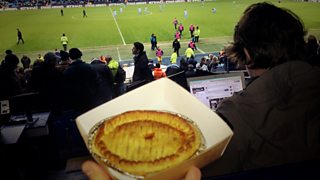
My new years’ resolution to ease off eating pies at football games lasted all of four days. I succumbed during half time in the Manchester City v Sheffield Wednesday game.
Conor McNamara is a commentator for BBC Radio 5 live
- Listen to Conor commentating the FA Cup third round replay between West Ham v Everton on Tuesday 13th January, Radio 5 live, starting at 19.45 kick-off
- Find out more about the FA Cup action with BBC Sport.
- Discover more about sports journalism on the BBC Academy website.
- Follow Conor McNamara on Twitter.
