
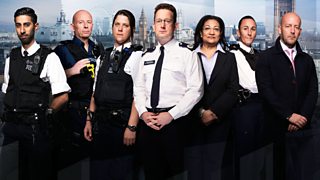
Back in July 2013 BBC Studios’ Documentary Unit gained unprecedented access to The Metropolitan Police - Britain’s largest busiest police service. It was the first time they'd let the cameras in to make an observational documentary series. Now, in its second series the team take another look at the scale of different police units across London. Filmed over a year, the team go behind the scenes of police work, giving viewers an in-depth look at how the Met works.
The Met: Policing Londonfollows officers of Britain’s biggest and busiest police service as they deal with life, death, crime and its victims, all across the capital. We wanted to make a second series, as there were many areas of The Met and London that we hadn’t seen in the first one. It had been a huge success for BBC One, both critically and as a ratings hit. Feedback from our audience showed that they felt they’d had an opportunity to see this massive and sometimes hard to penetrate organisation in a more human way.
Although we had done it once, it didn’t make it any easier to make a second series! We wanted to replicate the feeling of breadth and scale, capturing the enormity of what the police do every day across the city, but it was important to try and look at some different areas of policing and London. So access conversations had to start from scratch again so we could meet new officers and take our audience to other parts of London we hadn’t been in before.
We were very lucky to have an incredibly committed production team who worked for over a year and a half to make this series.
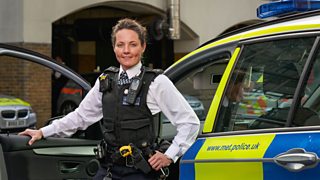
One of the officers featured in 'The Met - Policing London' - PC Paris Smith
A big part of police work is responding to the thousands of 999 calls they receive a day. This time, we followed officers from Newham, Hackney and Westminster as they dealt with anything from multiple stabbings to an argument over a car parking space. Part of the challenge for the police and us, was never knowing what you were going to find, until you turned up at the scene of the call. Seeing officers dealing with people in a crisis or just trying to establish what was going on was always interesting and sometimes darkly funny.
One of the new units we worked with for this series was the Sexual Offences Unit, who deal with and serious sexual assault. It was important for us to include these crimes as they are incredibly serious and the victims have to live with the ordeal and humiliation for the rest of their lives. They’re also very difficult and sensitive crimes for the detectives to deal with and conviction rates are low.
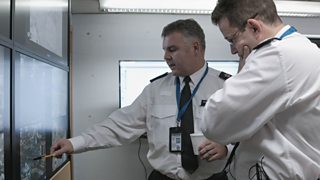
Jim Read and Commander, BJ Harrington in episode 4
We also looked at London’s busiest custody suite in Brixton. The team spent countless nightshifts in the unpredictable and at times, chaotic environment to capture the relationship between custody sergeants and their detainees.
On one hand, filming was easier as the police understood what we were trying to achieve and we had support from people who’d been involved in the first series. But at times it was still difficult to find people on the ground, who wanted to be filmed. The terror threat means many police officers don’t want to draw attention to themselves by appearing on television.
One of the most astounding stories we covered was a case that can’t be shown in the series, due to reporting restrictions. It involved a child who hadn’t been seen for 10 years and his remains were found in a shed in his mother’s garden. His mother was arrested and we followed Homicide detective who worked for days to try and understand what had happened.
We were shocked at the number of teenagers and young adults carrying knives and how everyday it is for police to attend to stabbings in some boroughs. We found it depressing at times at the lack of cooperation between the police and the victims, due to fear of reprisals and a lack of faith in the justice system.
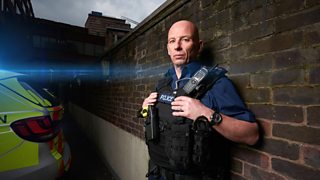
Firearms Officer Derek
We were also with Firearms Officers when they carried out an armed stop, a controversial tactic used as a final attempt to stop a car when they think there’s a gun in it. It’s a tactic that’s gone wrong in the past and a cause of much distrust between the police and some communities.
Making any police series means you have to work within the constraints and timescales of the justice system and sometimes this can mean that your stories don’t make it to air in time. Frustratingly, we lost some of our favorite and most important stories because of this.
The stories of crime may be ones that tap into our deepest fears and at times show the worst of humanity, but there are social issues at the heart of most of them and we hope these narratives have the power to change things for the better.
Shona Thompson is the series producer of 'The Met - Policing London'.
- 'The Met - Policing London' is broadcast on Wednesdays at 9pm on BBC One with previous episodes available to watch on BBC iPlayer
