
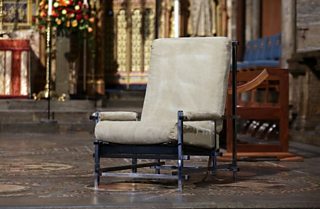
The sun shone brightly from a bright blue sky in Parliament Square today. Crowds converged on Westminster Abbey, necks craned to get a glimpse of familiar faces filing past.
Ronnie Corbett, who died last year at the age of 85 from motor neurone disease, drew friends and colleagues from across the entertainment industry, intent on celebrating his lifelong career.
Parliament Square buzzed with activity, the buildings surrounding it beamed in the reflected glow of the sunshine. We were all out for Ronnie.
“What’s your connection to Ronnie?” whispered the lady next to me.
I explained that I didn’t know him. I was writing something about the event. Normally I would have felt apologetic about my presence. This time around, I felt a valid part of proceedings.
That comes from Corbett’s mastery as a comic actor. As a kid he made life seem manageable. Corbett playing Timothy Lumsden in Sorry! didn’t so much outwit his outwit his overbearing mother with youthful subterfuge and chutzpah, as triumph over her by default with hope, grim determination and bittersweet optimism.
BBC sitcom Sorry! – Corbett’s post-Two Ronnies sitcom was an unorthodox proposition. A comparatively edgy proposition. Was Ronnie Corbett taking a risk with Sorry!? I need to watch it again to be sure.
What the memorial service highlighted was exactly the man I assumed he was all his life.
We don’t laugh at Corbett (or his comedy partner Ronnie Barker) because of nostalgia. If that was the reason we’d laugh because we mourned the passing of a comic tradition. We laugh instead at Corbett’s masterful self-deprecation.
A man who can laugh at himself has enviable self-awareness. Someone who has that self-deprecation at the heart of his public persona is a strategic thinker. That Corbett had the talent to deliver the finished product so effortlessly made him all the more endearing.
Little wonder Jim Moir, former BBC Head of Light Entertainment (1987-1993) had this to say of Corbett. “Ronnie was gifted with a sharp editorial mind. He was the comedy alchemist who lifted the words from the page and transformed them into golden comedy laughter.”
It was Corbett’s monologues which I enjoyed the most. His delivery – perched on the edge of a seemingly oversized chair – paid due deference to the meandering and beguiling scripts written for him, whilst reserving just enough space on the seat for his personality. A tricky balancing act for most, effortless for people like him.
That touching Corbett spirit – the likes of Toksvig, Norton, and Clary are the present-day exponents – is down to the man’s love of story. His monologues validated those of us for whom detail is all-important.
The opportunity to indulge in the joys of such an intimate personality was a rare treat. Escaping to Ronnie Corbett’s world should be prescribed as an antidote to the trials and tribulations of the present day.
Jon Jacob is Editor, About the BBC Blog
- Remember Ronnie Corbett in a series of pictures illustrating his work at the BBC.
