http://www.bbc.co.uk/blogs/aboutthebbc/morecombewise_xmas1977.jpg
Christmas is a very important time of year for BBC television. It's not that everybody suddenly watches loads more television (on average only 20 minutes more per day than the usual four hours per day in winter) - it's that people look to the BBC to offer something special and the number of people watching BBC One soars.
2009 was no different - BBC One's share of Christmas Day viewing in peak hours (that's the percentage of viewers watching the channel between 6pm and 10.30pm) averaged nearly 40%, by far the highest of any broadcaster. The biggest audience of the day was for EastEnders (10.9 million), followed by The Royle Family (10.2 million) and Doctor Who (10 million). Gavin & Stacey (8.7 million) and The Gruffalo (8.8 million) also had strong audiences. It's also not just a BBC One story any more for the BBC - BBC Three and BBC Four both had their best ever Christmases in terms of audience share this year.
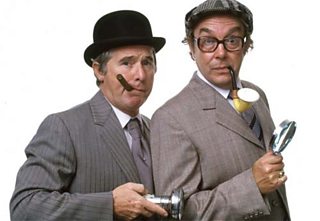
You may have read in the press that people aren't watching as much television at Christmas as they used to, but the figures don't back that up. Although numbers for individual programmes are far below those of the seventies and eighties (when 29 million watched Morecambe and Wise's Christmas Show in 1977 and when in 1986 a double showing of EastEnders where Den gave Angie divorce papers had a combined audience of 30 million), this is a result of much wider choice, rather than people turning away from television altogether. Remember, back in 1977 there were only three channels to choose from, today there are hundreds. And if you missed a broadcast then, there were no catch-up services.
If you look at the average live audience to TV over the whole festive period, audiences have been remarkably steady over the past 10 years, and on Christmas Day itself they have actually grown in recent years after a period of mild decline. What makes this truly remarkable is that this is in the face of an increased capacity to timeshift programmes through personal video recorders, on-demand services such as iPlayer, ITVplayer and 4oD, narrative repeats and catch-up channels. If we add this extra viewing into the figures for the Christmas Day EastEnders, for example, nearly 800,000 watched the episode from a recording, a further 800,000 watched it on BBC Three and nearly half a million requested it on iPlayer - making the total audience closer to 13 million, before we even get to the omnibus edition later in the week. This isn't just a Christmas phenomenon - the impact of viewing beyond the first showing is increasingly crucial to tell the whole story.
To further underline this change in behaviour, this Christmas iPlayer had its biggest week ever. There were over 17 million requests to view TV programmes on iPlayer in the week starting 28 December (a huge 2 million more than the previous high) and a new daily record on 1 January 2010 of 2.8 million requests. The most requested programmes on iPlayer over the festive season included the Top Gear special, Doctor Who, Gavin & Stacey, EastEnders and the family comedy Outnumbered. And with the continued growth of on-demand television, to the television set as well as the PC, there's no reason to expect this record to last very long.
All this makes me think that the public haven't yet fallen out of love with TV at Christmas. While the way we watch it may evolve and fragment, and those big peaktime shared moments do get a little smaller each year, as long as there are programmes we really want to watch we will find a way to watch them sometime and somehow.
David Bunker is Head of Audience Research, BBC Vision

