
Looking ahead to the next prime ministerial debates
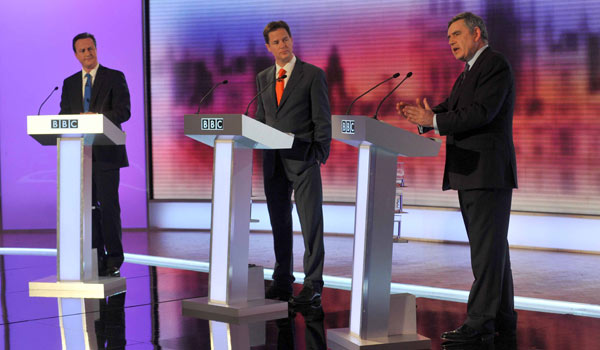 More than 22m people watched any of the three prime ministerial debates that took place in the run up to the election. It's hard to tell what kind of impact the debates had on voting behaviour - voter turnout was up on 2005 from 61.4% in 2005 to 65.1% - but it is clear that the debates engaged viewers.
The success of the debates at this election makes them a very likely feature at the next, so we asked viewers what they thought of the debates.
The key themes that came back were a desire for more grilling of the leaders and a greater degree of audience participation. Many said that they wanted the moderator to be able to respond once the leaders had spoken.
The rigidity of the debate was a slight bugbear for audiences. Just a third thought the programmes were spontaneous or that there were surprising elements in the debate and a significant minority felt the staged responses and tight rules were a weakness of the debate.
Of course the rules of the debate aren't just for the broadcasters to decide - the parties themselves heavily influence this - but we will feed these views into discussions next time round.
Luba Kassova is Head of Audiences, Journalism

Comment number 1.
At 17:14 28th May 2010, woodnorton wrote:My biggest criticism of these debates is that they replaced the Question Time with each individual leader on his or her own in front of the Question Time audience. I think we saw much more democracy when Tony Blair was obviously unaware of difficulties in making GP appointments.
Complain about this comment (Comment number 1)
Comment number 2.
At 23:21 28th May 2010, lucas42 wrote:I found that the format for the Scottish leaders' debates worked a lot better than the prime ministerial ones. The moderator could grill the leaders and the audience could respond.
However, one problem with loosening the rules for the prime ministerial debates is potential for a loss of impartiality. Obviously the BBC are the experts at impartiality; David Dimbleby gets lots of practice doing Question Time every week. But the other broadcasters (particularly Sky) aren't quite so good at it. There are plenty of examples of Sky getting it wrong, including Adam Boulton's treatment of Nick Clegg in their TV debate.
I think the rules need to be a balance between giving the BBC space to properly grill the leaders, whilst preventing Sky from doing anything stupid.
Complain about this comment (Comment number 2)
Comment number 3.
At 09:45 30th May 2010, Mike, Wivenhoe wrote:The leader's debate reminded me of another recent event.
Besuited types with a vision of the future which has so little to do with the actual hopes and aspirations of the public. Ill-conceived ideas that seem designed to satisfy the right-wing media all conveyed without an opportunity for the audience to challenge their blinkered and flawed notions.
There needs to be more opportunity to challenge these power-crazy leaders. But enough about the BBC's Strategy Review, the election debates clearly have room for improvement along the same lines.
Complain about this comment (Comment number 3)