About the BBC - BlogAbout the BBC - Blog
Local Navigation

Archives for May 2010

The BBC North Recruitment drive continues

Blog comments are currently unavailable. Find out more.

Post categories:

Peter SalmonPeter Salmon|16:12 UK time, Friday, 28 May 2010

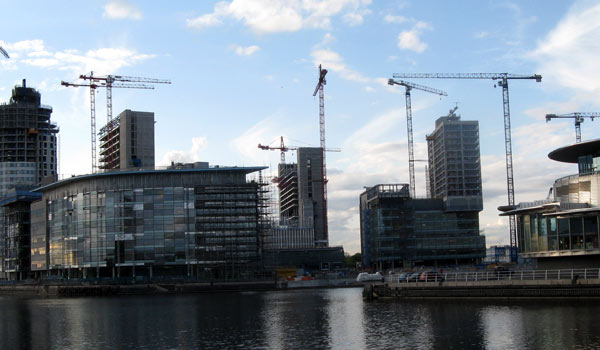
MediaCity site.jpgAs the buildings at our new home on the banks of Salford Quays get ever closer to completion, the important matter of who we fill them with gets more and more pressing.

The move to BBC North will result in the largest single recruitment drive in the history of the BBC.

In the coming years we will be looking to recruit over 500 people from entry level to the most senior to work in areas as diverse as BBC Sport, Children's, Radio 5 live., Learning and Future Media and Technology. It really is a Herculean task - but one that brings with it a very rare opportunity.

A chance to help the BBC change its DNA.

I have said before that BBC North is an experiment in creativity and collaboration - and fundamental to our success will be the team that we recruit, both from inside the BBC where there are many staff whose current jobs aren't moving but are still keen to be part of our journey, and crucially from outside the organisation as well.

The process has already been a hard one, and we will be losing some very talented individuals who have decided not to make the move. This disruption and heartache for so many puts even more emphasis on the need for us to get it right and ensure our new workforce produce world class content and services in new and ambitious ways to strengthen our relationship with audiences across the UK. It's a big challenge, but one that we are ready to take on.

We want to open up the BBC to people who previously had neither the opportunity nor likelihood of working here - who have perhaps assumed that the BBC wouldn't be interested in them. We want to be better at celebrating diversity, to actively encourage difference, to hear unfamiliar accents and voices and to be challenged. And that means we need a renewed focus on values and behaviours as much as on CVs. We are looking for people full of original thinking, open to new ideas, who take ownership and responsibility, have a can do attitude and who are focussed on engaging with audiences and communities.

Let me be very clear - this is not box ticking or political correctness by another name, it is very simply about making sure we recruit the right person for every role.

So we will be looking for experience and potential. People who have spent their careers in media and people who have barely even considered it before. People from our own backyard, and talent from across the UK.

It is only by recruiting this unique mix that we will be able to deliver our ambitions. And to make this possible, we need to spread our net wide and be very proactive.

We can't wait for good people to come to us, we must go to them. So we are splitting our recruitment focus between the specialisms we know we will need and the communities and groups that traditionally don't see the BBC as an obvious career.

You will see our adverts in the Media Guardian and on CWjobs.com, but you will also see us on YouTube on regional media websites like How Doand events across the north. Looking for people whose fresh ideas will have an immediate impact but also that can be nurtured and trained for the future.

To deal with such a high number of roles, we have changed our recruitment process to make it simpler and more efficient for candidates and for hiring managers.

BBC jobs always get a healthy number of applications, and with the new online system boasting a range of exciting opportunities to a hungry jobs market - we expect demand to be very high. Make no mistake, securing an opportunity is bound to be tough. 

Only a modest number of those people who register interest will get through, indeed the new online assessment will rule out some candidates early on in the process so that we have a manageable number of applicants, but it is important to remember this chance is not a one-off.

We are planting our feet in the north for the long haul so recruitment and opportunity will become a way of life for the BBC in the north of England.

We have already begun outreach and training schemes to start preparing the ground across the region. The Media Foundation Placement scheme, The Mentor Project and Apprenticeship Scheme have all begun to make inroads in helping make the BBC and with it the wider media sector, more accessible. We want to deliberately increase the number of flexible contracts we offer to help create a more fluid workforce.

We want to help build careers for people across the northern media sector and to develop the depth and range of the talent pool in the region. No longer will opportunities be restricted to those that can or must move to the capital to work in media. All roads will not lead to London.

BBC North should be one of the stamps that you want on your career passport. A place that helps you express yourself, develop with some of the best training in the industry and acquire and share knowledge.

But it should also be a springboard to other things.

Some people have expressed concerns that the scale of recruitment could be a talent drain on the north. I actually think we can be a talent irrigator, providing the media landscape with well trained and ambitious journalists, technologists, content makers, production managers and writers, growing and developing on the landscape that is already there. It ought to become a breeding ground for great new talent, a finishing school for rough diamonds and a place that everyone in the media recognises as fresh, collaborative and open to new ideas.

None of this is going to be easy, and things are not going to change overnight. But I believe that if we can get our talent mix right, then by 2015 we will have a workforce and a sector that is a creative engine for the whole UK and which will be good for the region and for the BBC. Exciting times ahead.


To apply for opportunities at BBC North go to www.bbc.co.uk/jobs/north

Peter Salmon is Director of BBC North
Looking ahead to the next prime ministerial debates

Blog comments are currently unavailable. Find out more.

Post categories:

Luba Kassova|09:21 UK time, Friday, 28 May 2010

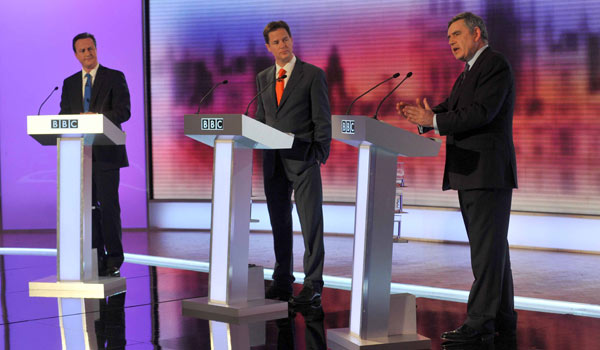
David Cameron, Nick Clegg and Gordon Brown at The Prime Ministerial DebateMore than 22m people watched any of the three prime ministerial debates that took place in the run up to the election. It's hard to tell what kind of impact the debates had on voting behaviour - voter turnout was up on 2005 from 61.4% in 2005 to 65.1% - but it is clear that the debates engaged viewers.

The success of the debates at this election makes them a very likely feature at the next, so we asked viewers what they thought of the debates.

The key themes that came back were a desire for more grilling of the leaders and a greater degree of audience participation. Many said that they wanted the moderator to be able to respond once the leaders had spoken.

The rigidity of the debate was a slight bugbear for audiences. Just a third thought the programmes were spontaneous or that there were surprising elements in the debate and a significant minority felt the staged responses and tight rules were a weakness of the debate.

Of course the rules of the debate aren't just for the broadcasters to decide - the parties themselves heavily influence this - but we will feed these views into discussions next time round.

Luba Kassova is Head of Audiences, Journalism

The BBC's Window of Creative Competition explained

Blog comments are currently unavailable. Find out more.

Post categories:

Jana BennettJana Bennett|08:59 UK time, Thursday, 27 May 2010

Small IslandIn 2007/2008 we introduced the Window of Creative Competition (WOCC). 50% of BBC output is made by the BBC's in-house production teams, 25% is made by the independent sector. The remaining 25% is the Window of Creative Competition and is open to both in-house and indies to compete for. The best ideas are chosen irrespective of who makes the programme.

So, it's that time of year when we publish the annual WOCC figures and look keenly at where the 25% up for grabs has been carved out - how has the investment of the BBC's £250million budget in the WOCC been split between the indie sector and in-house productions? This year, the overall story is roughly the same as in the past couple of years, with indies winning 70% of the available business and in-house production securing 30%.

That isn't where the story ends though. Dig deeper and look at the volatility of figures in the genres: year on year we see differences in the battle for each genre. It's creative competition at its very best, with the entire sector - both indie and in-house - in healthy competition and ultimately delivering the best programmes for our audiences.

Think back to three years ago when we launched the WOCC. We were also talking about how quickly the audience was catching up with technology and using content in new ways, how we needed to stop thinking in terms of linear broadcasting and prepare for the world of digital television on demand. But, while the access to content and the technology may change exponentially, what will remain constant is the fact that the best creative ideas are going to be the key to success in this new world.

And that's exactly what we are seeing, year on year. When introducing the system of the WOCC, the BBC reinforced the need for a balanced ecology, making a firm commitment to in-house production and the independent sector through its guarantees, and introducing a window for direct competition. The WOCC's radical approach to getting the best ideas from both in-house and indie is working - both sectors still have much to play for. From whatever source, the best proposals have delivered the range and distinctiveness of programmes this year that is a testament to this heightened creativity, to "Putting Quality First".

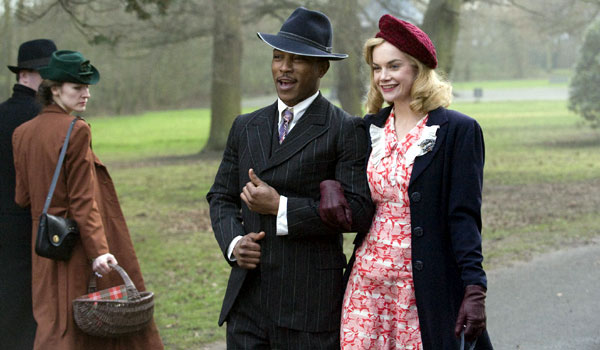
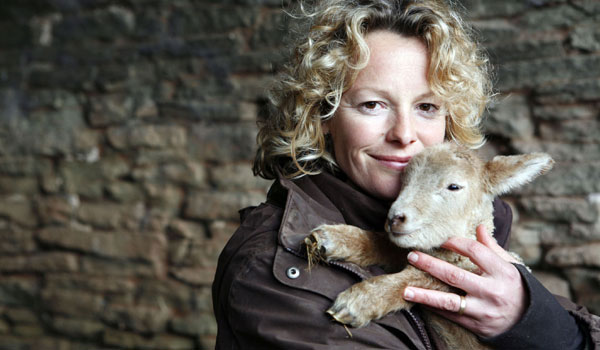
Lambing LiveI'm delighted that overall the indie sector is now delivering a total of 2,800 network hours with some real breakthrough shows in the shape of Small Island; Russell Howard's Good News; Michael McIntyre's Comedy Roadshow; Blood, Sweat and Luxuries, and The Day the Immigrants Left.

But I am also pleased to see how in-house has responded competitively to the WOCC - Children's has gone from nothing won two years ago to 50% this year. Across the board, I'm extremely proud of innovative in-house productions such as Criminal Justice, Five Days, Miranda, Wonders of the Solar System, and Lambing Live.


The BBC's raison d'etre is providing excellent programmes that audiences love, but what today's WOCC figures show is that there are broader benefits that stretch far into the creative industries. We know from the Deloitte report recently published that overall the BBC contributed at least £7.7billion to the UK economy in 2008/2009 - which generates at least two pounds of economic value for every pound of the licence fee.

WOCC plays its part in this and I am so pleased to see competition delivering the very best to our audiences. Now, let's see what happens next year!

Jana Bennett is Director, BBC Vision

Northern locations to get greater exposure

Blog comments are currently unavailable. Find out more.

Post categories:

Peter SalmonPeter Salmon|12:15 UK time, Wednesday, 26 May 2010

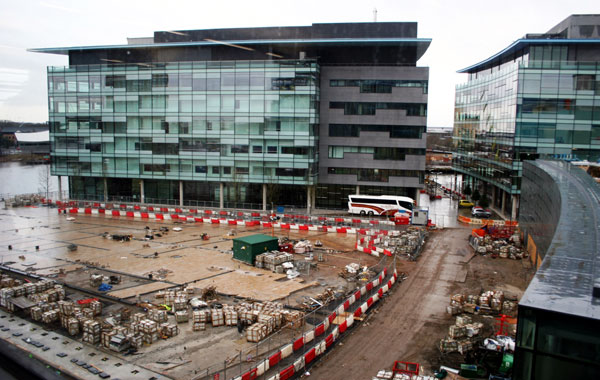
MediaCity at Salford QuaysAs a son of the North, I've always thought the most stirring clause in the BBC Charter is the promise to reflect the nation back to itself. That doesn't mean people living in London patronising regional viewers with programmes about flat capped Northerners with whippets or Welshmen who sing in choirs. It means recognising that 'the audience' is a set of different communities who often come together in shared tastes and enthusiasms, but at the same time may have different needs and different cultural identities. And now, with the opening next year of MediaCity at Salford Quays, the BBC will really be putting its money where its mouth is. What will come out of that mouth is a distinctive new Northern voice for the Corporation.

We are in a process of unprecedented editorial devolution, the BBC aims to shift half of all its network production out of London by 2016. In the biggest single move in its history, no less than five departments Sport, Children's, Learning, Radio Five Live, and parts of Future Media and Technology - will transfer from London to Greater Manchester. An enormous range of television, radio and online content, including some of our most loved shows like Match of The Day and Blue Peter, will be made in the North.

Where you place your feet affects the way you see things and the stories you tell. I want people all over the UK to be able to turn on their television or radio, and hear northern voices: not only in the sense of familiar vowel sounds, but also in that they describe the world in a way that is familiar and authentic. They want to see their hills, their valleys, their towns and their coastline celebrated. We need to be better at representing people's lives on screen, so our new base in Salford will be a filter, not a fortress, ensuring the benefits flow right across the North, to include great creative cities like Newcastle, Leeds, and Liverpool.

So in the next series of our biggest children's drama Tracy Beaker Returns, now made in the North East, there'll be more of Tyneside on screen, and even an episode set on an outdoor activities course in the glorious Northumbrian countryside. Producers aim to make the show associated to Newcastle in the way Torchwood and Doctor Who have become with Cardiff. Off screen the show is also engaging with young people, working with schools in Darlington on a project to boost media skills, and will take part in an event for secondary school students from across the North East at the Discovery Museum in Newcastle on 2nd July.


Peter Salmon is Director of BBC North

Apply for jobs in BBC North
Radio 1's Big Weekend and a big clean up for tickets

Blog comments are currently unavailable. Find out more.

Post categories:

Ben Cooper|10:41 UK time, Wednesday, 26 May 2010


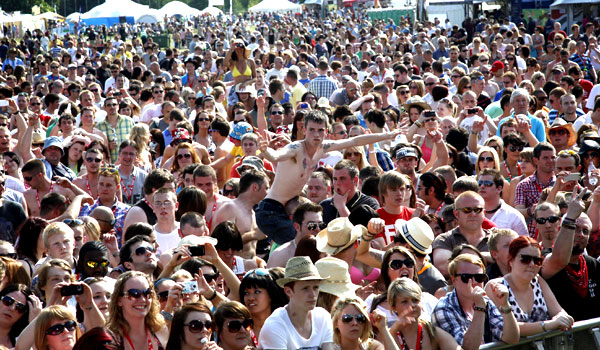
Radio 1 crowdThe future King was there, the current Queen of Pop looked amazing and 40,000 people from North Wales had a pretty good time too.

On Monday morning, as I sat on a bench on platform 1 at Bangor train station I reflected on an amazing week of activity which culminated in two days of the very best in live music.

Even though HRH Prince William and Cheryl Cole might grab the headlines, for me there is something much more exciting about my time in Bangor. You may be surprised to learn that - even though our event is called a 'Weekend' - there's so much more to it than that. The Radio 1 wagon does not just roll in to town on a Friday making a sharp exit on a Sunday. We were there for a whole week in the run up to the event with Chris Moyles and Greg James presenting their shows from North Wales and they got out and about across the area every day to meet people.

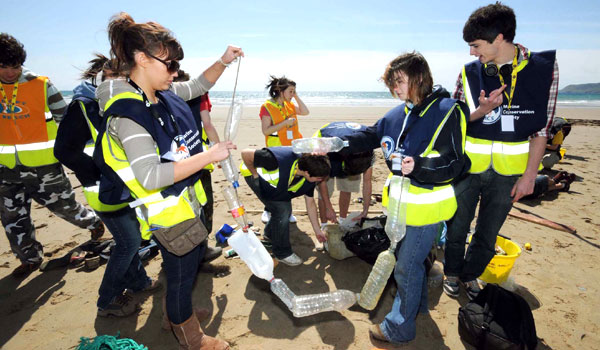
Young people cleaning up a beach.jpgFollowing on from our volunteering campaign last month, on Monday we organised a beach sweep with 50 volunteers from the University of Bangor, cleaning up a local beach in exchange for tickets; The Fringe was bigger than ever before with seven gigs from Monday to Thursday showcasing new local talent; and DJs and production teams ran masterclasses at schools, colleges and the University too.

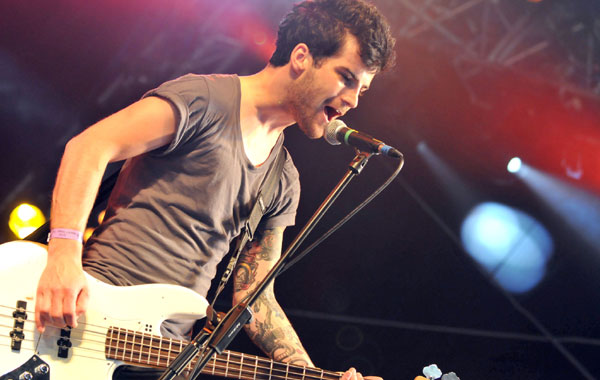
And as for the weekend itself, on Monday I watched the band Kids in Glass Houses get on the train to Cardiff with their tattoos, hats and tight jeans standing out amongst the local commuters. They played a fantastic set on Sunday on the In New Music We Trust stage that seemed to get the volume up to eleven and beyond.

But before their energetic performance on stage in front of a huge crowd I saw them in a tent of about thirty young people teaching them how to play the guitar. 

Kids in Glass HousesThe idea was that Radio 1's listeners come to see some of their musical heroes but may never have picked up a guitar in their lives. So across the weekend several bands took the time out to show how if you hold down the strings in this way then that way, a life of rock and roll can await.

The reaction was so good. People's faces a mix of concentration and excitement about playing different cords for the first time in a hot and sweaty tent. Simply brilliant to see.

At the weekend and across the whole of last week we brought live music to an area of the country that is under served by the market place. From delivering world class acts to the main stage and putting up and coming bands on the In New Music We Trust stage to giving brand new unsigned musicians a slot on the BBC Introducing Stage and securing local bands performing at The Fringe - all with the hope that, as in previous years, we leave a platform for the local music scene to build upon. And in addition to that, we might just have given a young person from North Wales the opportunity, confidence and motivation to pick up a guitar and change their lives. As I sat at the station, across the tracks from me was a poster with an advert for Bangor University. It says 'for learning and for life' - it seems quite apt.

Watch live performances from Radio 1's Big Weekend

Ben Cooper is Deputy Controller, Radio 1

Erik Huggers - The evolution of BBC iPlayer

Blog comments are currently unavailable. Find out more.

Post categories:

Erik HuggersErik Huggers|08:43 UK time, Wednesday, 26 May 2010

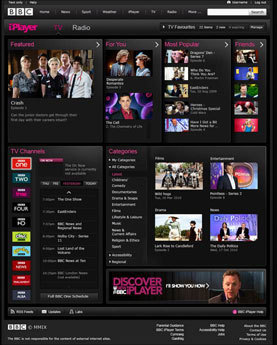
Today sees one of our most popular websites enter a new phase in its life - the BBC iPlayer re-launches in public beta to become more simple, personal and connected. It's an important moment in its evolution.

New BBC iPlayerYou can find it here.

The idea for BBC iPlayer was first floated internally around seven years ago, when the web was in its relative infancy. The potential of on-demand was obvious, even if the networks, technologies and market wasn't there yet

But the potential public value of being able to offer our audiences more control (a digital VCR that you don't have to set) and the offer of better value for money (by providing more opportunities to access programmes they've missed) was huge. Some years later, on Christmas Eve 2007, the first-generation product launched.

That moment represented a turning point for the BBC, and for me personally, the most significant development to BBC Online since its launch in the late 1990s. In just two and half years BBC iPlayer has evolved to become one of our most popular websites, integral to BBC Online, and available on a very wide range of internet-connected devices.

The BBC wasn't the first mainstream media company to offer a video-on-demand service, but I do think we were the first to get it right. Some important early decisions contributed greatly to its appeal with audiences.

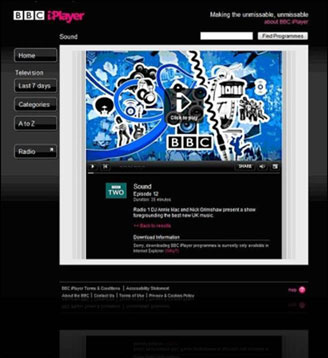
First generation BBC iPlayerFirst, it was high-quality and simple. We needed to make access to the content itself as quick and simple as possible, which meant moving the focus from peer-to-peer downloads to streaming. This removed delays, and the need to install a client (a piece of software on your computer). Simply click and play because the vast majority of consumers already had Adobe Flash installed.

Second, it had an unrivalled content offer - no user-generated videos of cats on skateboards here. It was always distinctly BBC, understood to be the only place for BBC long-form content, and by extension a byword for quality. As good as we make the iPlayer experience; we never forget that it's the content, above and beyond the delivery, that brings people back.

Third, the proposition was made really clear to mainstream linear TV audiences. It was this clear communication of the simple proposition of "making the unmissable, unmissable" combined with integrated linear promotion, that helped video-on-demand cross over into the mainstream. And finally, we wanted to make the BBC iPlayer available on a platform neutral basis. The ability to repurpose the site for a wide range of internet-connected devices and platforms has enabled us to take the product to our audiences rather than prescribe that they access it on the PC alone.

But back in 2007, none of us were really sure about how successful the BBC iPlayer would be. Some people had doubts about take-up. Will people go for it? Do people really want to watch TV on their computers when they have a perfectly good TV for that, with dozens of channels already? Others expected a TV revolution. "It's the end of TV as we know it" - the idea that giving the power of control to audiences would wipe out linear TV and the "old fashioned" idea of scheduling.

The truth lies somewhere in the middle: we've been hugely encouraged by the reception of iPlayer, and while people clearly love greater choice, they're not ready to abandon live TV. Our schedulers are brilliant at picking the right programme for the right channel at the right time: and nothing beats the collective experience of live TV around big events, whether it's a dramatic climax in the live episode of Eastenders or the FA Cup Final..

The facts are these, only 0.4% of UK adults watch exclusively on-demand. Linear TV is going from strength-to-strength, UK research company Thinkbox revealed earlier this month that year-on-year, average viewing is up to some 30 hours a week - an increase of two and a half hours on the year before. On-demand viewing is clearly complementary.

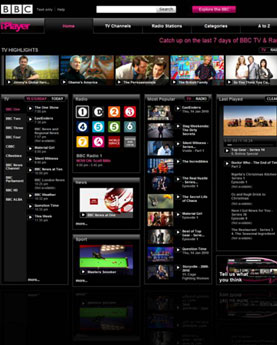
Second generation BBC iPlayerThe BBC iPlayer saw its first major evolution in July 2008, with vastly enhanced functionality. In came the integration of live TV and radio, together with a list of the most popular programmes and contextual recommendations - based on the programme you've just watched or listened to. We launched the first download manager to aid viewing offline. A list of recently played items came too - together with a user-experience that aimed to make all this content easy to find, and later, multiple bit rates and HD quality content.

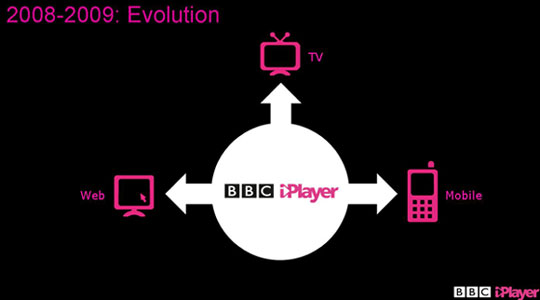
A demonstration showing BBC iPlayer to be multi-platform multi-deviceCoupled with this, through 2008 and 2009, the product was repurposed and rebuilt to work on a wider range of platforms and devices - from a Windows only base, it's now on more than 40 different devices and platforms. Our aim is to make the BBC iPlayer work on pretty much any platform or device that can connect to the web, where technically possible and economically sensible, and the BBC Trust opened a public consultation on our syndication policy just yesterday.

BBC iPlayer has become recognised domestically and internationally as best in class, a pioneer in the field and a major stimulant in the overall market for on-demand services.

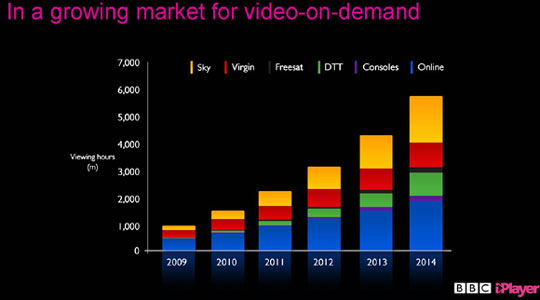
We've seen impressive growth in programme requests BBC iPlayer, and as the projections below (Mediatique, 2009) for video on demand show - this is a growing area across the entire media industry.

Mediatique projections showing requests for video on demandBut this is a busy and fragmented marketplace, with traditional broadcasters launching their own video on demand propositions (eg. SkyPlayer, BBC iPlayer, 4oD, ITV Player, Demand Five), content aggregator sites (eg. SeeSaw, YouTube), free to air platforms (eg. Freeview, Freesat), pay TV platforms (eg. Virgin Media, BT Vision, Sky), search companies (e.g. Google TV), device manufacturers (Sony, Nokia, Samsung), mobile operators (eg. Three, Vodafone) and gaming platforms (e.g. Nintendo, Sony Playstation) all looking to offer a video-on-demand proposition of sorts to consumers.

How does the BBC iPlayer fit in to this world and remain distinctive?

As I outlined at the Guardian's Changing Media Summit in March, just after we announced our Strategy Review, BBC Online is changing.

By halving the number of top-level domains on BBC Online, reducing the overall service-licence budget by 25% by 2012, focusing on the BBC's core editorial priorities, and developing strategic online partnerships we intend to put the internet at the heart of the BBC's digital media strategy, creating a more focused BBC Online with clear boundaries. The proposals outlined in the BBC's Strategy Review are subject to public consultation by the BBC Trust.

BBC iPlayer is a core component of BBC Online, and is the first core website in the online portfolio to be upgraded since we announced Putting Quality First.

Bringing the benefits of emerging technologies to the public is in the BBC's DNA as its sixth public purpose, and the idea behind BBC iPlayer was to give audiences greater control over the programmes they enjoy, guarantee subscription-free access to BBC content in an on-demand world, and provide better value for the content they have already paid for.

In the new beta version of the product we've launched today, we've listened to the audience and responded to their desire to have greater control over their own BBC iPlayer experience: now you can have a BBC built just for you.

We've integrated the social web through innovative partnerships, which allow audiences to interact with each other around our content. And we've pulled all this functionality together in a clean and intuitive user experience.

I can't emphasise the importance of good design enough. In age of unlimited choice - our audiences need better ways to find what they are looking for, and it is this thinking that we've brought into BBC iPlayer. In addition to discovery through traditional TV listings, you can now also:

- select your favourites, delivered to you in a playlist

- see what your friends are recommending

- browse by popularity, like a top-ten programmes chart

- browse by genre and sub-genre, depending on your mood

- try what we think you'll like, based on what you tell us

Along the way you'll be able to select your favourites, to be delivered to you when they're ready.

And later in the year, we'll be linking to other video on demand providers, and launching a new feature that will allow you to chat to friends.

There's a lot more information about the functionality and technology on the BBC Internet Blog if you're interested and you can find the new BBC iPlayer here.

So we very much hope that you like the new product, and if you'd like to be involved in the beta testing we'd love to hear from you.


Erik Huggers is Director, BBC Future Media & Technology 

BBC archive marks 70th anniversary of Dunkirk

Blog comments are currently unavailable. Find out more.

Post categories:

Kate Wheeler|15:01 UK time, Monday, 24 May 2010

In order to see this content you need to have both Javascript enabled and Flash installed. Visit BBC Webwise for full instructions


Take a look behind the scenes at the BBC archive in Windmill Road before it moves to its new home in Perivale.

Sunday's edition of Broadcasting House brought together 200 listeners for a special edition broadcast from the BBC's Radio Theatre, which marked the culmination of their series 'Who do you think you archive?' in which listeners got the chance to discover their own radio gems from the BBC's archive.


The programme looked at some of the amazing stories which the public have called up from the archive, from the man who grew up not knowing that the drug thalidomide had been responsible for his condition, to the woman who wanted to hear Terry Wogan interview her silver medal-winning father. It also asked about wider archive issues with comments from digital media guru Emily Bell and Richard Ranf, Head of the British Library's Sound Archive and ending with the BBC director general Mark Thompson emphasising his commitment to ensuring the public gain access to more of the archives.


Our contribution to the event was the launch of our latest collection - WWII: Dunkirk Evacuation. It is the latest in the series of our wartime collections and one we found particularly enthralling to put together. Mostly because of the incredible personal stories that were captured in the archive and that we have been able to release. The documents in the collection reveal that the government prevented the BBC from broadcasting interviews with the rescued members of the British Expeditionary Force (BEF) and, when you listen to the stories that we were eventually able to record you get a sense of why. The chaos, horror and grinding misery of the beaches where men waited for rescue come across so clearly that it is understandable that the government wouldn't have wanted the Germans to know how close they had come to delivering a knock-out blow to Britain's chances of winning the war.


One surprising interview we unearthed for the collection was with Commander Charles Herbert Lightoller, who took his boat 'Sundowner' over to Dunkirk and managed to rescue 130 men, despite attacks by German bombers. We already knew of Lightoller from a previous collection. In 1936, he gave a talk to BBC listeners about his memories of the sinking of the Titanic - he was the highest ranking officer to have survived this disaster.


Most people will go through their lives (we hope) without ever experiencing a test of courage as great as just one of these incredible events and yet Lightoller lived through two, and was able to share his unique perspective on both with the BBC. This is just one of the many ways that personal stories run through the archives, and it explains why people hold a special place in their hearts for the BBC's heritage.


Since September 2009, almost every month has brought another 70th anniversary of some aspect of World War II. We've already looked at the outbreak of war and the German propaganda broadcaster Lord Haw-Haw, and though we won't be turning the BBC Archive into the War Archive, we'll continue to look at key moments in the war as we continue to explore the archive. We're already working on another major war-related collection in time for the summer and we hope to keep on giving you access to more of the incredible stories which we have preserved from these momentous years.


Kate Wheeler is Editorial Lead, BBC archive project

Flexible Working at the BBC - you can't keep a good man down

Blog comments are currently unavailable. Find out more.

Post categories:

Chris KaneChris Kane|12:25 UK time, Thursday, 20 May 2010

At last week's Leadership meeting Mark Thompson paid tribute to our Deputy Director General Mark Byford for running the BBC's General Election campaign from his front room. What's this all about you may ask? Has the BBC taken its property cost cutting campaign to an extreme?

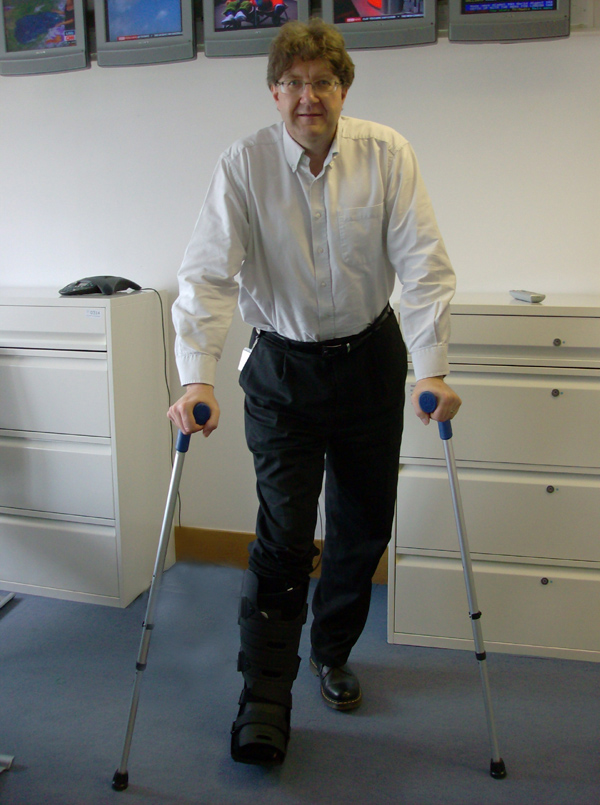
As a result of an unfortunate accident Mark Byford (pictured below) found himself nursing a badly broken leg for three months and unable to make his daily commute. Not to be constrained by such an inconvenience Mark was determined, as Head of BBC Journalism, to be able to lead the overall co-ordination of the BBC's Election coverage. Armed with his broadband connected laptop, Blackberry, TV and radio, he was able to do this from his Winchester home. In effect he watched and listened to more output than anyone else and was able to lead the overall Election team effectively throughout the campaign chairing daily phone conferences and giving regular feedback.

Mark Byford with a broken leg

From a flexible working point of view this is yet another example of how we need to stand back and reflect on the adage - 'work is something you do, not a place you go to.'

We want the BBC to be the most creative place to work in broadcasting - flexible and dynamic, where people can achieve their best. People often say they feel obligated to work in a BBC building even when they know they could be more creative or productive in a different environment.

To solve the problem of 'presenteeism' we need to strike a different work-life balance that, where possible, gives people the option of working part of the time away from their building base.

The case of Mark Byford proves it can be done.

Chris Kane is Head of Corporate Real Estat for the BBC

Beatrice Harrison, cello and nightingale duet 19 May 1924

Blog comments are currently unavailable. Find out more.

Robert SeatterRobert Seatter|09:32 UK time, Wednesday, 19 May 2010

BBC anniversaries come thick and fast in the BBC calendar. In this year alone, we have 25 doof-doof years of EastEnders, 60 years of sequinned Come Dancing, and, on a darker note, 70 years of French pride since General De Gaulle gave his stirring address from Broadcasting House to rally the Resistance against a German-occupied France.

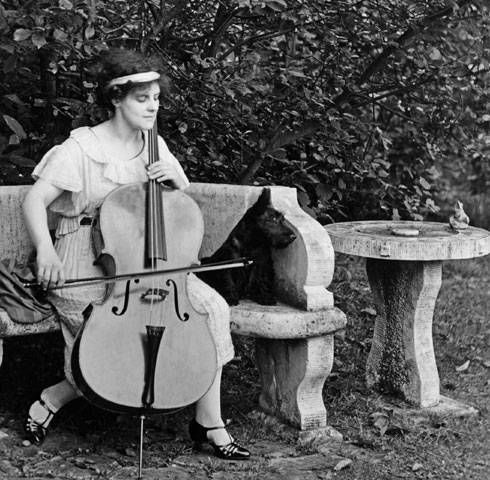
Beatrice Harrison playing the cello.jpg

But I must confess to being partial - and one of my favourite BBC anniversaries crops up today. It's the quirky and idiosyncratic story of a nightingale and a cello. Once upon a time...

On 19th May 1924, BBC radio listeners heard for the first time an extraordinary duet live from a Surrey garden. The cellist was Beatrice Harrison, who had recently performed the British debut of Delius's Cello Concerto, which had been written for her. The nightingales were the birds in the woods around Harrison's home in Oxted, who were attracted by the sound of her cello.

Harrison first became aware of the birds one summer evening as she practised her instrument in the garden. As she played she heard a nightingale answer and then echo the notes of the cello. When this duet was repeated night after night Harrison somehow managed to persuade the BBC that it should be broadcast. Engineers carried out a successful test and the following night the live broadcast took place. Harrison played and the nightingales, eventually, joined in.

The public reaction was such that the experiment was repeated the next month and then every spring for the following 12 years. Harrison and the nightingales became internationally renowned and she received 50,000 fan letters. Writing in the Radio Times before the second broadcast, BBC Managing Director John Reith said the nightingale "has swept the country...with a wave of something closely akin to emotionalism, and a glamour of romance has flashed across the prosaic round of many a life". What a great prose style that man had!

And why does the 'glamour of romance' still touch me? I suppose it's partly for the same reason that Springwatch works its charm on audiences today. It's the belief that, even in this post-industrial age, we still have some relationship with our 'natural' neighbours. Nature touches us - and even more extraordinary, does not ignore us: a nightingale may answer a cello.

RS

More information at BBC History.

Robert Seatter is Head of BBC History

Children in Need says "Thank You"

Blog comments are currently unavailable. Find out more.

Post categories:

Gilda Witte|15:52 UK time, Tuesday, 18 May 2010

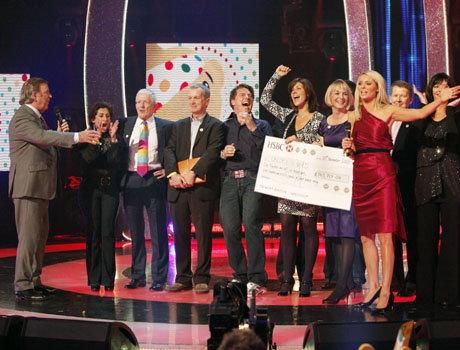
It's an exciting week in BBC Children in Need's busy calendar. On the Chris Evans show, Sir Terry Wogan announced our biggest total in the history of the charity: a whopping £39million.

The 2009 telethon kick-started this year's Appeal, raising £20.3million, and since then we have been overwhelmed by the generosity of the British public, which has seen the total almost double. Last year marked the 30th anniversary of the Appeal, which makes the record even more special, and we hope the public will come out in force once more this year and support us.

Sir Terry Wogan and varies celebrities on the Children in Need stage

It's remarkable to think that the BBC launched its first broadcast appeal for children in 1927 through a five-minute radio programme on Christmas Day. It raised £1,143 18s 3d and the proceeds were shared with four prominent children's charities. In 1980 the appeal was broadcast on BBC One in a new telethon format, hosted by Sir Terry with Sue Lawley and Esther Rantzen. We have come a long way in 30 years and raised a lot of cash.

The show has evolved to become one of the highlights of BBC One's entertainment calendar and last year saw audience figures peak at 12.5 million, with the great and the good of the worlds of showbiz and entertainment appearing to help raise the roof for Pudsey. So a big thanks to everyone who has helped in any way to raise money for the charity - we really do appreciate it, as do the children's charities who benefit from the grants we give.

The first Pudsey bear

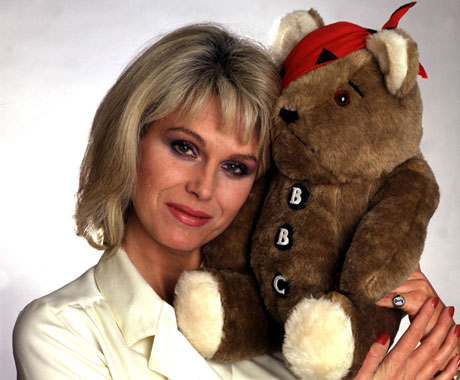
Pudsey has also changed through the years from the very sad-looking brown bear with the red and white spotty eyepatch who graced our screens back in 1980, to the fresh-faced bear of today that we know and love, his last makeover happening in 2007. The first teddy bear Pudsey still exists in the BBC archives, having been usurped by the sunny yellow bear who graces T-shirts and much more up and down the country.

I think the great thing about BBC Children in Need is that it is the people's charity. It is the fundraisers and supporters who take the initiative and create events across the UK in order to help us raise funds for disadvantaged children. We hear some great stories of what the nation is up to - the imagination of the UK knows no bounds! From a marathon space-hopper race and walking from Spain to Cornwall, to a spotty hug-a-thon and a sponsored ghost hunt, it can be quite overwhelming when you hear the lengths people go to for us.

It's important for us to empower our fundraisers and make sure they enjoy raising money for Children in Need. In some ways it's their charity, not ours - we are just looking after it, making sure it's still a great entertainment-based charity for the next generation to enjoy. Lots of our fundraisers are kids, growing up with the simple message about children in the UK helping other children. It's quite humbling really.

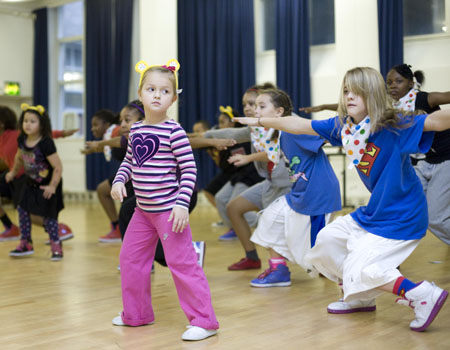
Children dancing

You can see some of the children the charity has helped thanks to the generosity of the great British public on our website. We work hard with our grantees to locate and showcase a range of the great stories behind the projects we fund on the telethon. This is really important as it shows how the money that people work incredibly hard to raise and donate is helping to make a real difference to young lives, while also encouraging further engagement with us.

This week also marks the second of our four annual grant rounds. It means that to date we have given out nearly half of our total pot to help disadvantaged children all across the UK.

Last week I went to a project called Sense Scotland based in Glasgow. They provide services to help children who have a range of profound sensory disabilities. Sense Scotland received a BBC Children in Need grant of £333,000 a few years ago to build a children's wing, and since then they have been able to secure millions of additional funding to extend their facilities in order to help more people.

It is really rewarding to be able to see that the money works hard for years after it is first awarded and to speak to the people our funding is helping.

We are also pleased to have been highlighted as a focus in the Strategy Review where we were identified as one of the events that bring communities and the nation together. BBC Children in Need is very much a national occasion with real local relevance and can create real community cohesion across the UK.

Gilda Witte is Director of Marketing and Fundraising, BBC Children in Need

The Editors blog - Impartiality and coalition government

Post categories:

Laura MurrayLaura Murray|11:08 UK time, Monday, 17 May 2010

"We're all in new territory: government, opposition - and broadcasters. Coming to terms with the "new politics" of coalition sets us some new challenges, just as we're trying to recover our breath from the extraordinary events of recent weeks". Ric Bailey, the BBC's chief political adviser.

Over on the Editor's blog, Ric Bailey discusses the challenges faced by the BBC to achieve balance and impartiality under our new coalition government.

You can read Ric's blog in full and comment on the Editor's blog.

We are changing lives with 'One Water'

Blog comments are currently unavailable. Find out more.

Post categories:

Chris KaneChris Kane|11:06 UK time, Thursday, 13 May 2010

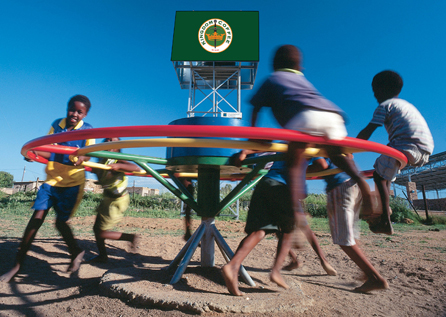
 A play pump in Malawi.jpgEvery now and then fate deals us a good card. Excellent sales of One Water across BBC catering outlets up to March mean that a third play pump can be set up to help communities in Malawi. One Water also has money left over to get well on the way to purchasing a fourth one! Thanks to all staff and visitors who have bought One Water for making this possible.

The playpumps use special technology so that while children have fun spinning on the playpump merry-go-round, clean water is pumped into a tank above ground.

I visited Lesotho last year and was enormously proud to see how this simple idea has completely changed the lives of people in these communities. I will be making a return trip to Malawi in July, along with Catering Manager Hilary Friel and Cutomer Service Director Kate Smith, to see first-hand the benefits that the new pumps will bring.

In preparation for the trip, Island Mastara from Media Village engineering has even been helping us with some language lessons - 'zikomo' Island! (Thank you!)

Well done to everyone who has supported the One Water initiative.

Chris Kane is Head of Corporate Real Estate for the BBC

BBC Internet blog - new homepage launches

Post categories:

Laura MurrayLaura Murray|15:34 UK time, Tuesday, 11 May 2010

Over on the Internet blog, Jo Wickremasinghe has announced the launch of a new version of the BBC homepage.

Changes include a new navigation bar across the top of the page to facilitate easier and faster access to the most popular sites across the BBC.

header_nu.pngThe new navigation bar is slowly being rolled out across the entire BBC website. You can have a play on the Dr Who website.

Read Jo's post in full and comment on the Internet blog.

Over the Rainbow - the story behind the singing

Blog comments are currently unavailable. Find out more.

Post categories:

Alec McGivanAlec McGivan|14:00 UK time, Tuesday, 11 May 2010

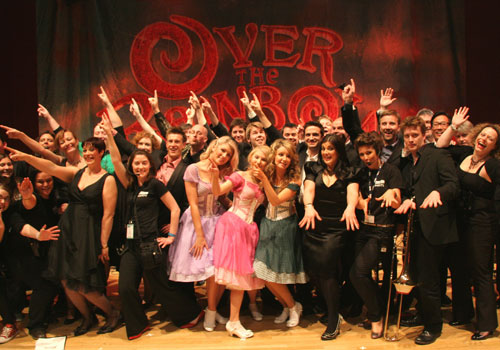
Over the Rainbow group shotThis weekend I was on the set of BBC One's Over the Rainbow in Fountain Studios, Wembley. It's the latest Andrew Lloyd Webber-fronted search for new West End talent. The main hunt is for an actress to play Dorothy in The Wizard of Oz, but for the first time this year the BBC is also involving the nation's pets with a search for Toto. I did momentarily consider entering our own Schnauzer, but considering the trouble he has mastering the simple command to "stay", I thought better of it!


Sometimes, when you work on the corporate side of the BBC, you can feel a bit far from the production teams, so it's good to get on set and see a live show in action every so often. That wasn't the reason I went along this weekend though - it was actually about the charitable work that is made possible by this series and other programmes like it.


On air, the series is about providing a platform for a handful of young people with talent, and off air that's an even bigger story. The BBC Performing Arts Fund is a charity of which I'm a Trustee, as well as line manager for the small team. The Fund helps aspiring music-makers and performers looking for a way to get ahead. The charity receives its revenue from the voting lines of BBC One entertainment programmes that seek to find new performing talent. In this case that's Over the Rainbow, but it has also included past series like Any Dream Will Do and it was originally set up around the Fame Academy series in 2003.


Performing Arts Fund Logo.jpgOn Saturday I hosted a reception event around the show's live recording, offering guests including journalists and other arts charities the opportunity to see the show first hand and meet some of the previous winners. It was all about letting people know what's done with the revenue from these BBC phone lines and how it's helping support new talent.


I met several Performing Arts Fund bursary winners on Saturday. It was great to hear what a difference the money had made to their careers. One of the winners, Briony, graduated last summer and now has an agent and is auditioning for roles. Two of the other winners I met, who are both still studying, told me they need all the help they can get in this economic climate, so the award is a real benefit - both practically and also to help make their CVs stand out.


It's a significant moment for the Fund because just last month last we gave a round of grants that means we have now distributed over £3m in total (£3,017,332). The Fund has now supported 739 individuals and around 6,000 members of 98 choirs through a number of different schemes: the Education Bursary, Training in Musical Theatre, Instrument and Equipment Awards, Junior Instrument and Equipment Awards, Urban Music and Choral Ambition.


If you need any evidence of the impact of the Fund, you can look to the West End. Several winners of the Musical Theatre Award are currently starring in shows, including Dirty Dancing (Fra Fee), Mamma Mia (Nicola Hawkins and Nikki Bentley) and The Sound of Music UK Tour (Zoe Doano).


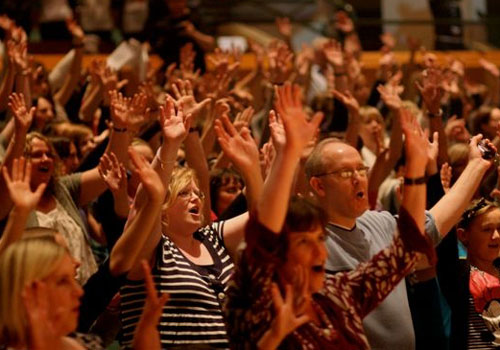
Audience raising handsAs the Over the Rainbow TV series is running, the BBC is also holding live events across the country offering audiences the chance to participate and enjoy singing and performance themselves. There will be 10 events in total, visiting locations from Glasgow to Cardiff to London to offer musical theatre masterclasses to an estimated 15,000 people. The events kicked off on 1 May at Leeds Town Hall. Anyone could apply for tickets via the Over the Rainbow website and those have now all been snapped up. However, if the show has given you the singing bug, you can still get some good tips from this downloadable singing guide (PDF).


The next event I'll be going along to with the Performing Arts Fund charity is in September. We'll be working with BBC Merseyside to host a performance opportunity for the Fund's north-west England based winners of the Choral Ambition scheme, which ran last autumn and is all about group singing and development. We hope to highlight the contribution that the BBC Performing Arts Fund is making to the voluntary arts sectors across the north-west. The performance will be at the Metropolitan Cathedral in Liverpool and the audience will be made up of members of the public, as well as guests and local press. It should be a good day and I look forward to reporting back on how it went.


Follow Dorothy and Toto's progress on Twitter and become a friend of the BBC Performing Arts Fund on Facebook.


Alec McGivan is Head of BBC Outreach


Flexible working, video conferencing and the BBC

Blog comments are currently unavailable. Find out more.

Post categories:

Chris KaneChris Kane|09:13 UK time, Friday, 7 May 2010

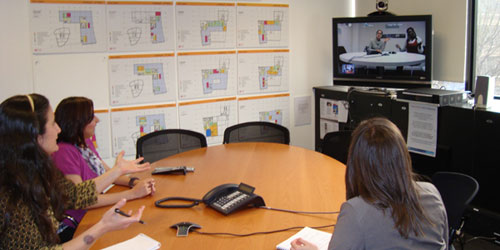
Tube video conferenceLots of people talk about the benefits of using video links to avoid the need for travel. In the main there is a fair degree of scepticism about the usefulness or otherwise of this technology, for example, 'it's expensive, the picture is poor and one needs a degree in rocket science to get the kit working!'

For the BBC move to MediaCityUK in Salford we're working on the theme 'Salford - it's not as far away as you might think.' A key element of this is embracing video conferencing.

To help us get started we have installed 'the Tube', a permanent video link between the Manchester and London based project team. We have allocated two meeting rooms that work as a pair, enabling team members to drop in at any time to connect up. It's simple, requires no technical support and provides a richer form of interaction.

A sign of things to come.


Chris Kane is Head of Corporate Real Estate for the BBC

BBC Internet blog: BBC iD on CBBC

Post categories:

Laura MurrayLaura Murray|14:08 UK time, Wednesday, 5 May 2010

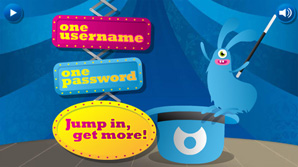
oneeyedrabbit_450.jpgBBC Children's have just entered the final phase of the BBC iD roll out for CBBC. This means that children will be able to access all CBBC content using one password and one iD. This animation shows how children can get a new BBC iD account.

Over on the Internet blog, Marc Goodchild, Head of Interactive and On Demand, BBC Children's, explains the challenges the team faced to ensure the data collected within user's accounts followed them to the new system whilst also protecting their safety.

You can read Marc's post and comment on the Internet blog.

About this blog

Senior staff and experts from across the organisation use this blog to talk about what's happening inside the BBC. We also highlight and link to some of the debates happening on other blogs and online spaces inside and outside the corporation.

Here are some tips for taking part.

This blog is edited by Jon Jacob.

Subscribe to this blog

You can stay up to date with About the BBC via these feeds.

If you aren't sure what RSS is you'll find our beginner's guide to RSS useful.

[an error occurred while processing this directive]

Follow this blog

Other BBC blogs

More from this blog...

Categories

These are some of the popular topics this blog covers.