About the BBC - BlogAbout the BBC - Blog
Local Navigation

Archives for December 2009

Merry Christmas!

Blog comments are currently unavailable. Find out more.

Post categories:

Chris JonesChris Jones|10:29 UK time, Thursday, 24 December 2009

xmas.jpgThe About the BBC blog will be taking a short Christmas break over the following week but will return in January. Many thanks for all your visits and comments in 2009. All the best for the holiday and see you in the New Year! - Chris Jones, Editor

The Blue Peter team brings Christmas to Cumbria

Blog comments are currently unavailable. Find out more.

Post categories:

Peter SalmonPeter Salmon|10:58 UK time, Friday, 18 December 2009

The BBC is at its best when we work together to deliver great moments and experiences for our audience. And that doesn't have to be a glittering production or a major event.

Just yesterday, terrific teamwork pulled off something rather special for some youngsters who deserve our support at this time of year, children who suffered real hardship in the recent Cumbrian floods.

Thanks to everyone in News and Children's who helped make this Christmas moment happen - the first of many such treats we will land by working together as BBC North.


In order to see this content you need to have both Javascript enabled and Flash installed. Visit BBC Webwise for full instructions

Hamlet for the cross-platform age

Blog comments are currently unavailable. Find out more.

Post categories:

George EntwistleGeorge Entwistle|10:41 UK time, Wednesday, 16 December 2009

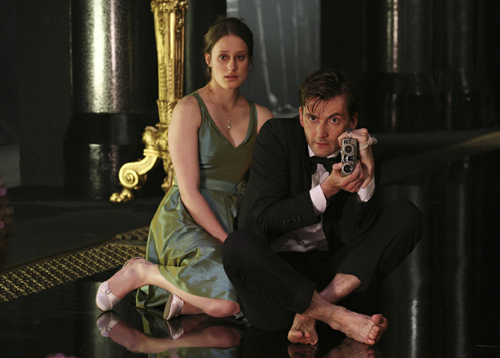
"Whatever happened to Fortinbras?" was just one of the questions preoccupying a packed Q&A session at the BFI on London's South Bank on Monday night. It came after the first public screening of Hamlet the movie - the RSC's magnificent performance, starring David Tennant and Patrick Stewart, adapted for the BBC by John Wyver's production company Illuminations. What we hope will be a wider audience still can see it this Christmas on BBC Two on Boxing Day at five past five in the afternoon.

On stage to answer questions from Front Row presenter Mark Lawson were Patrick Stewart - whose exceptional rendition of Claudius is one of the glories of the film - and the director Greg Doran, who revealed he'd dropped the Act V, Scene II appearance of Fortinbras mostly because he doesn't like it. Other insights included how an arras turned into a shattered mirror (much to the discomfiture of the director of photography), and how there's less difference between acting to camera and acting to a live audience than tradition insists.

This film version of Hamlet is three hours long, so scheduling it in the early evening of Boxing Day, during television's famously competitive Christmas season, represents a genuine act of determination by Janice Hadlow, the Controller of BBC Two. But if you choose to gamble on Hamlet, it's reassuring to know that the lead role is taken by none other than David Tennant, who'll be appearing elsewhere on BBC TV this Christmas in a more familiar guise.

Tennant's performance is a revelation. Familiar soliloquies are made to sound as if extemporised. His physical presence and kinetic energy lock you to the screen. Around him, Oliver Ford Davies' Polonius brings comedy and pathos to the "wretched, rash, intruding fool", while a consistently excellent company brings the plotting and paranoia of Elsinore irresistibly to life. The digested read: this film really is worth watching.

The reason we co-commissioned Hamlet, and the reason the project is so near to our hearts, is that we believe this version, with this cast, has the potential to engage audiences who wouldn't normally turn up for Shakespeare. For those who watch and find their appetite stimulated, BBC Learning - again in partnership with the RSC - has produced a wonderful website. We hope it will offer irresistible online journeys for anyone inspired by this superb TV version of the play, and provide an accessible, lasting record of the creativity and inspiration that went into the performance.

bbc.co.uk/hamlet launches this week and will feature behind-the-scenes stills and footage; specially-shot interviews with the actors talking about their characters and how they approached the play; key excerpts from a range of historical performances; and a comprehensive range of links through to BBC Learning and the OU's content on Shakespeare, and RSC Education's content on Shakespeare in performance.

Back at the BFI last night, one audience member disclosed she was a student, currently studying versions of Hamlet on film. She asked whether director Greg Doran had studied any of them himself, prior to shooting. "Not really," came the reply. Then a question straight back from Greg: "Which is best?"

"Oh..." she said, "this one."

The BBC Academy and College of Journalism

Blog comments are currently unavailable. Find out more.

Post categories:

Anne MorrisonAnne Morrison|14:36 UK time, Tuesday, 15 December 2009

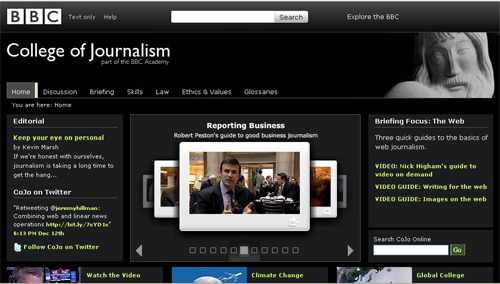
cojo.jpgIn becoming Director of the BBC Academy, as well as bringing together all of training and development at the BBC for the first time (my first and most obvious task), I've been determined to use the creation of the Academy to raise our ambitions for training within the BBC and to be much more explicit and proactive about our role in training the industry. The announcements we have made this week indicate a willingness to look outwards and understand the skills gaps in the industry.

It is part of our public service mission to work with partners to foster a skilled, modern workforce, able to circulate through the industry. We are doing this against a background of many companies and broadcasters, under commercial pressure, cutting back on investment in training. What we can do, within the limits of fair trading, is to share some of the fantastic resources we have for the benefit of the wider industry by working in partnership with other broadcasters and institutions on areas of shared interest.

As change in the media world accelerates, training becomes ever more important. The Academy brings together centres of expertise in Journalism, Production, Leadership and Technology training to create a world-class development resource for our staff. However, with an increasingly mobile workforce it is in our interest that we should help support training outside the organisation as well as inside. In other words, our new initiatives are not inspired by charity but by enlightened self-interest!

The BBC College of Journalism website is a tremendous learning resource, with masterclasses from leading BBC journalists such as Evan Davis, John Humphrys, Robert Peston, Jenni Murray and Jeremy Vine, as well as craft skills, ethics and values, videos, audio files and interactive modules. We have now made it freely available to everyone in the UK and in the New Year it will be available by subscription abroad.

We are joining forces with Channel 4 to create the Diversity 2010 programme, which aims to increase understanding of diversity in the workplace and embed it in our future leadership. We are also collaborating with ITV to improve employability in the media industry for people with disabilities. By sharing best practice and enabling two-way placements, ITV will further develop its Enabling Talent disability programme and the BBC its award-winning Extend scheme.

With other partners we've developed a very successful model for Multiplatform Foundation training which we're rolling out within the BBC currently. Now, the Academy will share that model with other broadcasters and organisations including PACT, BECTU, and the Indie Training Fund. Finally, we will be delivering ideas development and pitching workshops for independent and in-house producers outside London to share best practice and help increase the number of commissions from the UK nations. The workshop was piloted successfully in Belfast and will be held in Cardiff and Glasgow in the New Year.

These new initiatives add to existing BBC schemes to train freelance talent and represent just the beginning - and we are confident there'll be many more initiatives to come as the Academy fulfils its potential. It's a very exciting journey we've all embarked on and the ambitions we have won't be achieved overnight, but I passionately believe in the importance of investing in the future talent of our industry.

Why the BBC should continue to play a central role in Worldwide

Blog comments are currently unavailable. Find out more.

Post categories:

Mark ThompsonMark Thompson|08:26 UK time, Tuesday, 15 December 2009

In today's MediaGuardian I have written about the future of BBC Worldwide. You may wish to visit the website to read the full article.

BBC HD Picture Quality: some myths laid to rest

Post categories:

Danielle NaglerDanielle Nagler|14:29 UK time, Monday, 14 December 2009

Over the course of the last week, the debate about BBC HD picture quality which has been running since August has entered a new phase. The Head of Technology for BBC HD, Andy Quested, has serialised an extended review of his response to all the areas that have been covered over the course of the many posts on this subject, and included in that epic some insights into the results of the technical tests that have been carried out to assess picture quality. Looking at your comments I can see that there are still areas on which our views differ.

Editor's note: This is an extract of Danielle Nagler's response to the large amount of interest raised by Andy Quested's recent posts on HD quality. To read the full post and to comment visit the Internet blog.

The BBC and the British Library: a joint approach to building a digital archive

Blog comments are currently unavailable. Find out more.

Post categories:

Roly Keating|10:08 UK time, Friday, 11 December 2009

RR_3.jpgIt's only a piece of paper. But then again - as archivists and librarians understand better than anyone - a single piece of paper can sometimes have lasting significance.

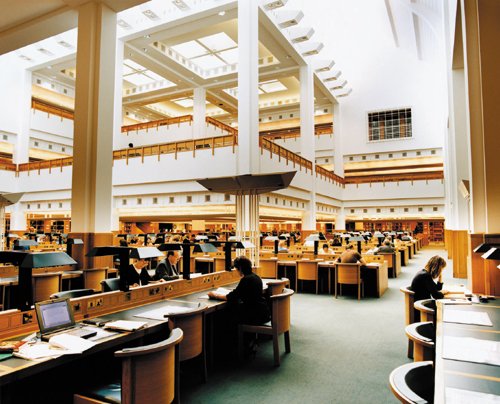
When the BBC's Director-General Mark Thompson and the British Library's Chief Executive Lynne Brindley add their signatures later today to a Memorandum of Understanding, it'll mark a major new chapter in the relationship between these two remarkable and very British institutions.

Some may wonder why a broadcaster and a library are even talking to each other, let alone committing to share strategies and develop joint projects.

But the truth is that the two organisations have more in common than you might think. The BL, for instance, has incredibly rich audio-visual holdings, including of course the National Sound Archive (which contains some 100,000 BBC recordings). The BBC, on the other hand, has a massive written archive, which is only just beginning to reveal its riches to the public. Our Information and Archive teams have worked with BL colleagues on and off for years, and in many ways this is an old friendship with deep roots.

What's changed is the sheer scale of joint opportunity - and challenge - opened up by the prospect of a digitally connected UK. As custodians of two very different parts of the national heritage, we find ourselves asking some strikingly similar questions.

BL-external.jpg

Some of these questions are mind-boggling for those of us who grew up in the comforting landscape of traditional broadcasting. But we know we have to tackle them, if we want to secure and protect a vibrant, accessible public cultural space at the heart of the UK's digital landscape. It's a formidable task, and not one that any single organisation can tackle by itself.

That's why - alongside other key partnerships in this space such as the BFI, The National Archives and the Arts Council of England - the alliance with Lynne Brindley and her teams feels so timely and so full of potential.

And that's why the piece of paper being signed today might just find itself pored over by the archivists of the future - though presumably they'll be examining a scanned and digitised version rather than the fragile paper original!

Portraying the countryside on the BBC

Blog comments are currently unavailable. Find out more.

Post categories:

Andrew Thorman|16:33 UK time, Thursday, 10 December 2009

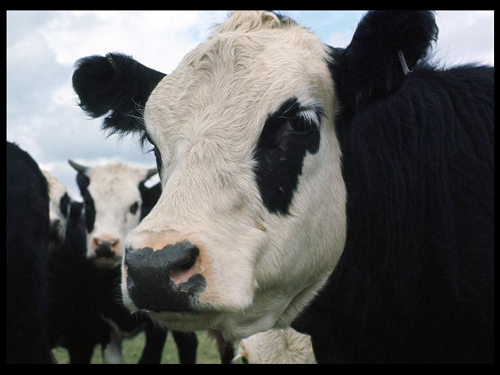
cow1.jpgFarmers Weekly asked me whether the BBC made any programming specifically for people in the countryside or for farmers. And the short answer is that we don't. Just like we don't make programmes specifically for people in the city or for people in the suburbs, or for accountants or train drivers. What happens in the countryside, though, is of immense importance to the whole country. And farming is a big part of the countryside - indeed, farmers look after 75% of the land in the UK and are responsible for producing much of what we eat and how the land is managed. So the BBC absolutely should examine issues that affect farmers, from bovine TB to renewable energy policy.


But, of course, farmers aren't the only people in the countryside. In fact I reckon there are at least 100 different groups routinely commenting on various aspects of rural affairs, including farmers, landowners, environmentalists, conservationists and business groups. The countryside is certainly not without issues, whether it's rural services - transport, health or communications - or questions over agricultural practices. Very little in the countryside is black and white, apart from the cows!

My job is to bring these debates that are shaping our countryside to a wider audience. The BBC provides a generous amount of airtime to do this - not just Countryfile and Farming Today but also Costing the Earth, On Your Farm, The Food Programme and Ramblings on Radio 4, alongside many other TV shows including Jimmy's Farming Heroes and Mud Sweat and Tractors. And don't forget that wherever you are in the country you can also watch BBC Scotland's Landward, or listen to Radio Wales' Country Focus or Farm Gate from Northern Ireland, on BBC iPlayer.


I think Countryfile has proved that you can make mix journalism and entertainment in a way that appeals to a wide audience. The challenge is to get the balance right between entertainment and fact-finding. Countryfile must be informative, but it has to be genuinely interesting and enjoyable so people will want to watch it. It would be no good for me to make a programme about the countryside that only certain people could understand or that would only interest a tiny minority. This isn't 'dumbing down', it's making what we do accessible to all. I think this is the very heart of good factual television: telling complex stories in interesting and engaging ways. I'm lucky to have excellent teams of producers and researchers who are never short of ideas for how to make what may seem like distant issues - whether it's livestock disease, food security or river pollution - real and understandable for our audiences wherever they are.


It's the same with Farming Today. It's not just for farmers, just as Law in Action isn't just for lawyers and Horizon isn't just for scientists. People listening to the radio at quarter to six in the morning are just as likely to be commuters as farmers, so we design the show to be a broader look at food production and rural life. If Farming Today were, say, a 15-minute overview of sheep and cattle prices, not only would it be of limited value to farmers, who can get this sort of information in much more depth elsewhere, and not only would it be a kick in the teeth for the specialist farming media who provide it, but, most importantly, it would be a massive missed opportunity to tell the story of the countryside to a wider audience.


I'm very pleased that Countryfile is now reaching over 6 million people a week, up from 2 million since its move from morning to evening. And Farming Today now has around 50% more listeners than a decade ago. Over 900,000 people now regularly tune in every week - and on Saturday mornings Farming Today This Week has had over 1 million listeners on a couple of occasions this year. I'm pleased because this means that more people than ever are gaining an insight into the kind of rural issues that, at the end of the day, affect us all. Of course, Countryfile is also a showcase and a champion for the countryside. It's a breath of fresh air for people who don't always have the chance to escape or enjoy what the countryside has to offer. The popularity of shows like Countryfile and Open Country on Radio 4 reflects what I've always believed - the countryside is a great place to be.


As I said, we're bringing the countryside, the rough and the smooth, to a greater audience than ever before. As someone who grew up in the countryside and lives in the countryside, I'm sure that can only be a good thing.

But I'd never claim that we couldn't do more or that we get everything right. Far from it, so please do let us have your feedback, suggestions and ideas - by commenting below, by visiting the Farming Today message board, or by emailing Countryfile.

Andrew Thorman is a BBC executive editor. He's responsible for many of the BBC's rural affairs programmes, including Countryfile and Farming Today. In this week's Farmers Weekly, he's been answering questions about what goes into these programmes and why.

A decade of BBC Digital

Blog comments are currently unavailable. Find out more.

Post categories:

Jana BennettJana Bennett|17:16 UK time, Wednesday, 9 December 2009

446adultseason1.jpgAs we head into the next decade and decide what to call it (I never liked the 'noughties'), it's worth looking back over the last 10 years.

Hard to believe, but at the beginning of the decade we didn't have any digital channels as viewers would recognise them today. We'd launched fledgling channels BBC Choice and BBC Knowledge but, editorially, they bore little resemblance to today's BBC Three and BBC Four. We weren't supporting the digital channels in a way that would help them become as loved as our terrestrial channels. And we hadn't yet launched either of our children's channels.

We decided to make them mixed genre, to distinguish them in the multi-channel world. As a result CBBC, CBeebies, BBC Four and BBC Three reflect the Reithian principles and audiences obviously appreciate this.

This year it was fantastic to see that 18.5 million 16-34 year olds tuned in to watch our Adult Season on BBC Three. These programmes explored what it means to be a young adult in Britain today and showed that this age group appreciate challenging innovative TV that offers them more than wall-to-wall reality.

BBC Four has had a record year too without compromising its mission to provide the very best cultural and arts television, while the pillars of BBC television's output, BBC One and BBC Two, remain creatively vital. BBC One really comes into its own at Christmas and a blockbuster schedule has become as much a part of the British family Christmas as turkey and all the trimmings.

And capping such a triumphant decade is, of course, the iPlayer. Because it's available on so many different platforms (it's just launched on Freesat, by the way), it's also bound to relieve the tension in any families with a potential to fight over the remote.

Meanwhile Freeview passed another milestone this week and is now in over 10 million British homes - an important achievement for the BBC and its partners in digitally enfranchising the population without the need for them to pay a subscription.

No doubt before the next decade is out the days when everyone watched non-HD broadcasts will also be a quaint memory...

For a fuller exploration of our record-breaking year it's worth visiting the BBC Press Office site or this article on the Broadcast website, but for now, no matter how you choose to mark the end of the year, and indeed the decade, I wish you and your friends and families a peaceful and relaxing Christmas.

Planning the Christmas TV schedule

Blog comments are currently unavailable. Find out more.

Post categories:

George DixonGeorge Dixon|16:46 UK time, Monday, 7 December 2009

doctorwhoxmas.jpgWhen I was growing up I used to wait eagerly for the Christmas schedule to see what delights would be coming on television in late December. I still get the same excitement seeing the final Christmas schedules, but for different reasons. As Head of Scheduling for BBC Vision I oversee the plans for five television channels and BBC One in particular. It's a privilege to be responsible for the BBC One schedule over such an important time of year, but I'm always anxious that our channels live up to the expectations of all our viewers.

After each year's Christmas schedule has transmitted we receive lots of detailed feedback from viewers. My job is to translate that into our plans for the following year. Audiences have high expectations of Christmas television, whether they're watching as part of a big family or in a smaller group. Surprisingly, more than a quarter of the audience on Christmas Day will be watching alone. Another quarter of the audience will be watching with children. And the remaining 47% will be watching in a group with no children. So when we create the Christmas schedule for BBC One, BBC Two, BBC Three, BBC Four and the HD channel, we have to finely balance the programmes and schedule to deliver to these distinct audiences.

In addition, the mindset for viewing at Christmas can be contradictory. We enjoy seeking out new programmes, but at the same time many viewers say they're unwilling to 'take risks' when choosing programmes. This is consistently reflected in the numbers of people who love seeing classic television at Christmas such as comedy or vintage films. This need for familiarity could also be down to the desire to keep other people who are watching with you happy. Viewers also tell us that often television is playing as a 'background' over Christmas. So programmes that are lighter in tone and that can be easily dipped in and out of frequently prove popular.

Taking all of this into account, it's easy to see why some of the most popular programmes over the years have been comedy and entertainment specials featuring the biggest stars of the day, blockbuster family films, and high-octane storylines in series such as EastEnders. Den serving Angie with divorce papers in 1986 remains one of the most enduring Christmas Day specials for over two decades. And I hope people anticipate the Royle Family special at Christmas in the same way that people used to look forward to Morecambe and Wise.

This year's highlights include David Tennant's mesmerising performances in his final Doctor Who episodes and also as Hamlet. In comedy, alongside celebrations of Not the Nine O'Clock News, June Whitfield and Steve Coogan, we have brand new specials from Catherine Tate, The Royle Family and Outnumbered. In arts we have a celebration of the life and work of Orson Welles, plus a new documentary that examines the story behind one of the world's most admired nativity paintings, the Mystic Nativity by Botticelli. There's also a wide range of music - from Top of the Pops, Sting's Winter Songbook, Jools's Annual Hootenanny and Songs of Praise from Jerusalem to our live Christmas morning service from Chester Cathedral. I'd argue that this selection is indicative of an unrivalled, high-quality line-up from the BBC, offering something for everyone. So although for obvious reasons I can no longer eagerly await the Christmas schedule, I'm already looking forward to seeing how viewers react to our programmes. I'm planning Christmas 2010 already and I'd love to know what audiences are looking for next year.

Christmas with the BBC

Blog comments are currently unavailable. Find out more.

Post categories:

Jana BennettJana Bennett|10:32 UK time, Monday, 7 December 2009

about_the_bbc_gruffalo_09.jpgOn Friday we published a sneak preview of our Christmas line-up and today I want to tell you a bit more about what is coming up on BBC television over Christmas and the holiday season. We are aiming to create a television schedule which gives viewers a chance to share big moments, especially on BBC One, which is why we have so much original programming over the period across our channels.

I am pleased that this year BBC Television's commissioners, channel teams and programme makers have delivered one of our best ever holiday schedules. There's a cracking list of specials from Britain's best comedy talent from Catherine Tate and Victoria Wood to the Outnumbered family. We will all bid an emotional farewell to David Tennant in one of the most dramatic and spellbinding exits in Doctor Who history, and the much-loved children's book The Gruffalo comes to life on screen for the very first time. I am also looking forward to the Orson Welles season on BBC Four, and modern dance courtesy of the Ballet Boyz on BBC Three bringing us The Rite of Spring. I saw the filming in London's East End last month and I can promise viewers that BBC Three will bring new audiences to Stravinsky's wonderful ballet through this original interpretation.

There's also a whole host of drama and comedy, a celebration of food and a wide range of big family films, with the Incredibles one of the highlights on BBC One.

We have planned for the arts to take centre stage on BBC Two, with the Royal Shakespeare Company's acclaimed production of Hamlet with David Tennant demonstrating his wonderful range as an actor alongside Patrick Stewart - another one of Britain's finest. This production is a small miracle of planning. It was shot after the RSC production had ended, in a palatial but abandoned seminary in north London. When I saw the gravediggers' scene being filmed, the cast had gathered after getting time off from other plays, film and TV commitments in order to be reunited. So we will present the original cast and director of Hamlet so that an even wider audience can see it. The Private Life of a Christmas Masterpiece, also on BBC Two, celebrates another great work as we look at the Mystic Nativity by Botticelli. And this is to mention just a few highlights. More shows will be available in high definition than ever before - and remember, with BBC iPlayer there's no need to argue over the remote.

Happy Christmas!

Christmas crackers on the BBC

Blog comments are currently unavailable. Find out more.

Post categories:

Chris JonesChris Jones|16:42 UK time, Friday, 4 December 2009

As you may have seen, Delia's Classic Christmas kicked off December with a festive bang on Tuesday. For those who can't wait much longer, Jana Bennett - the boss of BBC television - has asked me to post this sneak preview of our festive Christmas crackers to whet your appetite.

In order to see this content you need to have both Javascript enabled and Flash installed. Visit BBC Webwise for full instructions

The Hitchhiker's Guide to Encoding: Before we start

Post categories:

Chris JonesChris Jones|10:07 UK time, Friday, 4 December 2009

Editor's note: Over at the BBC Internet blog Andy Quested of BBC HD has published the first in a series of posts addressing issues raised in the ongoing robust debate surrounding the BBC's HD service. To read the full post and to comment visit the Internet blog.

hdtestcard.jpg

Friday

It's been sometime since my last post on the blog but I have tried to be as active as I could on the existing ones. I read all the posts and my thanks go to Paul Eaton who has listed many of my comments just to prove I do exist! I try to answer points raised in the blogs but unless there is a specific issue, I just can't answer each post individually.

Because there's a lot to say, I thought it would be better to serialise this blog over the next week with each episode covering a different topic. I will make no apologies for the titles and many thanks to the memory of Mr Adams.

Tea with the Mayor

Post categories:

Roger Mosey|14:48 UK time, Thursday, 3 December 2009

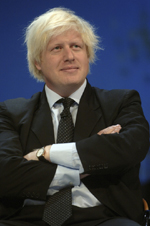
boris.jpgThe road to City Hall starts with some audience research and some anecdotal evidence.

The research is from the Beijing Olympics. It showed that 74% of the British public followed the Olympics on television, while 31% accessed our online services; 15% used radio; and only 2% made use of mobile. Don't worry that it adds up to more than 100%: obviously it's possible both to watch TV and use online to follow the Games. But we did investigate that 2% figure, which showed a lower-than-expected reliance on mobile devices despite their huge growth in recent years.

Please note: this is an extract. Read the rest of Roger Mosey's blog post and leave comments on his blog.

Women We Loved on BBC Four

Blog comments are currently unavailable. Find out more.

Post categories:

Richard KleinRichard Klein|11:00 UK time, Wednesday, 2 December 2009

women-on-four.jpgWomen We Loved - well, I certainly love them now - Enid, Gracie and Margot, that is.


After a three week rollercoaster of a season called Women We Loved, BBC Four has recorded some of its highest viewing figures ever, including a 1.4 million audience for Gracie!, about Gracie Fields. In the previous week Enid - about children's writer Enid Blyton - won over 1.3m viewers. And last night the season ended with a fine film starring Anne Marie Duff playing Margot Fonteyn.


Now, ballet doesn't usually rate anywhere. Sky Arts' documentary about Margot - coincidentally played out just the night before BBC Four's drama - rated 2,000 viewers. So I wasn't holding my breath. But over 750,000 people came to watch BBC Four's film, and for that I am both grateful and delighted.


It is always a bit of gamble to commit to three big dramas based around a single subject, especially one about the arts, in this way - and women artists at that. So I was a little apprehensive.


And when I first turned up at the office last week and looked over to the channel scheduler to enquire about how Enid had done - the first of the three films to transmit - he rolled his eyes and said: ''There's a '3' in the figures.''


Now I know BBC Four isn't just about share and ratings. It is reputation that counts. But still, my heart sank. Only 300,000 viewers! This had Helena Bonham Carter playing Enid and the drama team had worked miracles to make the film as wonderful as possible.


''Actually it's 1.3 million,'' said the channel scheduler after a pause. He'll have to go.


When I first commissioned these three films the idea was to try and reflect the private lives of three women who had lived their lives very much in the public eye. All three women were artists, serious players in the artistic worlds they chose to inhabit: Enid, one of the greatest writers of children's literature and certainly the most prolific; Gracie Fields, one of Britain's greatest female singers and entertainers; and Margot Fonteyn, possibly Britain's finest ballerina and certainly its most famous.


But it isn't easy having a private life when you're striving for greatness, and these films sought to explore the demands of that coexistence. Across the season three separate stories showed how these women tried to lead complex lives and how they each in seperate ways dealt with different pressures - some handling it well and some handling it pretty badly.


It is a hallmark of BBC Four's drama output that the channel provides a platform for performance. In all three cases the central leads - Helena as Enid Blyton, Jane Horrocks as Gracie Fields and Anne-Marie Duff as Margot Fonteyn - delivered in spades, and I am grateful to their efforts.


I've been thinking hard about how to expand BBC Four drama output. I want to carry on what is a fine tradition of biopics here. Next up, in early January, is Sophie Okonedo's extraordinary depiction of Winnie Mandela; and then Christopher Eccleston plays Beatle John Lennon in a powerful exploration of why he broke up the Beatles and went to America. Blame it on the parents, I say.


But I am also going to be taking drama in a new direction. I still think it is important to offer audiences something that they instantly recognise. So, a true story like Canoe Man, which tells the story of John Darwin, who went missing in his canoe and was presumed dead until he turned up five years later living next door to his wife, is a high-profile subject for a factual drama.


But I am also keen to open up the channel to other expressions of drama, and one way we will do so is via modern adaptations of 20th-century classics. I have commissioned a new season for next year potentially called Modern Love. This seeks to explore the story of how men and women have changed in their relationships between each other, as seen through literary classics of the 20th century. To that end I have commissioned two new dramas - DH Lawrence's Women In Love, and John Braine's Room At The Top. Both of these novels take very different approaches to the same subject, and both are sometimes overlooked, which makes them intriguing subjects for our first adaptations. They'll form the backbone of the season, with a range of other programming examining the same subject from different angles. Modern adaptations are an exciting new direction for drama on the channel and one which I hope the viewers will love as much as our biopics of Enid, Gracie and Margot. We're hoping to attract the same calibre of actors to the project and as soon as I have news I will share it with you, but if you would like to read more about the two adaptations for BBC Four, please click here.

The BBC's award-winning diversity

Blog comments are currently unavailable. Find out more.

Post categories:

Amanda RiceAmanda Rice|12:13 UK time, Tuesday, 1 December 2009

street.jpgAs a public sector broadcaster, reflecting the differences within as well as between the UK's diverse communities, nations and regions in all our output is part of what we are here to do.

It's nice to know that when we do that well - when we seek to really understand and connect with difference through authentic portrayal and programmes - we also make programmes which a whole range of audiences love.

Just look at the past couple of weeks. The BBC has picked up awards related to our output which all serve to highlight the real progress we are making in being more reflective of our distinct audiences.

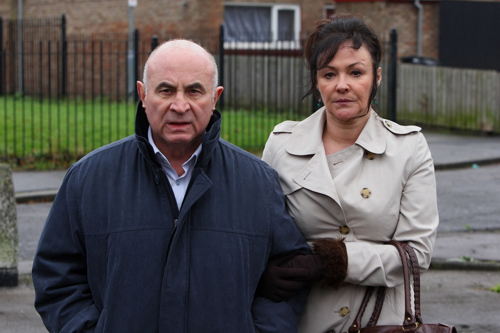
At the Ability Media International Awards (AMI) 2009, BBC One's The Street (pictured above), which presents a complex and compelling insight into the lives of individuals from diverse backgrounds, won the Television Award, whilst the Radio Award went to The Hunchback of Notre Dame, the result of a collaboration between Radio 4 and Graeae, a disabled-led theatre company.

This follows last week's Cultural Diversity Network (CDN) Awards where a strand of our excellent Storyville series, Heavy Load, won the Excellence in Creative Output - Diverse Content award.

Our programmes took up 19 of the 32 nomination slots at the Mind Mental Health Media Awards - a figure which demonstrates the breadth and depth of our programming and highlights the value of the BBC when it comes to educating and informing as well as stimulating debate on some tough issues that might otherwise be overlooked.

This included some for the Newsnight focus on mental health amongst MPs; Alastair Campbell's documentary Cracking Up, part of the BBC Headroom campaign; Radio 4's You and Yours, and the radio drama Dos and Don'ts for the Mentally Interesting.


EastEnders also received the Making a Difference award for the ongoing commitment to mental health issues.

This is one that we should be particularly proud of as it signals that one of our most popular and entertaining dramas is connecting with a whole range of audiences through great character-led storylines and a stream of fresh ideas. Critical to the success of programmes like EastEnders are good stories with well-rounded characters. A sensitive and nuanced portrayal of cultural difference and an avoidance of the stereotypes of old is key.

Get the stories right and believable characters will follow.

Portray difference authentically and viewers will follow.


Authenticity is something our viewers recognise as soon as they see it and it is that which makes them switch on. They expect to see it and so they should.

Stories about mental health can help to educate and inform our audiences. These stories can really get under the skin of issues which some viewers may never have had a connection with, whilst others may immediately recognise and identify with experiences that mirror aspects of their own life.

At the RADAR (the Disability Network) People of the Year Awards last night the BBC also won a number of awards in the area of disability portrayal. These were for Otto: Love, Lust and Las Vegas (BBC Three) and for EastEnders (BBC One), which over the last 12 months has consistently portrayed disability positively.

In some cases disability is merely incidental and in others it is central to the story line, but in all cases it reflects disabled life as it is - no mystique, no stereotypes, just people, who are far more than their impairment - getting on with their lives and facing the barriers society inevitably throws at them.

I believe the success at the RADAR awards can be credited to our renewed focus and effort over the last year to get to grips with portraying disability. The BBC's Disabled Talent Directory was launched in June this year and a number of talent searches have been held around the UK, where we've been meeting aspiring disabled actors and performers.


Are we there yet? Certainly not, but scooping big wins as we have over the last few days does indicate a real step-change, which can only bode well for the future.

About this blog

Senior staff and experts from across the organisation use this blog to talk about what's happening inside the BBC. We also highlight and link to some of the debates happening on other blogs and online spaces inside and outside the corporation.

Here are some tips for taking part.

This blog is edited by Jon Jacob.

Subscribe to this blog

You can stay up to date with About the BBC via these feeds.

If you aren't sure what RSS is you'll find our beginner's guide to RSS useful.

[an error occurred while processing this directive]

Follow this blog

Other BBC blogs

More from this blog...

Categories

These are some of the popular topics this blog covers.