Alastair Chisholm's novel Orion Lost is an exciting story that is out of this world!
Alastair visited Authors Live to read from the book and talk about how he writes. He had lots of handy tips for anyone who'd like to try writing stories of their own. Whether you have read the book or not, in this article you can learn about:
science fiction
coming up with creative ideas
how to write your own stories
Title and cover
Activity 1 - Cover
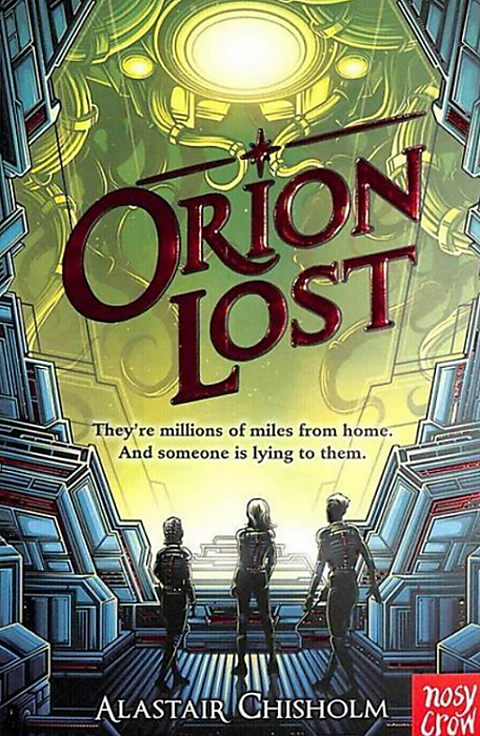
Examine the title and cover illustration of Orion Lost by Alastair Chisholm.
Try and answer these questions:
What clues do the title and cover give us about the type of book we're about to read?
Do you know what the word Orion might mean or refer to? Does this help us predict what the story might be about?
Alastair discusses how he chose the title 'Orion Lost'
When you are trying to think of a title for a story, you want something that you think is going to… It's going to really grab the reader and give them some feeling about what's going on.
So in the case of Orion Lost, the original title was actually Orion's Watch. Orion is the star sign up in the sky, the constellation, and so that's the sort of space side, and then the Watch was named after the old night police officers, who used to look after the town when the people were asleep.
I went to my publishers with that and they really liked the book, but they had some feedback on the title because they said that they had given it to some test readers and some of the test readers had come back and said, "Where's his watch?" They said, "We never found his watch."
So we said, "Okay, that's not quite going to work. So we had another brainstorm and I came up with Orion Lost.
Where is the book set?
Orion Lost takes place on a transport ship travelling through outer space.
In reality, humans have only travelled as far as the Moon. But we do know what other parts of the universe are like from telescopes and space probes we have sent much further into space. This means we can base a story set in space on real science and facts, but there is plenty of room for imagination!
Watch Alastair Chisholm read a section from Orion Lost on BBC Authors Live. Listen out especially for the type of language he is using to describe the ship, and the part of space they're exploring.
"There was a ship, in space, lost. It was a large, old, mining transport, designed for longhaul trips to small moons and asteroids. The enormous squat engines and hydrogen scoop underneath gave cheap and steady propulsion, but not much acceleration. The command module was huge, but the carg"- Sorry-"The command module was small, but its cargo section was huge, taking up most of the ship. It was broadcasting a radio signal: —Earth ship Orion, four months out of Earth and heading for Eos Five. Our location is Sector 278. Coordinates 549 dash 2 by 902 dash 8 as of—
An experienced miner might have noticed odd things about the ship. It had been patched and refitted, and its life support systems – gravity, oxygen, food processing – had been extended to cope with a much larger crew. Extra equipment was fastened round the hull, for planet exploration. Rovers, diggers, habitats, all with landing gear but no way to take off of their own. They could land but they’d never take off again. Not a mining transport any more then, but a colony ship, taking a group of brave new-worlders off to some distant settlement, and helping them set up. —currently adrift, said the message, and we have no propulsion, although our Jump drive is working. Four large power generators bulged out near the base, but two of them were cold and dark and only a few of the ship’s outer lights were working. The ship was turning gently, and as it turned, it revealed an enormous scorched rupture near one of the engines. 'We have experienced severe damage to the ship', said the message. A ship in deep space hardly ever sent out a distress signal. What would be the point? Ships were like tiny motes of dust in the vast sky, so far apart that the chance of one coming across another by accident was virtually none. Near Earth perhaps, or around the Solar System, perhaps heading to one of the older and more established colonies, on a well-known route. But not here. Here you could travel for six months and see no one, and no sign that anyone else had ever existed. Here there were no friends. 'Command has been compromised', said the message. 'We are unable to establish order. All command crew rated able-bodied or higher are disabled and cannot resume control.' In fact, this far out – so far from Earth you could barely see its sun as a tiny flickering star – if you found anyone at all, it would be more likely to be Scrapers, pirates and thieves. Or worse still, the mysterious, alien Videshi: strange, half hidden, half understood, terrifying. A ship in deep space hardly ever sent out a distress signal, because if you were helpless enough to send one, then you did not want to be found. The message repeated: 'This is a general Mayday from the Earth ship Orion, four months out of Earth'… Something found them."
Activity 2 - Setting
In this book, Alastair Chisholm imagines that humans can live on board ships that travel long distances away from the Earth. The ship Orion has been away from earth for four months at the start of the book! Can you imagine the feeling of travelling in a space ship for four months? What might you see?
Watch this clip featuring Tim Peake, with footage from the International Space Station, to get a sense of the atmosphere you'd have to try and create.
Tim Peake:
Hi, I’m Tim Peake. I’m an astronaut based here at the European Space Agency, in Germany. And from December 2015 to June 2016, I spent six months orbiting Earth on the International Space Station. Looking down on the Earth from the ISS gives you a completely new perspective on the planet. Something you get a sense of in this clip from professor Brian Cox, which takes in not just our own planet, but also looks at where it sits alongside the other planets in our solar system.
Brian Cox:
‘This is the ball of rock we live on. It carries bus through cycles of night and day, as it turns in its axis every 24 hours. A year is the time it takes to orbit the Sun. And we have seasons because the Earth’s axis is tilted by 23 degrees.
To see how that works we need to speed time up, so a year passes in just ten seconds. At this pace we can see how the southern and then northern hemispheres are angled towards the warmth of the Sun, taking us through yearly cycles of summer and winter.
All the rhythms of our lives are governed by how the Earth travels through space. But it’s not just the Earth. The whole solar system is full of rhythms. Each planet orbits the Sun at its own distinctive tempo.
Mercury’s the fastest. Closest to the Sun, it reaches speeds of 200,000km an hour, as it completes it orbit in just 88 days.
Venus rotates so slowly, that it takes longer to spin on its axis than it does to go around the Sun so that on Venus, a day is longer than a year.
Further out, the planets orbit more and more slowly. Jupiter, the largest planet takes 12 Earth years to complete each orbit.
And at the very furthest reaches of the Solar System, 4.5 billion km from the Sun, Neptune travels so slowly that it hasn’t completed a single orbit, since it was discovered in 1846.
The Solar System is driven by these rhythms, so regular that the whole thing could be run by clockwork. It seems extraordinary that such a well-ordered system could have come into being spontaneously. But it is in fact a great example of the beauty and symmetry that lies at the heart of the universe.’
Think about how you would write a story with outer space as your setting.
What would life be like inside the spaceship? How would you eat, sleep and exercise? Can you come up with different ways to describe these conditions?
Think about how all five senses experience the world around you, both inside and outside of the spaceship.
- What adjectives and adverbs (describing words) could you use for what you see, hear, smell, taste and touch?
- What could you compare your setting to? Can you use similes or metaphors to bring your scene to life?
As we are still learning so much about space, you will have to really use your imagination to add detail.
- Could there be living things you might encounter?
- What other challenges and dangers might exist in space?
What is science fiction?
Science fiction (or 'sci-fi' for short), is a popular genre, or type, of fiction.
Science fiction usually involves a world that is different to our own, perhaps set in space or on another planet. Sometimes the setting is Earth, but the story is taking place in the future and involves technology that we haven't invented yet or that doesn't exist.
A common theme of science fiction is technology or innovation going too far, or out of control, in a way that becomes dangerous. This kind of plot makes these books thrilling and fun to read.
Features of science fiction
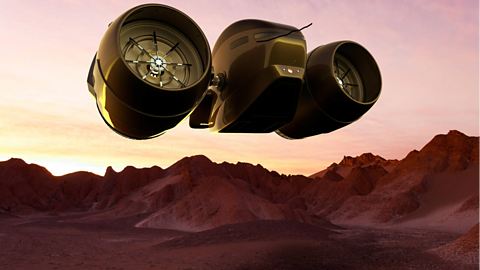
Science fiction often features technology that doesn't yet exist. This can take many forms but often the imagined technology has the potential to go wrong - which allows the writer to create drama and interest for the reader. Here are some examples of the technology often found in science fiction.

Image caption, Robots
Technology can even take the form of a character - a robot or android who has been built for a purpose, who then goes on to do other things within the story that weren't intended. Some famous examples of this are the short story collection 'I, Robot' by Isaac Asimov, and the film Wall-E. (rico ploeg/Alamy Stock Photo)

1 of 3
Tips to help you write your own sci-fi
When Alastair visited Authors Live, he shared his top five tips for new writers.
- Stories are people. It doesn’t matter what kind of story you’re writing, characters and their problems are what make a story. Think about what the people in your story want. What’s happened to them?
- Scrapbooks and plans – get all your ideas down on paper. Take time to scribble them all out, whether it’s in a mind map, a notebook, or a computer document.
- The story rollercoaster! This is the fun part, going on a journey with your story.
- Walking and talking – if you get stuck, stand up, get moving and talk yourself through the problem! When someone else tells you a problem they have, you are more likely to come up with a way of solving it, so try talking yourself through anything difficult to get you (and your character!) out of trouble.
- The only rule of storytelling! Keep going! You can always go back and revise your story – just get to the end and see what you have.
In this section, he talks about his second tip - how to record all your 'fizzing' ideas on paper and how to start planning your story. Watch this clip where he talks about how he does this in his own writing.
And my second tip all about how you can go about taking the ideas that you've got and turning them into a story.
Now you may have had a problem where you are trying to think of an idea for a story. But you can't get it straight in your head until you start to write it down. Then you are not ready to write it down because you haven't quite got it straight in your head.
Or maybe you've got hundreds of ideas, all sorts of ideas, and they're fizzing in your brain and you try to write them down and you get half a page in and then you discover that it's gibberish. You can't understand a single thing that you've written and you can't even remember what the main character's name is any more. It's a mess.
How do you take these ideas and give them space to breathe and give yourself a plan of how to work them out?
Well, there are lots of different approaches to this and I don't think there's really a wrong or a right one. But the one that I tend to use is something I call 'scrapbooks and plans'.
This is my notebook here. Says Alastair Chisholm, Alastair's notebook. Top secret. That's how you can tell it's mine. And this is where I would capture my details of the story that I'm going to write and the first thing to do is to take a sheet of paper or you can use your own computer or your notebook and you just want to scribble every idea that you've got about your story, every fizzing thought that you've got you want to capture it.
First of all. Don't worry about turning into a story yet. Just stick it down. So this… This is the scrapbook or my upcoming - I'm sure - new book which is going to be a global phenomenon. I'm pretty certain it's called Alien Bunnies of Doom. And it's a great new science fiction adventure. I'm pretty sure it's the next Harry Potter.
So I've got all these ideas. I'm going to start throwing them in and you can see I've got lots of thoughts here. I've got things like what the characters are going to look like. Where they are going to live, what they might be called, a villain might be called, things that might happen. They're not in any particular order and certainly not bothered about spelling. I'm not even bothered about putting them in the right place. I just dumped them all down, all these ideas are captured so that you've got them and you can look at later.
Now, you might be thinking. I don't have any, I guess. And that's tricky. You know you start off with building up ideas is a thing that you practise and you'll get the hang of. But there are some ways that you can cheat. You can take the things that you know and love and put them into the story.
So maybe you really love football. Right. And maybe you… you really know what you're talking about when you talk about football. Maybe you love the game. You love watching, you know your team, you know all the transfer costs and all the things that have been going on. So why not use that. Take your story and set it around a football game. It could be on the pitch, it could be in the terraces, watching, it could be in the changing rooms halfway through, it could be just somebody at home, really, really loving their team and wanting them to win.
Or maybe you are the world's greatest expert on unicorns. All right, well then you know what would make a really great unicorn story because you love unicorns. So take what you know, and use that to come up with ideas for your story.
So when you've got all your ideas and you've captured them all the next thing to come up with a plan. So what I do is I have a look at all these ideas that I've got and I think about them and I think about the order in which they might go and I start to get a feeling for what the story might be and that is when I come up with the first part of my plan and the first part of my plan is called 'Who. Where. What' And it's basically who is going to be in this story? What are the problems that they're going to have? And where is it going to take place? So who is going to be in it - that's the character.
You may have the main hero. You might have the villain. You might have sidekicks or other friends or other characters in the book and you just want to put down everything that you can think about this person. What's their name? Where do they live? What are they called? What are they… what are they like? What do they look like? What do they sound like? Do they have any mannerisms when they speak? What do they think? What do they think about the main character? Do they like them? Are they an enemy? A friend? Put as many as you can in and think as much as you can about the way they think.
And then the next thing is: where does it take place? Well, that could be entirely up to you really, but it could be at a football game. It could be in a magical unicorn kingdom. It could be in your school. Wherever it is, have a think: what does it look like? What does it sound like? What does it smell like? If it's your school what does it smell like just after lunch? What does it smell like just after the boys have done P.E? What is it like to be there? And then lastly, have a think about the kind of problem that you want. What is the danger that they've got?
What is the problem that they have to solve? And at the same time that you're doing that have a think about any words that you think might be useful. So if you're doing a scary story maybe think about scary words… like slither or slide or creepy or terrifying… things like that. Any really good words you can stick them in.
And then the last thing that I do is a chapter plan. This is my chapter plan for Alien Bunnies of Doom. And it's in ten parts, but you can have fewer if you like, you can have five or even three. You can always split them up later. And all I do here is I write maybe a line or two about each thing that I'm going to do. And this is a really great idea because it allows you to spread your ideas out throughout the story and it lets you keep track of the things that maybe you need to have in a particular order. If you've got the villain down here doing his nasty stuff then you'd probably better introduce him further up so that gives you a way to spread your ideas out. Get your plot right.
And then just start. You can start at the start. I normally start at the start, but you don't have to it. Once you've got a plan you can start anywhere. So you can start at the most exciting bit if you like and spread from there. But it's up to you.
Activity 3 - Scrapbook and plan
Watch the video above where Alastair talks about his planning method.
Using what you've learned about titles for stories, setting, and maybe even science fiction, begin a scrapbook of ideas for some creative writing of your own. (You can even write your name and TOP SECRET on the front, like Alastair did!)
Try to think about:
getting all your brilliant ideas down on paper, whether you write, draw or use mind maps
using Alastair's who/where/what method of making a more detailed plan
The story rollercoaster!
Now you've got a plan, loads of ideas, and maybe even a title. Your adventure is about to begin!
Alastair has a helpful (and memorable) way of thinking about driving the plot of a story to make sure it is exciting. His third tip was all about the story rollercoaster, all the twists and turns that make a story exciting for the reader.
Watch the clip and think about your favourite stories, and whether they go on a rollercoaster journey!
You know the idea of a rollercoaster. You get in the cart at the start.
You get strapped in and off you go… and you're all fine. Everything's fine. Then you start to go up and you go "woahhh", and everybody starts laughing nervously and "Oh, here we go…" And you go up and up and up and everybody's starting to get a bit tense and you go up and up and up and up and up until you are right at the top and then you are looking down over and you are thinking "Wow. I'm really high up. I'm not sure about this at all."
And then suddenly down you come… Whoosh! And you are waving and you are screaming and everybody's waving their hands "Oh we're going to die!"
And then you get down to the bottom and you slow down, you stop and everybody is like "That was brilliant. Let's do it again."
That's what you want from your pacing. That's what you want from your story.
So when you are thinking about the chapters in your story, think: where does the action happen? And how can you make it so that the action gets more and more and more, and the tension gets more and more and more until you reach one point where everything has gone wrong? And then how can you get them feeling that feeling?
Activity 4 - Get writing!
You've thought about your title and setting, you've planned who/where/what, and you've made it into an exciting rollercoaster ride! Not bad when you started with a blank piece of paper.
The time has come to pull it all together, and try and write the story. It might even be a science fiction adventure like Orion Lost!
Remember to describe the setting around your characters using all five senses.
Look through your ideas, maybe even some that you'd left out will come in useful later in the story.
Remember the rollercoaster journey!
And if you need more tips from Alastair, there's a link below to a full interview and clips from his Authors Live event. Good luck and happy writing!
Writing tips interview with Alastair Chisholm
Full interview with more helpful pointers for new writers!
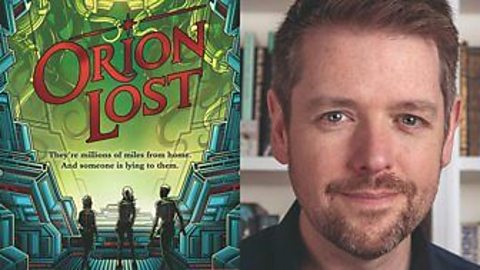
Alastair Chisholm on BBC Authors Live
Watch more clips from Alastair's event

How to create a story structure. video
Organise your plot and create a great structure with these tips
More on Stories and poems
Find out more by working through a topic
- count5 of 14
- count6 of 14
- count7 of 14
- count8 of 14