How to structure a story
The structure of a story is the order that events take place in. Many stories follow a simple story structure called the story mountain.
In this article you can find out how to:
- Organise your plot
- Develop your story ideas
- Create an organised structure using a story mountain
This resource is suitable for creative writing for primary school learners.
Video - Story structure
Watch this video to learn how to create a story structure using a story mountain.
Organise your plot and create a great structure with these story mountain tips.
How to create a story structure.
Every story needs a plot: an exciting series of events.
Most stories follow a simple structure that is called the story mountain, but obviously all stories don't have to have a mountain in them.
The foot of the mountain is your opening where you introduce your hero and start setting the scene.
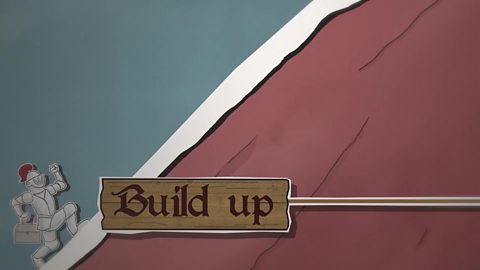
Ah, a knight - a perfect character for your story. Your next stage takes you up thestory mountain. It's called the build up.
Here, you build up the main body of the story. A plot will always be engaging if you add in a conflict, a fight or a mystery to solve.
It seems that the evil wizard in the castle on the other side of the mountain has kidnapped the heir to the throne. What a rascal!
Our knight must do something about this.
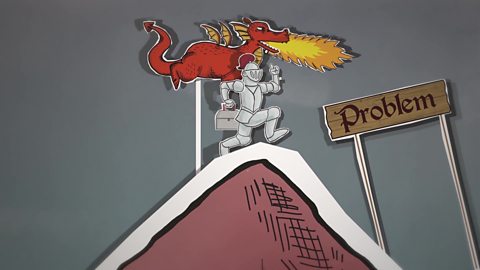
Now you're at the top of the mountain where the story peaks and our characters encounter a major problem, obstacle or dilemma.
A dragon! I would consider that a fairly big obstacle and the evil wizard has an army as well. Goodness me. How is the knight ever going to get past them?
Is our knight going to be roasted alive? Like a metal kebab?
This is the most thrilling part of the story. Be sure to keep your readers in suspense.
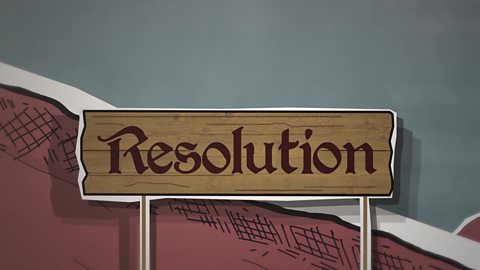
Next, we need a resolution. How does your character deal with the dilemma?
This is the point at which your character has to solve or resolve a problem to reach their goal.
It's a good idea to try and make your resolution unusual and original.
Well, I didn't see that coming.
Serves you right, you weasel.
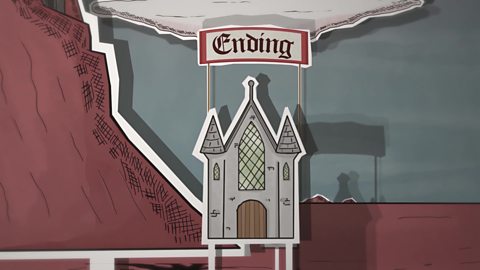
At the bottom of the mountain is the ending and conclusion of your story with everything resolved.
Just because it's the end doesn't mean you can't be creative.
You could add an unexpected twist.
Your story needs to engage the audience with an exciting plot and keep them engaged from the opening, through the build up, problem and resolution, right up to the ending on the final page and beyond.
Now, I think I'll have a wild boar cabbage special sandwich but on brown bread or white?
Oh, black it is.
Different stages of a story mountain
Every story needs an exciting series of events.
- Most stories follow a simple The order that events take place. called the story mountain.
- The structure of the story is how it is When something has been planned or arranged in a particular order..
- The ideas in a story should When something moves smoothly.. They should be linked and make sense.
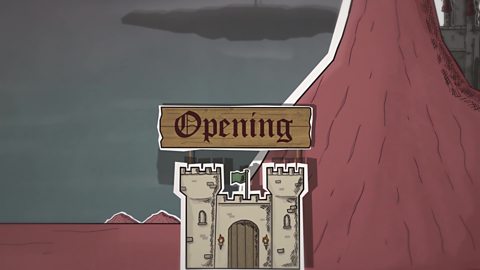
Image caption, Opening
The foot of the mountain is the opening to the story. This is when you introduce your hero, explain when the story is taking place and set the scene.
1 of 5
Writing the opening of a story
- The foot of the mountain is the The start or beginning of something. to your story with who, when and where.
- This is the beginning of the story where you When you use something or make someone known for the first time. your A hero is someone who is admired for their bravery or special qualities. The hero is usually the main character in a story., explain when the story is taking place and set the scene.
In our story we have a knight! A perfect character for our story.
Writing the build-up of a story
- The next stage takes you up the story mountain. It’s called the build-up.
- Here you think about what’s happening and build up the main body of the story adding detail to interest the reader.
- A plot will always be Something that is interesting and absorbing. An engaging story will make people want to keep reading to find out what happens next. if you add a A disagreement or clash. – a fight or a mystery to solve.
The evil wizard in the castle on the other side of the mountain has kidnapped the heir to the throne. Our knight must do something about this!
Creating a problem for your characters
- Now you’re at the top of the mountain where the story peaks and our characters come across a major problem, obstacle or A problem or challenge. This is usually a situation where someone has to make a difficult choice..
- This is the most thrilling part of the story, be sure to keep your readers in An excited or nervous feeling we experience when we are not sure what might happen next..
How is the knight in our story going to get past the dragon and the evil wizard with his army?
Resolving your character's problem
- This is the point at which your character has to solve or resolve a problem to reach their goal. This is the The solution or answer to a problem. A good story should end with a resolution to the characters' dilemma. .
- How does your character deal with the A problem or challenge. This is usually a situation where someone has to make a difficult choice.?
- It’s a good idea to try and make your resolution unusual and A new idea. Something that hasn't been copied..
The knight tames the dragon with a delicious sandwich. The dragon defeats the evil wizard by destroying his clothes!
How to write a story conclusion
- At the bottom of the mountain is the conclusion of the story with everything resolved.
- Even although it’s the end of the story, you can still be creative and add an unexpected twist.
Summary
Your story needs an exciting plot and an organised structure to keep the reader engaged with your ideas from the opening, through the build-up, problem and resolution, right up to the ending.
Key words about structuring a story

- story structure – The order that events take place in a story.
- organised – When something has been planned or arranged in a particular order.
- flow – When something moves smoothly.
- opening – The start or beginning of something.
- introduce – When you use something or make someone known for the first time.
- hero – A hero is someone who is admired for their bravery or special qualities. The hero is often the main character in a story.
- engaging – Something that is interesting and absorbing. An engaging story will make people want to keep reading to find out what happens next.
- conflict - A disagreement or clash.
- dilemma - A problem or challenge. This is usually a situation where someone has to make a difficult choice.
- suspense – An excited or nervous feeling we experience when we are not sure what might happen next.
- resolution – The solution or answer to a problem. A good story should end with a resolution to the characters' dilemma.
- original – A new idea. Something that hasn't been copied.
Test your knowledge
Quiz
Challenge
Create your own story mountain
Plan a short story. Draw a mountain and write your ideas for the short story on the correct parts of the mountain.
Before you start your story mountain…
- Borrow exciting words and phrases from stories and books you are reading. Write them down and save them to use later in your writing.
- When you are reading a story, pick out the parts of the story that match the story mountain and you could use these ideas in your own stories.
Ideas to help with your writing
- Write about personal experiences and imaginative situations
- You could write about The Magic Key, The Locked Door, The Treasure Box, When the Lights Went Out
- Use photographs, mystery objects, music, film and noises as inspiration for your writing
- Use the beginning of a story you’ve read and continue the story. What happens next?
- Use the ending of a story you’ve read and write the story leading up to the ending. What happened before?
Authors Live Extra. list
Get more from your reading and find inspiration for your own writing with exclusive interviews and tips from our Authors Live events.
More on Creative writing
Find out more by working through a topic
- count2 of 10

- count3 of 10

- count4 of 10

- count5 of 10

