Learning about setting in a story
Every story has a setting. The setting of a story tells us where and when the story is taking place.
In this article you will find out:
- What a setting is
- How to create a story setting
- How to use adjectives, metaphors and similes to create a setting
This resource is suitable for creative writing for primary school learners.
Video - Story setting
Watch this video to learn how to create a story setting.
Tricks of the trade to help writers choose the best setting for a story.
How to create a setting.
The setting of a story tells us where and when it is taking place. Let's choose a setting. It can be absolutely anywhere.
Ah, excellent! A boat drifting aimlessly out at sea.
Use your words to paint a picture for your readers. Give lots of detail along with plenty of adjectives. So what sort of ship should young Jane here be on?
It could be an old ship and our story could be set in the past. And where is the boat?
The barnacle-covered leaky galleon drifted across the shark infested waters towards a rocky, desolate looking island.
That sounds like a great setting. She looks a bit nervous, doesn't she?
Well, so would you be if you were her. Look at that large storm cloud.
No, wait. Look at that towering storm cloud!
The season or weather can have a big impact on your setting. The more descriptive you can be for the reader, the better.
You can use metaphors comparing two things which aren't alike but have something in common.
The storm whips the sea up into great walls of water.
You can also use similes, comparing things using like and as.
The waves throw the ship around like a wild animal toying with its prey.
Use all of your senses to describe your setting as this helps bring it to life for your reader.
After the storm the sea was calm. You can see it stretched out towards the horizon like blue velvet.
What can you hear? Seagulls calling on the sea breeze.
Maybe you can smell something. The salt-crusted sales?
And I can almost taste that rotten-looking fish stew. Haddock with a tangy cat vomit aftertaste.
Being on a ship means that young Jane is trapped by this fearsome pirate and can't escape her horrible food.
Good authors choose their setting with care and select a setting that is perfect for the story they want to tell.
Would your story be as exciting if it wasn't on a pirate ship in the middle of the ocean?
Would Jane be as scared of the pirate if she was on a fancy cruise ship?
No, I don't think so. But that setting could work for an entirely different story.
Look out for that iceberg! Oops.
What is a story setting?
- The setting of a story tells us where and when a story is taking place.
- The setting can be anywhere but it will have a huge impact on the story.
- The setting can give the reader a clue to the type of story they’re going to read.
How to create a story setting
Using adjectives to describe a setting
Try to use your words to paint a picture for your readers and create interesting settings for the characters. You can give lots of detail along with effective A word which describes a noun or pronoun. (describing words).
Imagine you are on a boat. How would you describe this setting?
- What sort of boat should the character be on? For example, it could be an old wreck and our story could be set in the past.
- Where is the boat?
- What does the boat look like?
- What does the water look like?
The barnacle covered leaky galleon drifted across the shark infested waters towards a rocky, desolate looking island.
Describing seasons and weather
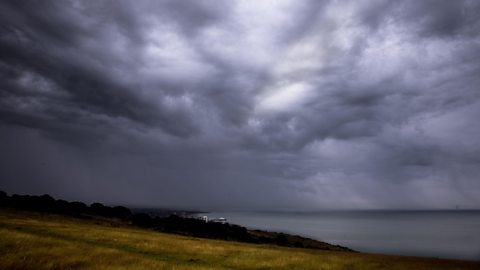
- The season and weather can have a big impact on your setting.
- The more descriptive you can be for the reader the better.
- Remember, you are trying to grab their attention and interest.
Get some inspiration for writing about the weather and seasons here: Weather
Activity
Can you make this sentence more interesting and exciting by adding two adjectives?
"Look at that storm cloud."
Here are some examples of how to add excitement to the sentence with adjectives:
- Look at that dark, towering storm cloud!
- Look at that enormous, scary storm cloud!
- Look at that large, grey storm cloud!
Which adjectives did you choose?
Using similes in your writing
You can describe something in an interesting or imaginative way by comparing things, using “like” and “as”. This is known as a simile.
Using a simile can help bring your setting to life for your reader. It can save you having to write a long list of adjectives!
The waves throw the ship around like a wild animal toying with its prey.
Using metaphors in your writing
- You can make your writing more interesting and exciting by using metaphors.
- You can create powerful descriptions by comparing two different things which aren’t alike but have something in common.
- Metaphors are like similes but don't use like or as
- Metaphors are effective and can make particular parts of your writing stand out.
The storm whips the sea up into great walls of water.
Using your senses
Use all of your senses to describe your setting as this helps bring it to life for your reader.
Activity
After the storm, the sea was calm. You can see it stretched out towards the horizon like blue velvet.
What sense did the writer use here?
- touch?
- sight?
- hearing?
- smell?
- taste?
Sight
What other senses can you use in your writing?
- What can you hear?Seagulls calling on the sea breeze?
- Maybe you can smell something?The salt crusted sails? And I can almost taste that rotten looking fish stew!
Good authors choose their setting with care and select a setting that is perfect for the story they want to tell.
Would this story be as exciting if it wasn’t on a pirate ship in the middle of the ocean? What would happen on a fancy cruise ship? That setting could work for an entirely different story.

Key words about setting
- Check your connection, refresh the page and try again. – A word which describes something or someone. For example, you can use adjectives to describe your favourite film: 'It’s funny, colourful and interesting.'
- Check your connection, refresh the page and try again. – A word or a phrase used to describe something as if it were something else. 'The crocodile’s teeth are shiny, white daggers' is an example of a metaphor where the crocodile’s teeth are compared to daggers.
- Check your connection, refresh the page and try again. – A simile uses 'like' or 'as' to compare two different things. For example: 'During the storm, my dad was as brave as a lion.'
Test your knowledge
Quiz
Challenge
Use adjectives, metaphors and similes to write an interesting setting for a story set in one of the following places:
- a forest
- a castle
- at school
- in space
Here is a guide to help you with metaphors and similes: What are metaphors and similes?

Authors Live Extra. list
Get more from your reading and find inspiration for your own writing with exclusive interviews and tips from our Authors Live events.

More on Creative writing
Find out more by working through a topic
- count3 of 10

- count4 of 10

- count5 of 10

- count6 of 10

