Learn about comics
KAPOW! A comic is an entertaining way to capture a story in both words and pictures.
Common forms of comics include comic books, newspaper cartoons, graphic novels and comic strips.
In this article you will learn:
- How to plan a comic
- How to layout a comic
- Different comic features, such as panels and captions
This resource is suitable for creative writing for primary school learners.
Video - Creating a comic
Watch this video to learn about the different features of a comic then have a go at making your own comic strip!
How to plan and lay out your comic.
How to create a comic.
A comic is an entertaining way to capture a story in both words and pictures.
Common forms of comics include comic books, newspaper cartoons, graphic novels and comic strips.
Why don't we have a go at making a comic strip ourselves?
Let's call our comic 'The Adventures of Cheeseman!'
Before you try to create your comic, you have to plan it out first.
Think about your story and how you will show it in pictures.
Don't worry if it's messy and rough at this stage. It's important to get your ideas down and see how they fit together.
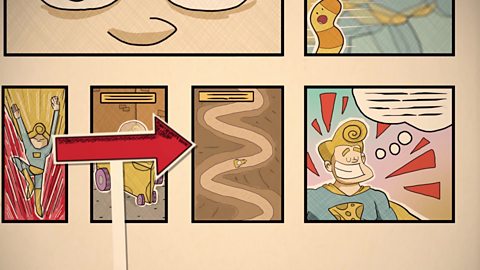
Each piece of action in your comic needs to be contained within a panel, which is surrounded by a gutter.
Remember to make your comic strip look exciting and interesting. By varying your images just like a film or TV show, your comic can have lots of shot types such as a long shot, mid shot, close up, extreme close up, bird's eye view or even a worm's eye view.
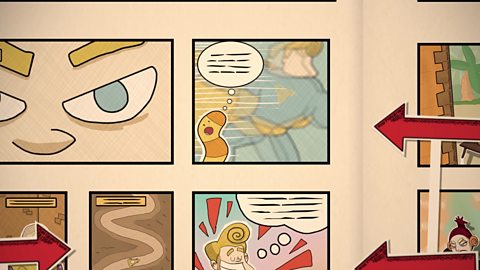
Comic strip panels are usually read from left to right but not always.
The shape and size of panels and where you place them on the page is important as it creates the flow of a page. Readers will follow that flow to put the pieces of the story together.
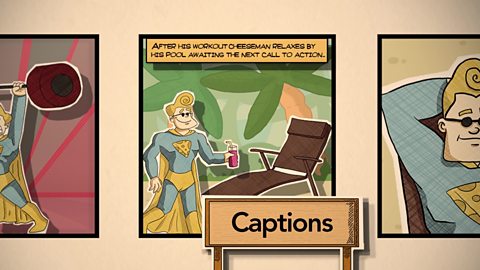
Use captions to tell the reader when and where events in your story are happening. Think of it as your narrator's voice that gives background information.
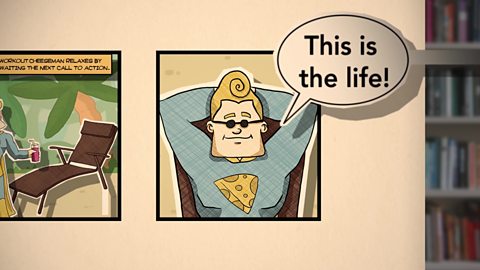
Put the words you want the characters to say inside speech bubbles.
Let's give Cheeseman an arch enemy: La Baguette.
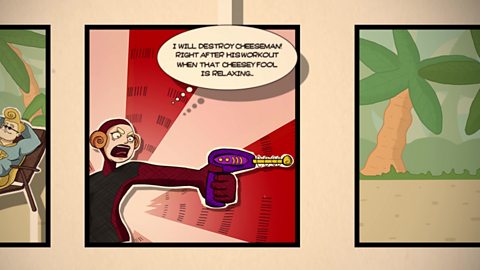
You can show what your character is thinking inside thought bubbles.
She is plotting to melt Cheeseman in a surprise attack.
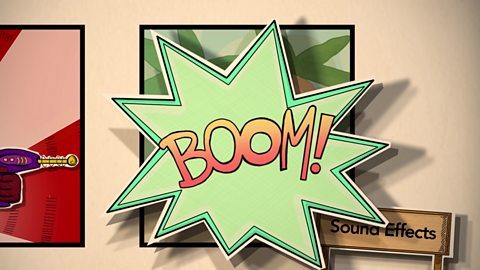
Sound effects can be added using onomatopoeia. Use words like POW! or BOOM! that sound like what they are describing.
Different types of speech bubbles can convey different emotions.
La Baguette looks like she has some anger issues.
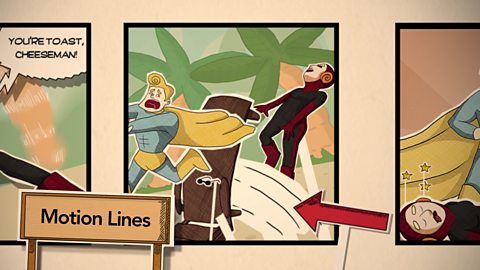
You can use visual elements such as motion lines to convey movement.
You have to get up pretty early in the morning to defeat Cheeseman it would seem.
Well, I thoroughly enjoyed that although it has left me feeling a bit hungry. I have an odd craving for cheese on toast.
How to create a comic
How to plan your comic
Before you create your comic, you have to plan it out first.
- Think about your story and how you will tell it in pictures.
- Your plan might be messy and rough at this stage.Get your ideas down on paper and see how they fit together.
- Each piece of action in your comic needs to be drawn inside a A box or frame that contains a moment or scene in a comic. . This is surrounded by a The space between two panels in a comic. .
- Remember to make your comic strip look exciting and interesting by varying your images and addingWhen a word sounds like the word it is describing. For example, ‘buzz’ or ‘hiss’. for sound effects.
What are the features of a comic?
- Panels – Comic strip panels are usually read from left to right, but not always. The shape and size of the panels and where you place them on the page is important as it creates the flow of a page. Readers will follow the flow of the panels to put the pieces of the story together.
- Captions – Use captions to tell the reader when and where events in your story are happening. Think of it as your The person telling the story. Sometimes this is a character in the story and sometimes this is a separate voice. voice that gives background information.
- Speech bubbles – Put the words you want the character to say inside speech bubbles. Different types of outlines around the speech bubbles can show different emotions. For example, a jagged speech bubble might show the character is angry.
- Thought bubbles – You can show what you character is thinking inside thought bubbles.
- Sound effects – Sound effects can be added using Check your connection, refresh the page and try again.. Use words like “pow” or “boom”. They sound like what they are describing.
- Motion lines – You can use visual elements like motion lines to show movement.
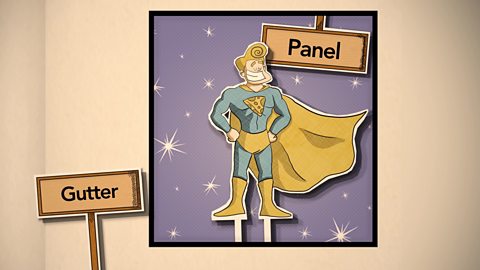
Image caption, Panel and gutter
1 of 6
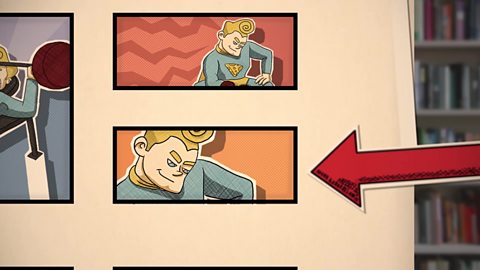
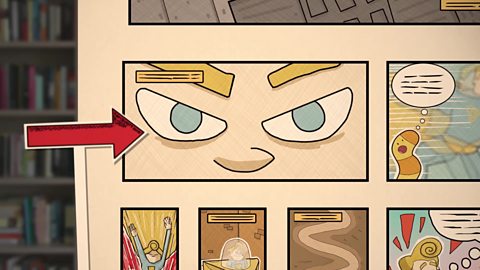
Different shot types in a comic
Just like a film or TV show, your comic can have lots of different shot types:
- a long shot
- a mid shot
- a close up
- an extreme close up
- bird’s eye view
- a worm’s eye view
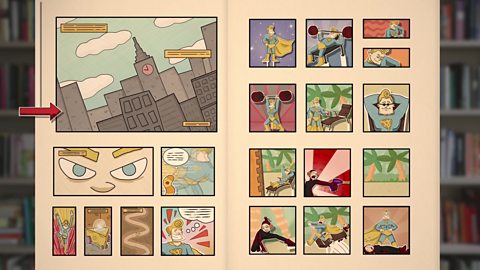
Image caption, Long shot

1 of 6

Key words about comics
- Check your connection, refresh the page and try again. – To hold or keep something within something else. A comic panel contains a scene or moment in your story. For example: 'Be careful. Don’t drop the box,” she said because it contained lots of glasses.'
- Check your connection, refresh the page and try again. – To show or give an idea or information. For example: 'When he got his new trainers, he didn’t say anything but his face conveyed his happiness.'
- Check your connection, refresh the page and try again.– Something we see. This could be a picture, film or illustration. For example: 'The photographs of their holiday is a useful visual reminder of the places they visited.'
- Check your connection, refresh the page and try again. – A piece of something. For example: 'They had only one more clue to find and then all the elements could be put together.'
- Check your connection, refresh the page and try again. – A word that sounds like what it is describing. For example: 'Cock-a-doodle-do woke him, then he heard the loud tick-tock from the clock before he jumped out of bed at the crashing sound of plates falling.' The words in this sentence imitate the sound they make and using onomatopoeia makes writing more interesting and colourful.
Test your knowledge
Try this true or false quiz about creating a comic.
Challenge
Draw your own comic
- Draw your panels first. The A box or frame that contains a moment or scene in a comic. can be a variety of sizes.
- Draw your character and set them off on an adventure. If you need help creating a character, use this BBC Bitesize to help you: How to create a character
- Use all different types of shots.
- Include the words they would speak and think in bubbles. Remember to include When a word sounds like the word it is describing. For example, ‘buzz’ or ‘hiss’. for sound effects.
KAPOW!
Authors Live Extra. list
Get more from your reading and find inspiration for your own writing with exclusive interviews and tips from our Authors Live events.

More on Creative writing
Find out more by working through a topic
- count5 of 10

- count6 of 10

- count7 of 10
- count8 of 10