Key points about describing yourself and others in French

Use A word used to describe an action or state of being.être and avoir to describe physical characteristics and personality.
An adjective is a word that describes a noun. In French, adjectives have different endings depending on whether the noun they are describing is masculine, feminine, singular or plural. endings change depending on the All French nouns are either masculine or feminine. In French, objects such as a table or car, as well as people, have a grammatical gender. and number of the The name of a thing such as an object, a place or a person. Nouns are often described as naming words. they are describing.
Adjectives ending in particular letters have their own rules.
Other adjectival endings are An irregular verb does not follow a set pattern..
This guide contains two videos as well as reading and listening practice.
Video - Describing myself and others
Watch the video of Rachel describing herself and her family, as well as talking to other people about themselves.
Rachel and others describe themselves using adjectives and present tense verbs
Salut! Je suis Rachel ! Je suis graphiste et j’habite à Bruxelles en Belgique.
Ma famille me décrirait comme déterminée, et je crois que ma copine dirait que j'ai confiance en moi. Je suis d’accord avec les deux.
J'ai trois frères - Julio, Phillipe et Kevin. Julio est un homme d'affaires et c'est lui qui voyage le plus dans notre famille. Je suis très jalouse ! Philippe est mon deuxième frère et nous nous ressemblons beaucoup. Et Kevin, c’est le plus jeune, mais le plus fort ! Il peut me porter facilement !
Je parle trois langues couramment: le néerlandais, le français et l'anglais. Mais ma mère dit que je parle bien le lingala aussi. C'est une langue du Congo et c'est sa langue maternelle.
Ma mère est née au Congo, et elle est venue ici, en Belgique où elle a rencontré mon père, qui est aussi Belge. Ma mère est extravertie et positive, mon père est créatif et patient.
Maintenant, que tu sais un peu plus de moi et ma famille, on va découvrir les gens dans la ville. On y va !
Comment tu t'appelles ?
Je m'appelle Sarah.
Et toi ?
Je m'appelle Kayum.
Tu as quel âge ?
J'ai 30 ans.
Et toi ?
Et j'ai aussi 30 ans.
D'où viens-tu ?
Je viens, a l'origine, du nord de la France, de Lille, mais j'habite à Cologne, en Allemagne.
C'est quoi votre relation ?
Nous sommes des copines, juste.
On est des bonnes copines, on était ensemble à l'école secondaire, et maintenant on se voit quand on est à l'université, pour prendre des petits cafés.
Tu parles quelles langues ?
Je parle le français, l'anglais, l'allemand, bien sûr.
L'italien, un peu d'espagnol, et j'apprends en ce moment le grec.
Waouh, quelle polyglotte !
Et toi, Kayum ?
Et moi, l'anglais, l'espagnol, et le comorien. Parce que je suis originaire des iles Comores.
Waouh ! C'est intéressant d'apprendre comment les gens se décrivent et comment ils décrivent les autres.
C'est super car il y a beaucoup de gens différents.
Translation
Hi! I’m Rachel! I am a graphic designer and I live in Brussels, in Belgium.
My family would describe me as determined and I think my girlfriend would say I have confidence in myself… I would agree with both!
I have three brothers - Julio, Phillipe and Kevin. Julio is a businessman and travels more than anyone in the family. I am very jealous! Philippe is my second brother and we look the most alike. And Kevin is the youngest but the strongest! He can pick me up easily!
I speak three languages fluently; Dutch, French and English. But my mum says I can speak Lingala well too. It is a language of Congo and it is her mother tongue.
My mum was born in Congo and she came here, to Belgium, where she met my dad who is also Belgian. My mum is out-going and positive, my dad is creative and patient.
Now you know a bit about me and my family- let’s find out more about people in the city!
What’s your name?
I’m called Sarah.
And you?
I’m called Kayum.
How old are you?
I’m 30 years old.
And you?
And I’m also 30 years old.
Where are you from?
I’m, originally, from the north of France, Lille. But I live in Cologne, in Germany.
What’s your relationship?
We’re just friends.
We are good friends, we know each other from secondary school, and now we see each other when we’re at university, to go and drink coffee.
What languages do you speak?
I speak french, english, german, of course.
Italian, a bit of spanish and I’m learning greek at the moment.
Wow, what a polyglot!
Wow! It’s interesting to learn how people describe themselves and how they describe others.
It's great because there are a lot of different people.
Vocabulary - Describing appearance
Describe physical appearance or personality using adjectives and either:
the verb être - to be
the verb avoir - to have
Describing appearance and personality using 'être' (to be)
To describe someone’s physical appearance or their personality, use the relevant part of the verb Check your connection, refresh the page and try again. (to be):
| French | English |
|---|---|
| Check your connection, refresh the page and try again. | I am |
| Check your connection, refresh the page and try again. | you (singular informal) are |
| Check your connection, refresh the page and try again. | he/it is |
| Check your connection, refresh the page and try again. | she/it is |
| Check your connection, refresh the page and try again. | we are |
| Check your connection, refresh the page and try again. | you (plural/formal) are |
| Check your connection, refresh the page and try again. | they (masculine plural) are |
| Check your connection, refresh the page and try again. | they (feminine plural) are |

For example:
Je suis grand(e). – I’m tall.
Mon frère est très fort. – My brother is very strong.
Mes parents sont assez jeunes. – My parents are quite young.
Mon chat est gros. – My cat is big.
Useful adjectives for describing people using the verb être include:
| French | English |
|---|---|
| petit(e) | little, short (height) |
| grand(e) | tall, big, large |
| beau/bel/belle | beautiful |
| gros/grosse | big, large |
| jeune | young |
| vieux/vieille | old |
| fort(e) | strong |
| faible | weak |
Describing hair and eyes using 'avoir' (to have)
To describe someone’s hair and eyes, use the relevant part of the verb Check your connection, refresh the page and try again. (to have):
| French | English |
|---|---|
| Check your connection, refresh the page and try again. | I have |
| Check your connection, refresh the page and try again. | you (informal) have |
| Check your connection, refresh the page and try again. | he/it has |
| Check your connection, refresh the page and try again. | she/it has |
| Check your connection, refresh the page and try again. | we have |
| Check your connection, refresh the page and try again. | you (plural/formal) have |
| Check your connection, refresh the page and try again. | they (masculine plural) have |
| Check your connection, refresh the page and try again. | they (feminine plural) have |
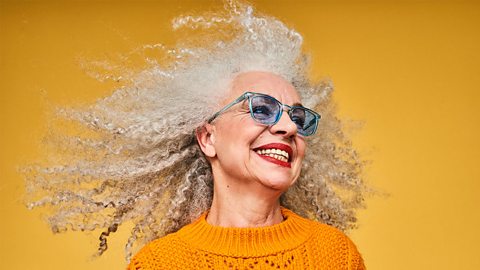
For example:
J’ai les yeux bleus. – I have blue eyes.
Ma grand-mère a les cheveux gris. – My grandma has grey hair.
J’ai un chien noir et blanc. – I have a black and white dog.

Remember
In French, you also use the verb avoir to give people’s ages. For example:
J’ai quinze ans. - I’m fifteen years old.
Useful vocabulary for describing people using the verb avoir includes:
| French | English | French | English |
|---|---|---|---|
| les cheveux | hair | blanc/blanche | white |
| les yeux | eyes | gris(e) | grey |
| bleu(e) | blue | blond(e) | blonde |
| vert(e) | green | châtain(e) | brown |
| marron | brown | court(e) | short (hair) |
| noir(e) | black | long/longue | long |
| roux | red (hair) |
Using 'être' and 'avoir' - Mini quiz
Complete the following sentences with the correct verb.
Je _____ grand.
I am tall.
Je suis grand.
Suis is the ‘I’ form of the verb être (to be).
Nous _____ forts.
We are strong.
Nous sommes forts.
Sommes is the ‘we’ form of the verb être (to be).
Tu ___ les yeux verts ?
Do you have green eyes?
Tu as les yeux verts ?
As is the you (singular informal) form of the verb avoir (to have).
Elles ___ les cheveux longs.
They have long hair.
Elles ont les cheveux longs.
Ont is the ‘they’ form of the verb avoir (to have).
Reading practice
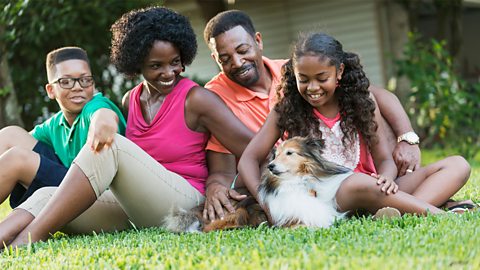
Read the following blog post about family relationships and answer the questions below.
Ma mère, Jenny, a quarante ans et elle très petite. Elle a les yeux bleus et les cheveux châtains, comme moi. Mon beau-père, David, est plus âgé – il y a environ vingt ans entre eux. Il a les yeux marrons et les cheveux courts et noirs.
J’ai aussi deux frères jumeaux qui s’appellent Ted et Max. Ils ont treize ans. Ils sont plus jeunes que moi mais déjà plus grands ! Ils ont les yeux verts et les cheveux longs et roux.
Mon frère, Alex, est amusant et bavard et nous nous ressemblons. Il partage ma passion pour les activités sportives.
Chez nous, on adore les animaux et nous avons un chat, Whiskers, et un chien, Rocky. Whiskers est vieux et faible, tandis que Rocky est un chien jeune et fort – il aime jouer tout le temps.
Which three of these statements is correct?
| A | Emma’s mum has blond hair |
| B | Emma’s looks like her mum |
| C | Emma's step-dad is younger than her mum |
| D | Emma’s brothers are twins |
| E | She is taller than her brothers |
| F | Emma’s cat is older than her dog |
Statement A is false.
Evidence from the text: les cheveux châtains - brown hair.
Statement B is true.
Evidence from the text: Elle a les yeux bleus et les cheveux châtains, comme moi. - She has blue eyes and brown hair, like me.
Statement C is false.
Evidence from the text: Mon beau-père, David, est plus âgé – il y a environ vingt ans entre eux. - My step-dad is older – there are about twenty years between them.
Statement D is true.
Evidence from the text: J’ai aussi deux frères jumeaux qui s’appellent Ted et Max. Ils ont treize ans. - I also have twin brothers who are called Ted and Max. They are thirteen.
Statement E is false.
Evidence from the text: Ils sont plus jeunes que moi mais déjà plus grands ! - They are younger than me but already taller!
Statement F is true.
Evidence from the text: Whiskers est vieux et faible maintenant, mais Rocky est un chien jeune et fort. - Whiskers is old and weak now, but Rocky is a young, strong dog.
Click or tap on the Show more button to read the translation of the text.
My mum, Jenny, is 40 and she is very short. She has blue eyes and brown hair, like me. My step-dad, David, is older – there are about twenty years between them. He has brown eyes and short, black hair.
I also have twin brothers who are called Ted and Max. They are thirteen. They are younger than me but already taller! They have green eyes and long, ginger hair.
At home, we love animals and we have a cat, Whiskers, and a dog, Rocky. Whiskers is old and weak whereas Rocky is a young and strong dog - he likes to play all the time.
Useful vocabulary - Describing personality and other characteristics
Here are some useful adjectives to describe yourself and others. Remember to use the verb être with these adjectives:
| French | English | French | English |
|---|---|---|---|
| actif/active | active | positif/positive | positive |
| agréable | pleasant, nice, agreeable | prudent(e) | prudent, careful, cautious |
| amusant(e) | funny, fun, amusing | responsable | responsible |
| calme | calm | sportif/sportive | sporty |
| ennuyeux/ennuyeuse | boring | strict(e) | strict |
| heureux/heureuse | happy | sympathique/sympa | nice, kind, friendly |
| négatif/négative | negative | travailleur/travailleuse | hard-working |
| patient(e) | patient | triste | sad |

For example:
Je suis travailleur. – I am hard-working.
Mes amis sont amusants et sympa. – My friends are funny and nice.
Parfois, ma sœur est un peu négative. – Sometimes, my sister is a bit negative.
Remember
Most adjectives agree with the noun but some including sympa (nice, kind, friendly) and marron (brown), never change. For example:
Ils sont sympa et ils ont les cheveux marron. - They are nice and they have brown hair.
All Foundation Tier vocabulary listed in this guide can be found on the vocabulary sheet below.
Grammar - How to use adjectives
Adjectives describe a noun and all French adjectives agree with the noun in gender and number. Most adjectives come after the noun they describe.
The general rule is:
for feminine nouns, add e
for masculine plural nouns, add s
for feminine plural nouns, add es
For example:
| Masculine singular | Feminine singular | Masculine plural | Feminine plural | English |
|---|---|---|---|---|
| Check your connection, refresh the page and try again. | Check your connection, refresh the page and try again. | Check your connection, refresh the page and try again. | Check your connection, refresh the page and try again. | independent |
| Check your connection, refresh the page and try again. | Check your connection, refresh the page and try again. | Check your connection, refresh the page and try again. | Check your connection, refresh the page and try again. | green |
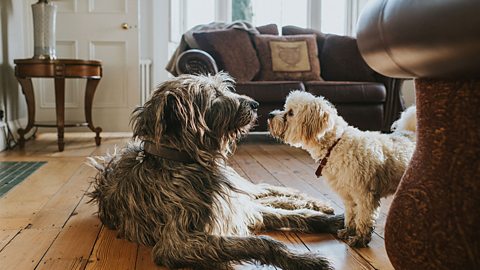
For example:
J’ai les yeux verts. - I have green eyes.
Mes petits frères sont très indépendants. – My little brothers are very independent.
If an adjective already ends in e, you do not need to add another e when forming the feminine form.
For example:
Il est agréable. - He is nice.
Elle est agréable. - She is nice.
If an adjective already ends in s, you do not need to add another s in the plural forms.
For example:
Mon lapin est gris. - My rabbbit is grey.
Mes lapins sont gris. - My rabbits are grey.
There are different rules for adjectives ending in certain letters.
Click or tap on Show more to find out about forming the different forms of adjectives ending with the following letters:
x
el and en
al
f
Adjectives ending in x
When an adjective ends in x, remove the x and add se to make it feminine. For example:
Mon poisson est ennuyeux. - My fish is boring.
Ma sœur est toujours heureuse. – My sister is always happy.
For masculine plural nouns, keep the x. For example:
Mes poissons sont ennuyeux. – My fish are boring.
For feminine plural nouns, remove the x and add ses. For example:
Mes sœurs sont toujours heureuses. – My sisters are always happy.
Adjectives ending in el and en
When an adjective ends in el, add le to make it feminine. If the adjective ends in en, add ne to make it feminine.
Add s to make the masculine adjectives plural and les or nes to make the feminine adjectives plural.
| Masculine singular | Feminine singular | Masculine plural | Feminine plural | English |
|---|---|---|---|---|
| Check your connection, refresh the page and try again. | Check your connection, refresh the page and try again. | Check your connection, refresh the page and try again. | Check your connection, refresh the page and try again. | traditional |
| Check your connection, refresh the page and try again. | Check your connection, refresh the page and try again. | Check your connection, refresh the page and try again. | Check your connection, refresh the page and try again. | Canadian |
For example:
Ma mère a les cheveux naturels. – My mother has natural hair.
Mon amie est végétarienne. – My friend is vegetarian.
Adjectives ending in al
When an adjective ends in al, add an e to make it feminine and es to make it feminine plural.
To make it masculine plural, change the al to aux. For example:
Mon petit copain est génial. – My boyfriend is great.
Mes parents sont géniaux. – My parents are great.
Adjectives ending in f
When an adjective ends in f, remove the f and add ve to make it feminine. For example:
Mon frère est très actif. – My brother is very active.
Ma sœur est très active. – My mum is very active.
To make the adjectives plural, add s with masculine nouns and ves for feminine nouns. For example:
Mes frères sont très actifs. – My brothers are very active.
Mes sœurs sont très actives. – My sisters are very active.
Adjectives ending in er
When an adjective ends in er, replace this ending with ère to make it feminine.
Mon grand-père est fier de sa cuisine. – My grandfather is proud of his cooking.
Ma grand-mère est fière de son jardin. – My grandmother is proud of her garden.
Irregular adjectives
Some adjectives are completely irregular, meaning they do not follow the rules when agreeing with feminine and plural nouns.
Useful irregular adjectives include:
| Masculine singular | Feminine singular | Masculine plural | Feminine plural | English |
|---|---|---|---|---|
| Check your connection, refresh the page and try again. | Check your connection, refresh the page and try again. | Check your connection, refresh the page and try again. | Check your connection, refresh the page and try again. | beautiful, handsome, nice (weather) |
| Check your connection, refresh the page and try again. | Check your connection, refresh the page and try again. | Check your connection, refresh the page and try again. | Check your connection, refresh the page and try again. | big, large, lots of |
| Check your connection, refresh the page and try again. | Check your connection, refresh the page and try again. | Check your connection, refresh the page and try again. | Check your connection, refresh the page and try again. | crazy |
| Check your connection, refresh the page and try again. | Check your connection, refresh the page and try again. | Check your connection, refresh the page and try again. | Check your connection, refresh the page and try again. | good |
| Check your connection, refresh the page and try again. | Check your connection, refresh the page and try again. | Check your connection, refresh the page and try again. | Check your connection, refresh the page and try again. | hardworking |
| Check your connection, refresh the page and try again. | Check your connection, refresh the page and try again. | Check your connection, refresh the page and try again. | Check your connection, refresh the page and try again. | long |
| Check your connection, refresh the page and try again. | Check your connection, refresh the page and try again. | Check your connection, refresh the page and try again. | Check your connection, refresh the page and try again. | new |
| Check your connection, refresh the page and try again. | Check your connection, refresh the page and try again. | Check your connection, refresh the page and try again. | Check your connection, refresh the page and try again. | old |
| Check your connection, refresh the page and try again. | Check your connection, refresh the page and try again. | Check your connection, refresh the page and try again. | Check your connection, refresh the page and try again. | white |
Using adjectives - Mini quiz
Choose the correct adjective in each of the following sentences:
Mes cheveux sont [blond/blonds/blondes].
Mes cheveux sont blonds.
My hair is blond.
Cheveux (hair) is masculine and plural, so the adjective ends in s.
Mes sœurs sont [sportifs/sportive/sportives].
Mes sœur sont sportives.
My sisters are sporty.
Sœurs (sisters) is feminine plural, and as this is an adjective ending in f, the feminine plural form ends in ves.
Ma mère est [travailleur/travailleuse/travailleuses].
Ma mère est travailleuse.
My mum is hard-working.
Mère (mum) is feminine singular, and this irregular adjective therefore ends in euse.
Mon ami Lucas est très [beau/belle/beaux].
Mon ami Lucas est très beau.
My friend Lucas is very handsome.
Ami (male friend) is masculine singular, and this irregular adjective is beau.
Find out more about adjective endings in the Gender and number agreement of adjectives in French guide.
Listening practice
Listen to three people talking about what makes a good friend and answer the questions.
Click or tap on the purple START button when you are ready to begin the activity.
Video - Describing people in French
Watch the video to understand more about using être and avoir when describing yourself and others.
Use the verbs 'être' and 'avoir' to describe yourself and others
Describing people in French
When you’re describing how you or other people look or are - then être - the verb to be is a good place to start.
Je suis - I am or elle est - she is.
Je suis grand - I am tall.
Elle est petite - She is small.
Je suis sportif - I am sporty.
Elle est contente - She is happy.
Then it’s good to be able to say what people have using the verb avoir - to have.
J’ai - I have
Elle a - she has.
J’ai les cheveux longs - I have long hair.
Elle a les yeux bruns - She has brown eyes.
Then you can say what you wear using porter - to wear.
je porte - I wear.
elle porte - she wears.
Je porte des lunettes - I wear glasses.
Elle porte un foulard - She wears a headscarf.
So with être - to be, avoir - to have or porter - to wear you can say a lot about yourself or other people.
Vocabulary sheet
Click or tap on the image below for a list of useful vocabulary to use when describing yourself and others.

Higher Tier - Vocabulary - Describing personality
Useful adjectives for describing yourself and others include:
| French | English |
|---|---|
| âgé(e) | old |
| ainé(e) | oldest |
| fidèle | loyal, faithful |
| fier/fière | proud |
| sévère | severe, strict, harsh |
| stressé(e) | stressed |
All vocabulary listed in this guide can be found on the vocabulary sheet below.
Higher Tier - Vocabulary sheet
Click or tap on the image below for a list of useful Higher Tier vocabulary to use when describing yourself and others.
Now you have revised the topic of describing friends and family have a look at the Describing life at school guide.
Careers advice and tips from BBC Bitesize
Future careers, further studies and the world of work - we're here to help with advice from experts and from young people who've found their path.

More on Family and friends
Find out more by working through a topic
- count4 of 4
- count1 of 4