What is the middle course of a river?
A river begins at the source, has a narrow and steep upper course and then a middle course. The middle course is wide and deep with fast flowing water.
In this article you can learn about:
- Features of a river's middle course
- The impact of erosion and deposition
- How meanders and oxbow lakes are formed
- Beavers in Scotland
This resource is suitable for Landscapes topics for primary school learners.
Video - Middle course of the River Tay
Join Isla and Connor as they explore the middle course of the River Tay.
Watch this short video to find out about the features of a river's middle course.
ISLA: Wow. We've come a long way already on our trip down the River Tay, Connor. All the way from the source, down the upper course and here we are in the middle course of the river.
CONNOR: Is this a good time to remind you of the Scottish Outdoor Access Code, Isla?
Take responsibility for your own actions. Respect the interests of other people. Care for the environment.
So, after the steep upper course and the terrifying near-death experience on the rapids, can you please respect my interest in a nice gentle ride on the river?
ISLA: The river is slow and wide in its middle course, so don’t worry Connor, I think you’ll be fine!.
CONNOR: That’s the Cambusmichael Burn. Lots of small tributaries - all these wee burns and streams flowing into the river add lots more water.
That’s why it gets wider and deeper as it continues on its journey. It’s so dark and murky because it's full of gravel, sand and rocks.
And we’re on a meander, look. A bend in the river.
Isla!
ISLA: Hello little fella!
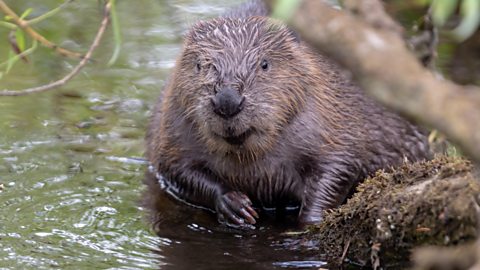
Look Connor, a beaver.
CONNOR: Come on, Isla!
ISLA: Oh, helpful!
Wait! I’m stuck on this beach!
CONNOR: I can’t get to you – push yourself off with the paddle.
ISLA: Phew!
CONNOR: That was what I was trying to warn you about. A meander starts at a slight bend in the river. Look.
The water flows fastest on the outside of the bend and slower on the inside. Faster water has more energy than slower water, so the outside of the bend gets eroded – worn away.
Slower water doesn’t have enough energy to carry all that sand and gravel, so it deposits - drops - it on the inside of the bend.
Over time the outer bank wears away, forming a steep-sided river cliff. The inner bank continues to build up, forming a river beach.
ISLA: Which is what I got stuck on, and why you were zooming off on the outside of the meander.
CONNOR: Where meanders form close together, they can eventually meet each other.
The river water breaks through forming a new channel. The meander gets blocked off with sand and gravel and becomes an oxbow lake.
There’s one on the River Earn, which flows into the River Tay.
ISLA: So eventually, the river can straighten out again!
We’ve already made it to the end of the middle course. Nothing stops us! Let’s see what the lower course has in store for us.
Next stop, Perth!
What is a river?
- A river is a moving body of water that flows from its Where a river starts. This is usually up high, like on top of a mountain. into another body of water, like the sea.
- A river is split into three parts: the upper course, middle course and lower course.
What is the middle course of a river?
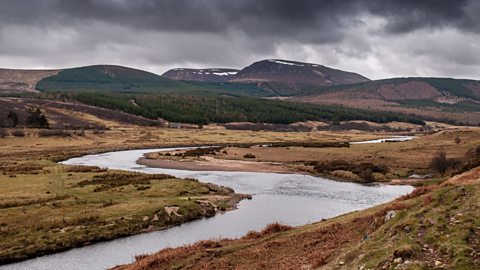
- The middle course has more energy and more water than the river's steep narrow upper course.
- It is wide and deep. Lots of A stream or river that flows into another stream or river instead of flowing into the sea. They add lots of water to the main river, which makes it wider and deeper. flow into the middle course, adding extra water to the river channel.
- A larger river channel means there is lessA force that makes it difficult for one object to move along the surface of another., so the water flows faster.
- Water flows fastest on the outer banks of the river and slower on the inside.
- Fast-flowing water Wearing away over time. the outer banks. Slow-moving water When a river cannot carry material, like sand and gravel, so it is dropped or dumped within the river channel. materials, like sand and sediments, on the inner banks.
- This process of erosion on the outer bank and deposition on the inner bank helps to create features like A large bend in the river caused by erosion and deposition. and a U-shaped lake that forms when meanders meet each other. The river water breaks through forming a new channel. The meander gets blocked off with sand and gravel and becomes an oxbow lake..
Physical features of the middle course of a river
This slideshow shows some examples of middle course features.
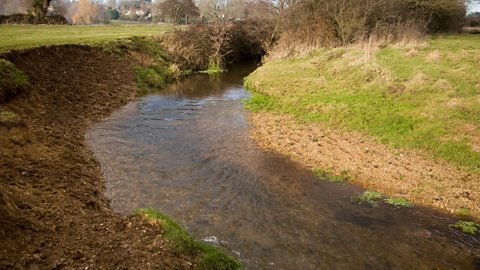
Image caption, Meanders
A meander is a large bend in a river. Water flows fastest on the outside of the bend and slower on the inside of the bend. Fast water erodes a steep river cliff on the outside of the bend (on the left in the picture). Slow water deposits sand and silt, making a gently sloping river beach on the inside of the bend (on the right in the picture).
1 of 2
River wildlife: Beavers in Scotland
In the video at the top of the page, Isla spotted a beaver on the River Tay. Let's find out more about beavers in Scotland.
- The Eurasian Beaver is the second largest
rodent species in the whole world. - Beavers mainly like to live in freshwater systems like rivers, streams, lochs and ponds.
- They are a native species to the UK, which means they naturally lived here without humans getting involved. They were hunted to extinction hundreds of years ago but were successfully reintroduced to the UK in 2009.
- Beavers are famous for their engineering skills. They dig A channel that has been dug for water to flow through. in the banks of rivers and ponds, which they use to transport food and building materials. These canals can also be used by other animals, like water voles.
- Beavers are also known for building dams and lodges to keep them safe from An animal that eats other animals..

Key words about a river's middle course
- Scottish outdoor access code - A set of Government guidelines about our rights and responsibilities when visiting Scotland's outdoors.
- middle course - The section of the river which comes between the upper and lower course. It is usually wider and deeper than the upper course and the water flows slowly.
- tributary - A stream or river that flows into another stream or river instead of flowing into the sea. They add lots of water to the main river, which makes it wider and deeper.
- burn - A large stream or small river. This word is commonly used in Scotland and some parts of England.
- erosion - When a material, like rock, wears away over time. The powerful water in a river's upper course causes lots of erosion in the landscape.
- deposition - When water loses energy, it drops the material it has been carrying, like sand and gravel.
- meander - A bend in the river caused by erosion and deposition.
- oxbow lake - A U-shaped lake that forms when meanders meet each other. The river water breaks through forming a new channel. The meander gets blocked off with sand and gravel and becomes an oxbow lake.
Test your knowledge
Quiz
Try this short multiple choice quiz to test your knowledge of the middle course.
Challenge

Design a poster which will help other children understand the Scottish Outdoor Access Code.
The Scottish Outdoor Access Code is a set of Government guidelines about our rights and responsibilities when visiting Scotland's outdoors.
The three main rules are:
- respecting the interests of other people
- caring for the environment
- taking responsibility for your own actions
Here are some ideas to get you started:
- Your poster should be eye-catching and should include important information. What information do you think this poster needs?
- Think about your audience. Who is this poster for?
- How will the look and style of your poster catch your audience's attention? What will your text look like? What kind of pictures could you use?
If you need help with your poster, you can learn more here: How to make a poster
More on Landscapes
Find out more by working through a topic
- count25 of 25
- count1 of 25
- count2 of 25
- count3 of 25