What do you know?
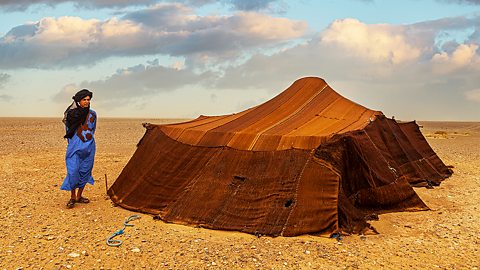
Where is the Sahara desert?
The Sahara desert lies in northern Africa. It is the largest hot desert in the world.
Key points
- Desertification is the process of land turning into desert. This can occur in semi-arid regions beside deserts, such as the Sahel to the south of the Sahara desert.
- Desertification can be caused by population growth, deforestation, overgrazing of animals and climate change.
- Desertification in the Sahel is being tackled by the Great Green Wall. This is an 8,000 km wall of acacia trees spanning the continent of Africa.
What is desertification?
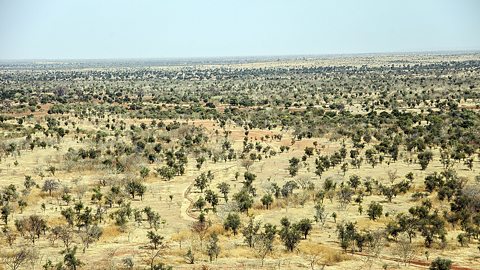
When fertile land becomes desert. is the process of land turning into desert. This can occur in A climate that experiences some rainfall, but is otherwise very dry. regions beside deserts, such as the Sahel to the south of the Sahara desert.
The Sahel
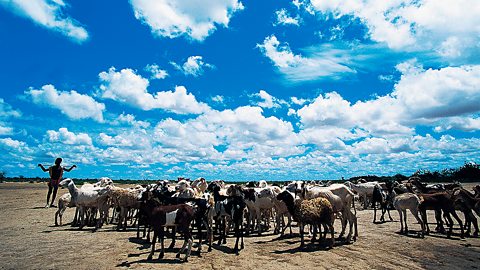
Desertification is caused when plants are removed, and soil is exposed. This can be caused by population growth, The removal of trees. This is sometimes done to make land for farming, roads or settlement., When too many cattle are left to feed in one place. Overgrazing causes a loss of vegetation cover, soil compaction and soil erosion. of animals and The long-term change of temperature and typical weather patterns.. Desert regions are becoming warmer and drier. The Sahel has regularly experienced lower than average rainfall since the 1970s.
The Great Green Wall
Desertification in the Sahel is being tackled by the creation of the Great Green Wall. This is an 8,000 km wall of acacia trees across 11 countries which span the entire continent of Africa. Acacia trees are able to grow in very dry conditions.
Trees have so far been planted in all 11 countries: Burkina Faso, Chad, Djibouti, Eritrea, Ethiopia, Mali, Mauritania, Niger, Nigeria, Senegal, and Sudan. The wall is due to be completed by 2030. Once complete, it will be the largest living structure on Earth. The project is creating jobs, improving Having a safe, clean, reliable and affordable supply of water. in the region and helping to stop desertification.
Question
What type of trees are being used to create the Great Green Wall?
Acacia trees are being used for the Great Green Wall. This is because they can grow in very dry conditions, like those found in the Sahel.
What are the causes and effects of desertification?
Click on the picture slideshow for more information about the process of desertification.
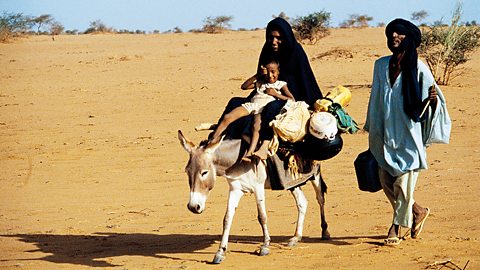
Image caption, A family in a desert area of Mali
Desertification affects the Sahel in Africa. This is a semi-arid region to the south of the Sahara desert. Land across the Sahel is turning into desert.
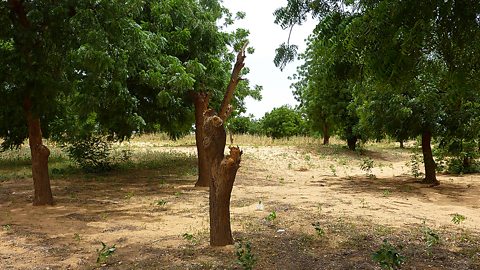
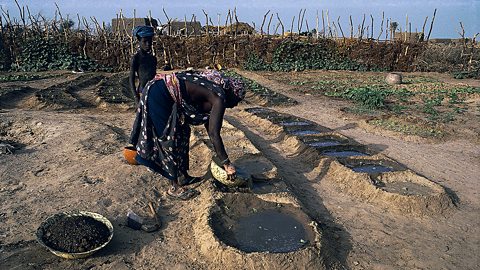
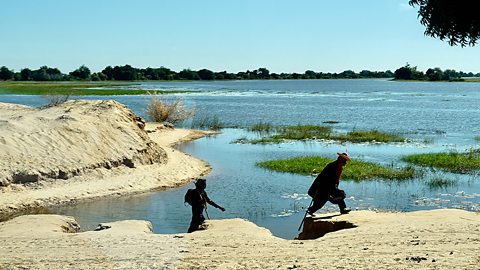
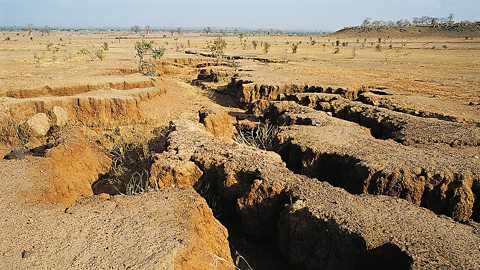
1 of 6
Question
Which causes of desertification can you name?
Overgrazing, deforestation and climate change are causes of desertification. Overgrazing and deforestation remove vegetation from the land, leaving it exposed and easily washed away by the rain. Climate change is making rainfall less reliable in many semi-arid areas.
How does desertification affect humans?
Health
Desertification can cause higher threats of malnutrition from reduced food and water supplies. Poor hygiene and a lack of clean water can lead to an increase in diseases such as cholera, typhoid, and diarrhoea.
Migration
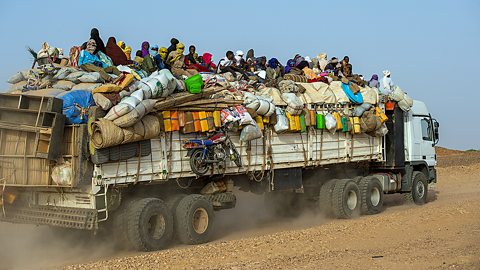
As desertification increases, it forces people to move to countries where they can find jobs and support their families. This has resulted in many refugees fleeing to neighbouring countries of the Sahel, such as Uganda.
It has also encouraged many people looking for work to migrate to European countries. The journey is dangerous and people can lose their lives trying to get to Europe, all in the hope for a better life. This highlights the importance of holding back desertification for the people in the Sahel and other countries.
Test your knowledge
Play Planet Planners on Roblox! game
Explore global locations, solve real-life challenges and make the big decisions that shape the future.

More on Global biomes
Find out more by working through a topic
- count5 of 5
- count1 of 5
- count2 of 5
- count3 of 5