Analysis of existing products is an increasingly important element of project research within the design process. There are several reasons for this:
- Research from analysing existing products can be used to inform your design specification and ideas.
- It can help you work out the cost of manufacturing a product, including the materials needed and machinery required.
- You will learn more about what already exists, which will help you develop products that meet the needs of end users better.
Product analysis
Video helping with analysing products for their aesthetic appeal and their ergonomic considerations (product comparison), and the evaluation of products compared to their design brief and product specification.
ANIMATION SEQUENCE
Learning outcomes
JOE
Hello and welcome to another sensational episode of Tech Bitez. We have a real treat instore for you today. We finally have a working prototype of our product.
SANDY
Are you sure it works? I mean, have you really tested it? Most products go through a number of prototypes before making it to market.
JOE
Of course it works. I think.
SANDY
There's a surprise. Now we definitely need to do a product analysis. It will help us to see how we can improve your design.
JOE
Okay maybe that's not a bad idea.
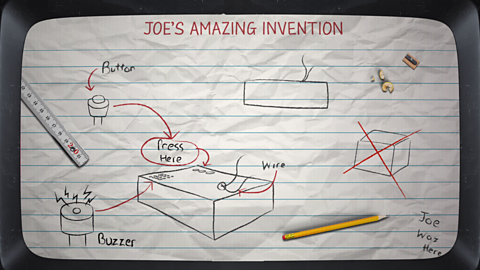
ANIMATION SEQUENCEAnimated plan of Joe's product analysis
SANDY
Well, first off, does the design meet the product specification, you set out? Okay, so first off, aesthetics. Did you really only write, it will be aesthetically pleasing?
JOE
Isn't that enough?
SANDY
No, Joe, you need to describe how you plan to achieve that. Also, it is ugly.So you have failed on that one. Next, you wrote about function. Again, we are going to need some more detail than, fingers crossed. Here you need to set out what the function of the product will be. Materials is next on the list. Joe, the cheapest is not an adequate answer. Yes, it is something to think about. But when deciding on what materials you plan to use, there is a lot more to consider. Size is the next thing to consider. In this section you should put the expected dimensions of your product. Just writing medium isn't really enough. It's not like you're ordering a pizza. You need to be a lot more specific, giving some estimated dimensions. I'm getting flashbacks to marking your Christmas exams here. At least we are nearly done. Next up is performance. Let's see how wrong you've got this one. That's perfect. Knowing that you can actually do it when you try is the most frustrating part. You have concisely described what you would like the product to do. Well done! Safety is the next section. Why am I not surprised you missed the section? Considering what steps you can take to improve the safety of both your product and process is far too important to ignore. Finally, you have target market. Joe, a picture of you. Pointing at the reader is not an appropriate answer.
JOE
Well, that was a pretty humbling experience. Guess it's back to the drawing board then.
SANDY
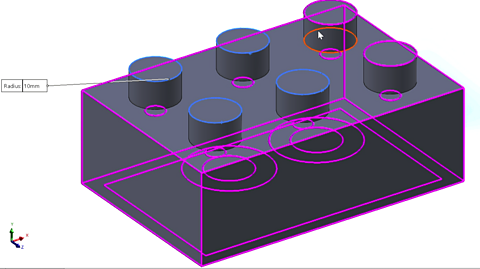
Drawing board. Okay Granda. You do know CAD is a thing now, right?
Analysis points of comparison between products may include:
- Function - What is the function and purpose of the product? How well does it work? Could it be improved?
- Size - What is the size of the product? Is it comfortable to use? Is it a similar size to other products with the same use?
- Cost - How much did it cost to make? How much does it cost to buy? Is it considered good value by the consumer?
- Materials and components - What materials and components have been used to make the product? Why were these materials and components used?
- Environment - Is the product sustainable and/or environmentally friendly? Is it recyclable? Can it be easily repaired rather than thrown away?
- Aesthetics - What does the product look like? What is the colour, texture, pattern and decoration of the product?
- Ergonomics (Human Factors) - is the product designed in a way to make it easy to use. Shape, size, weight, position of buttons and controls are all aspects that contribute to a product having good ergonomic design.
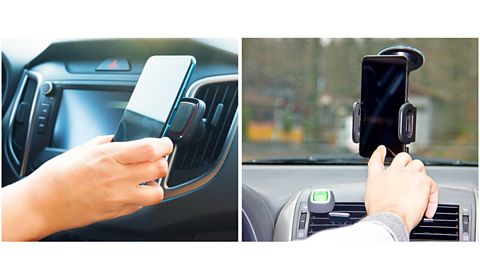
| Phone holder 1 | Phone holder 2 | |
|---|---|---|
| Function | The mobile phone is held in place by a magnet. The phone can tilted by 40 degrees and rotated to portrait or landscape. | The mobile phone is held in place by a clamping mechanism. Then phone can be tilted by 30 degrees and rotated to portrait or landscape |
| Size | The holder itself is 50mm tall and has a footprint of 40mm x 40 mm | The phone holder is 80 mm tall. The overall width is 110mm and length is 110mm. The mounting footprint is 60mm x 60mm |
| Cost | £12.00 | £8.00 |
| Materials and Components | Made from plastic with a magnet for phone attachment and an adhesive pad for desk mounting. | Made from entirely from plastic with a rubber suction cup for desk mounting. |
| Environment | Materials can be recycled. Mounting pad needs to be replaced if holder is moved. | Materials can be recycled. Mounting suction cup is reusable when moving holder |
| Aesthetics | Attractively designed and compact is size | A little large and not very attractive |
| Ergonomics | Phone can easily be placed or removed with one hand. | Placement and removal with one hand can be difficult. |
During the research stage, evaluating existing products againstA specific set of standards or characteristics that a product should be able to perform. will aid in the writing of a refined brief and specification.
Below is an example of an evaluation that compares two mobile phones.
| Performance criteria | Mobile phone A | Mobile phone B |
|---|---|---|
| Cost | Recommended Retail Price - the price a manufacturer suggests a product is sold for. £350.00 | RRP £99.00 |
| Size | Length = 130 mm, Width = 73 mm, Thickness = 7 mm | Length = 90 mm, Width = 65 mm, Thickness = 11 mm |
| Weight | 77 g | 86 g |
From this comparison, it is possible to draw a number of conclusions.
- Cost - Mobile phone A is more expensive than mobile phone B.
- Size - Mobile phone A is longer and wider than mobile phone B. Mobile phone A also has a bigger screen, which means more information can fit on the screen. However, mobile phone B is 4mm thicker than mobile phone A.
- Weight - Considering that the overall size of mobile phone A is bigger, it is 9 g lighter than mobile phone B.
Test yourself
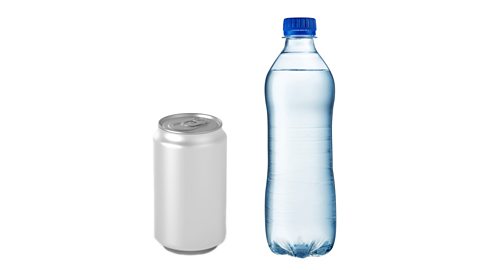
The table below compares an aluminium drinks can and a Check your connection, refresh the page and try again. (PET) drinks bottle on a variety of performance criteria:
| Performance criteria | Aluminium drinks can | PET drinks bottle |
|---|---|---|
| Cost of manufacture | £0.03 | £0.09 |
| Function | Hold liquid without leaking. Single-use container. | Hold liquid without leaking. Contents visible through bottle. Can be resealed and reused. |
| Volume | 300 ml | 500 ml |
What conclusions about cost, function and volume can be drawn from this comparison?
From this comparison, it is possible to draw a number of conclusions.
- Cost - The aluminium drinks can is cheaper to manufacture compared with the PET drinks bottle. The PET drinks bottle is three times more expensive to manufacture.
- Function - Both containers hold liquid without leaking; however, the contents of the PET drinks bottle can be seen, which is an advantage as the user can see how much of the drink is remaining. Another advantage of the PET drinks bottle is that it can be resealed, meaning it does not have to be consumed in one go and so can be reused.
- Volume - The aluminium drinks holds 200 ml less liquid than the PET drinks bottle. One reason for the increased manufacturing cost might be that the PET drinks bottle can hold more liquid.
More on Design and communication
Find out more by working through a topic
- count3 of 4
- count1 of 4