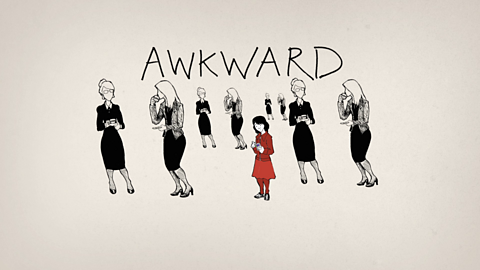
Overview of Hieroglyphics by Anne Donovan
- Hieroglyphics is a short story by Anne Donovan.
- The story is told in A first-person narrative is when the story is told from the point of view of one person using the pronoun ‘I’. from the perspective of the main character, Mary Ryan, who struggles with reading and writing.
- Like many of Anne Donovan’s short stories, this is an As if we are hearing characters’ thoughts..
- Mary’s thoughts are captured in her own accent. This helps to root the story in Scotland (more specifically, Glasgow) and gives authenticity to Mary’s thoughts and actions.
- Mary does not use standard English grammar, and this not only mirrors her speech but the challenges she has in learning English.
The main themes of the story are:
- innocence and truth
- relationships
- isolation
- conflict
Looking for some quick revision? Try an interactive quiz for National 5 English.
What is the plot of Hieroglyphics by Anne Donovan?
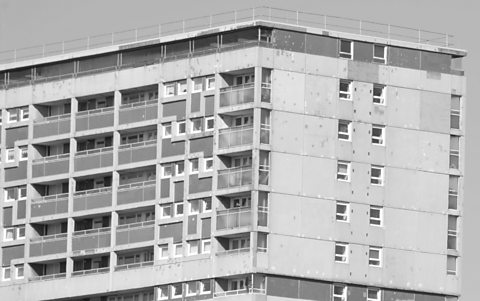
Hieroglyphics by Anne Donovan is a story set in the Drumchapel area of Glasgow. Mary describes it as being dreary and dull. A lack of colour reflects this. Mary and her classmates sit in class:
lookin out the high windaes at grey bloacks a flats and the grey streets, and sometimes the sky wisnae grey but maistly it wis.
The use of repetition here emphasises how "grey" and bleak Mary and her classmates view their surroundings. The dreariness could also reflect how Mary feels internally.
Mary is a schoolgirl who is having great difficulty learning to read and write. It is implied that she may have Dyslexia is a learning difficulty which affects information processing, primarily reading and writing skills but this is never confirmed. It is impossible for Mary to recognise the patterns required for spelling and punctuation, with her describing how letters:
were birlin and dancing roond like big black spiders.
Mary also does not see the value of learning some aspects of English, particularly in her own situation. For example, she concludes that The term used to describe a collection of individual nouns. For example, a 'group' of people. were "a bitty a waste when you think on it".
The story is interspersed with comments from other characters. These comment are usually in standard English and are written in italics. The language and its appearance both contrast with Mary’s dialogue. This allows the reader to hear other people's thoughts about Mary and her situation:
She's a poor wee soul but she tries very hard.
For the most part, other characters are pleasant to Mary.
they were dead nice to me at school
However, most characters fail to give Mary the academic support that she needs. Although extra lessons are put in place for Mary, when she makes little progress, the teacher seems to give up on her and these lessons stop.
Mary’s Primary 7 teacher doesn’t seem to have any academic expectations of Mary and instructs her to run errands around the school. Mary feels that:
naebdy ever asked me whit was gaun oan in ma heid. So a never tellt them.
High school
Mary then moves on to high school. She immediately recognises the pointless, dull nature of copying-down class rules:
this is the last period a the day and the sixth time ah’ve hud tae dae it.
Though some of Mary’s previous teachers let her down through lack of support, she meets Mr Kelly, who she immediately describes as a "sarky bastard". Mr Kelly is rude, patronising and cruel to Mary. He openly mocks her work in class, asking if her writing is:
hieroglyphics
After an exchange between the two in front of the class, during which Mr Kelly describes Mary’s work as "utterly unintelligible", she is left feeling "mortified, pure mortified".
This exchange signals a period of social isolation for Mary. Though there was no particular conflict, Mary states that:
the class stopped talkin to me.
After moving to high school, social groups around Mary are changing and evolving, but she is left alone. She bluntly states that this experience "wisnae nice".
This is a turning point for Mary as she begins to devote her time to creating real hieroglyphics. Mary’s history class spend time learning about the Egyptians. Mary discovers that she’s "dead good at" hieroglyphics. Mary excels in this small area of the curriculum, and when the rest of the class move on to another project, she remains working on hieroglyphics, academically isolated and:
stuck in a corner a the room.
Despite working alone, Mary seems to be finding ways of expressing herself through her hieroglyphics.
However, when a school inspection is announced, Mary is no longer allowed to work away on her own project. She resumes the same work as the rest of the class.
Mary is still taught by Mr Kelly every day, and she feels that:
his teachin wisnae even as modern as the ancient Egyptians.
Mr Kelly continues to patronise Mary, and she continues to be unable to make progress due to the complete absence of support.
Exam practice
One day, Mr Kelly sets that class with an examination practice. Pupils are instructed to:
Imagine you are going on a journey. Describe where you are going and what things you would take with you.
Mary writes her entire piece in hieroglyphics. She imagines that, as well as a pen and paper for doing hieroglyphics and a picture of a "dug" she would take her "mammy" and her sisters "Catherine an Elizabeth". Their journey would be over water, and she imagines which of her family members she would take. Following the exercise, Mary is instructed to collect in the class's compositions. When doing this, she notices that there are:
different kinds a haunwritin: squinty, straight, big or wee, different sizes and shapes on the page.
When she has collected all the papers, Mary realises that she forgot to put her name on hers, so she draws a picture of herself with a happy face on it. The story ends with Mary confidently placing her story:
right on tap ae the pile
She then places the "whole lot doon in the centre of his [Mr Kelly's] desk."
Who are the characters in Hieroglyphics by Anne Donovan?
Mary in Hieroglyphics
Mary, the central character of Hieroglyphics, is a likable and strong yet sensitive character. Like other The main character. in Anne Donovan’s stories, Mary is faced with challenging circumstances. These challenges build sympathy towards Mary, but her ultimate response to the main challenge she faces (her academic struggle) proves her to be a bold and courageous character.
Partly due to her struggles at school, Mary is isolated by her peers. At times, her teachers perpetuate this isolation, with Miss Niven having Mary do separate work in the corner of the class. Despite this isolation at school, Mary recognises the support of her mother, who she realises is:
too busy workin and bringin ye up’ to have any time for herself.
This observation regarding her mother’s situation is just one of many examples of mature, astute social observation from Mary. Often, she is much more aware of situations than adults give her credit for.
She notices that her Maths teacher looks her up on the first day of school; she assumes this is to check if she is on "the remmy list". The word "remmy" is short for 'remedial education'. This was a form of support for children with additional support needs, particularly in the 1970s.
She also recognises that Miss Niven, ultimately, is a kind character. The headteacher, too, fails to recognise how socially astute Mary is, leaving her sarcastically stating that:
obviously no bein able tae read makes ye deif.
Mary is also a thoughtful character. She is kind and eager to please – her primary seven teacher states that:
Mary is so good with the younger children,
This highlights the considerate side to Mary’s character that is present throughout the story.
In addition to Mary’s sensitive childish innocence, she is also a brave character. The story ends with Mary placing her work:
right on tap ae the pile
This is a key incident in the story that demonstrates Mary's courage. Despite the relentless criticism of her work, Mary recognises the value in her efforts, and is proud to show them off. Mary refuses to let Mr Kelly dictate the quality or worth of her thoughts and feelings, and when she places them proudly on his desk, we see that Mary’s bravery can help her to overcome challenging circumstances. Although Mary’s literary skills don’t progress (through no fault of hers) in a way that Mr Kelly approves of, she sees the value of her work and develops her abilities in other ways.
Mr Kelly in Hieroglyphics
Contrasting with Mary, Mr Kelly seems to have little care for those around him. His manner and his comments have a huge impact on Mary, and at times they seem designed to hurt her. He is portrayed as a bully and, as such, brings out a bitter side to Mary’s character that we don’t see anywhere else (Mary immediately states that she "hated" him).
Mr Kelly sometimes uses complex vocabulary (such as "unintelligible"), perhaps deliberately in order to make it difficult for Mary to understand, or perhaps because he doesn’t know how to communicate effectively with pupils of Mary’s age. He values the merits of being:
properly educated in the classical tradition
Whereas several teachers fail to give Mary the support that she needs, Mr Kelly seems to, at times, resent her. He makes no effort to support Mary and then blames her for her lack of progress.
Mr Kelly does seem to be intelligent and assured. Mary's ability to stand up to him serves to underline her own strength.
What are the hieroglyphics symbolic of?
As the title suggests, hieroglyphics are a significant part of this story. Donovan uses them as a symbol for larger themes and ideas.
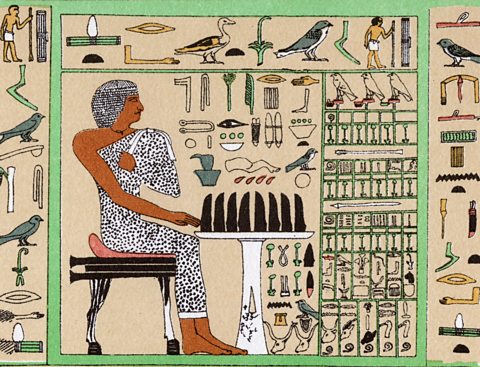
Hieroglyphics are symbols used by the Ancient Egyptians for writing. Some signs were pictorial and stood for whole words. Some signs were phonetic, which means they stood for sounds. They are often seen as mysterious and difficult to understand.
When Mr Kelly criticises Mary's work, he refers to her writing as "hieroglyphics" and "utterly unintelligible". In this case, hieroglyphics are symbolic of the difficulties Mary has with reading and writing. For Mary, written language feels just as mysterious and indecipherable as the ancient hieroglyphics.
However, when Mary learns about Ancient Egypt in a history class, she realises she’s "dead good at" creating her own hieroglyphics. At this turning point in the story, the hieroglyphics become symbolic of Mary's self-expression and creativity as well as her positive attitude towards life's challenges.
When Mary writes an entire piece of work in hieroglyphics and hands it into Mr Kelly, she confidently places it "right on tap ae the pile". This tell us that her writing, or the hieroglyphics, are no longer something to be ashamed or "mortified, pure mortified" by but something she wants to celebrate.
Learn more about hieroglyphics:What were ancient Egyptian hieroglyphs?
Examples of imagery used in Hieroglyphics
Donovan uses Imagery is where the writer uses words to paint picture to help the reader visualise the subject being described. Imagery often involves a comparison such as simile, metaphor or personification. to create a vivid picture of Mary's school life and emotions.
Mary describes reading using a A simile is a word or phrase used to make a comparison for dramatic effect, using 'like' or 'as'. and an Metaphors are a way of describing something by directly comparing it to something else. An extended metaphor takes this comparison and builds it over several paragraphs or poems, so it becomes a theme of the piece of writing.:
Ah mind they were birlin and dancin roond like big black spiders. A couldnae keep a haunle on them fur every time ah thoat ah'd captured them, tied them thegither in some kindy order they jist kep on escapin.
Mary compares reading to trying to capture moving spiders. The active description of the spiders as "birlin" and "dancin" helps the reader understand the way the letters appear to Mary on the page. It also emphasises the lack of control that she feels ("A couldnae keep a haunle on them"). The words "captured" and "escapin" have connotations of conflict; words are something wild that needs to be tamed or controlled. This image shows how challenging Mary finds reading.
Donovan returns to the image of comparing writing to small creatures later in the story. Mary explains:
My writin looked a bit like wee scarab beetles scurryin aboot the page and when he corrected it, it wis as if the wee beetles hud aw startit bleedin.
Mary draws on the Ancient Egyptians that she has been studying, comparing her writing to scarab beetles. Scarab beetles were believed to be very special in Ancient Egypt. Like "birlin" and "dancin" before, the word "scurryin" also suggests a sort of frenzy and lack of control. Similarly, when Mary says the beetles "startit bleedin", there is a sense of conflict. This highlights the difficulty Mary has with reading and writing, and the emotional turmoil she experiences as she faces Mr Kelly's criticism.
Imagery is used to describe scenes in Mr Kelly's classroom. For example, Mary describes the way Mr Kelly looks at her and her classmates like "some new strain a bacteria that could wipe oot the entire population a Glesga." This shows the disdain Mr Kelly feels for his students, he is perhaps even disgusted by them.
Donovan uses another extended metaphor to emphasise the lack of control Mary feels in Mr Kelly's class. She starts with a simile comparing the students to a "field a racehorses" and that Mr Kelly:
wus aun at such a pelt that only the furst two or three could keep up wi him.
The word "pelt" means moving at full speed. This gives the reader an idea of the pace that Mr Kelly operates at. He makes very little effort to help Mary, or the other pupils, understand what he is talking about. The word "pelt" is also a Scots word meaning 'to strike' or 'to give abuse.' This adds to the sense of struggle and conflict between Mary and Mr Kelly.
Mary expands on the imagery of horseracing by stating:
Me, ah wis the wan that fell at the furst fence.
Falling at the first fence, or hurdle, is a common metaphorical expression. It suggests Mary has failed or encountered difficulties before any of her peers. This touches on the isolation that Mary feels. She feels there is a barrier between herself and her peers that she can't move past.
Mr Kelly's tough approach is highlighted again:
The rest wur scribblin furiously, their airms hinging oot thur soackets
This metaphor suggests Mr Kelly works the students so hard that they are physically harmed by it (arms falling out of sockets). Mary uses this idea of physical harm again when she compares their arms to "big balloon[s]" after so much writing:
aw ye did wis write, write, write till yer airm felt like a big balloon
The simile here suggests Mary and her classmates are writing so much that their arms are swelling, which tells the reader how laborious she finds the work. The use of repetition in "write, write, write" emphasises the monotony and rigorous nature of copying down notes in class.
This theme of isolation is emphasised with another simile:
it's a time when friendships kindly shuffle roond like wanny they progressive barn dances […] ah fund masel oot the dance wioot a partner.
Mary compares friendships to social dancing where everyone is partnered up but her. By saying she's found herself without a partner, we get a sense of how lonely and isolated she feels.
Video - What is a simile?
Donovan uses many similes to compare Mary's experiences and feelings to other things. This helps paint a picture of her school life and inner world for the reader.
Brush up on your understanding of similes and why writers use them with this short National 5 English revision video.
What is a simile? How and why would you use one?
Simile!
A way to compare two things by using the words “like” or “as”
"Using a simile is like painting a picture with words.”
Their food was tough as old boots.
Imagine chowing down on an old shoe?!
This simile suggests that the food was leathery, dry and impossible to chew.
No thank you!
Be careful you don’t get similes mixed up with metaphors.
Metaphors compare two things by saying one is the other.
Similes always use “like” or “as”.
In her poem “George Square” Jackie Kay uses a simile to describe a protest:
“the banners waved at each other like old friends”
As well as suggesting how the banners move and wave together, this simile hints that the atmosphere at the protest was familiar, united and sociable.
Similes don’t always describe something clear, they can be much more complex.
In the novel The Cone Gatherers, Robin Jenkins compares the character Duror to a tree:
“He was like a tree still straight, still showing green leaves; but underground death was creeping along the roots”
Here, Duror is compared to a tree that seems healthy, but is dying on the inside.
This powerful simile tells us that although Duror may appear healthy and well on the outside
Inside, he is being slowly consumed by his hatred.
Using similes is a fun and effective way to explain something complex without using a long list of adjectives.
You can get as creative AS you LIKE!
Themes and comparisons with other stories by Anne Donovan
Innocence
Hieroglyphics explores the innocence that we associate with childhood. In this story, Mary is an innocent victim to the shortcomings of adults:
- her teachers’ disinterest in helping her academically
- her mother’s inability to support her academically
- the absence of her father, which is briefly referred to near the end of the story
By confronting the challenges that these shortcomings create for her, Mary starts to lose her childhood innocence and develop a harsher (yet perhaps more accurate and true) picture of the world.
Throughout all of her challenges, Mary is always true to herself.
The theme of innocence is also shown in the other stories:
| All That Glisters | Clare is very mature for her age because of how her parents treat her, and her father's illness and death. However, her innocence is highlighted when her father dies and she finds it difficult to process the situation. |
| Me and the Babbie | The narrator's childlike innocence is lost when she becomes a young mother. Instead “the babbie” is symbolic of innocence and gentleness. |
| Loast | As the narrator struggles with her declining memory and language, she begins to resemble a child in her dependence and confusion. |
Relationships
Hieroglyphics explores the emotional impact that relationships have.
Mary has the misfortune of experiencing various relationships that have a negative effect on her:
- the failings of her teachers affect her academic progress
- her abandonment by her peers isolates her socially
These relationships create challenges for Mary and highlight, like in other stories by Anne Donovan, the challenges of growing up.
Hieroglyphics is a story that captures the challenges that family relationships can face as children grow up. Though Mary’s mother is a source of support to her in a social and personal sense, Mary thinks that her mother considers her to be "daft".
Although family relationships can be complex, their ultimate importance is symbolised by Mary’s composition to Mr Kelly’s task. Mary thinks to herself that:
ah hink if ah’d asked her, ma mammy wid say we are her three best hings; Catherine and Elizabeth and me.
The theme of relationships is also shown in the other stories:
| All That Glisters | This story also explores the importance of a child’s relationship with parents. Clare’s father is loving and affectionate. |
| Me and the Babbie | The narrator has a difficult relationship with her family, who regularly criticise her. She makes a point to distance herself from them and to protect her autonomy. |
| Loast | The narrator has a strained relationship with her sister. She also conveys regret about missed potential relationships. Her regret at not having a daughter highlights her emotional emptiness and her desire for unconditional love and to be cared for. |
Isolation
Like many of the characters in Anne Donovan's stories, Mary suffers from isolation.
This isolation comes in different forms – academic and social – and Mary’s reaction to them both (to carry on and believe in herself) underlines her strength as a character.
Mary’s mother, who Mary considers too busy working and raising three girls to do anything, may also be socially isolated.
The theme of isolation is also shown in the other stories:
| All That Glisters | Clare feels emotionally isolated in her grief, especially as others do not understand her coping strategies. |
| Me and the Babbie | The narrator experiences emotional and social isolation, however, this is a choice for her. |
| Loast | Although she does not live alone, the narrator is emotionally isolated. Her relationship with her sister is cold and distant, and the narrator longs for connection. |
Conflict
Hieroglyphics also contains a degree of conflict.
Mary’s relationship with Mr Kelly is one, it seems, of mutual resentment.
On Mary’s side, Mr Kelly seems to repulse her, and she explicitly states that she "hated" him.
Language is used to show the differences between Mr Kelly and Mary:
- Mary’s voice is in Scots (and is perhaps representative of her working class roots)
- Mr Kelly’s standard English contrasts with this (and perhaps also shows his middle class background
This difference effectively reflects the conflicting backgrounds and attitudes of the two characters.
The theme of conflict is also shown in the other stories:
| All That Glisters | Clare experiences conflict with her Auntie Pauline. Clare's Aunt believes her to be disrespectful and uses firm and forceful language with her. |
| Me and the Babbie | There is conflict between the narrator and her family who do not understand, and often criticise, her parenting choices. |
| Loast | The relationship between the narrator and her sister, Agnes, is strained. Agnes appears to resent having to care for a sister who is declining. |
Revise Hieroglyphics by Anne Donovan
Revise Hieroglyphics and other short stories by Anne Donovan with interactive quizzes and flashcards for National 5 English.
Quizzes - Anne Donovan. quiz
Test your knowledge of the set texts by Anne Donovan with interactive quizzes for National 5 English.

More on Anne Donovan
Find out more by working through a topic
- count3 of 6
- count4 of 6
- count5 of 6
- count6 of 6