Identifying materials
Materials have different properties that make them better for some jobs than others.
When objects are designed and made it is important to think carefully about the materials that are used. This is to make sure that the object is able to do its job.
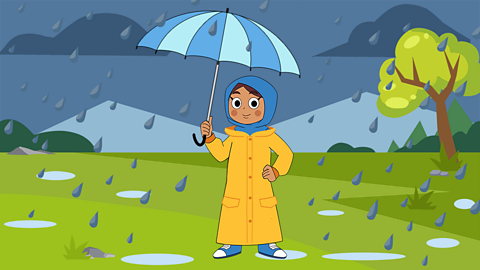
We use certain materials because of their properties. Plastic for instance is perfect for an umbrella or a raincoat as it is waterproof
Watch: How to compare materials?
Learn about everyday uses of materials.
Good morning! Lovely day outside. Hmm.
Windows are made of transparent materials like glass or clear plastic because if they were made of opaque materials such as wood, well it wouldn't work would it?
Skateboards are made of strong, rigid materials such as wood because if they were made of flexible materials such as rubber that wouldn't work either.
Umbrellas are made of waterproof fabric or flexible plastic because if they were made of absorbent materials such as wool it wouldn't work.
Chairs they're made from strong materials such as wood, plastic or metal because if they were made from weak materials such as paper. Yeah you've guessed it.
Teacups are made from heat resistant materials such as china or glass because if they were made of materials that absorb heat such as chocolate. Well I think you get it by now.
Maybe you should have stayed in bed?
Fascinating facts
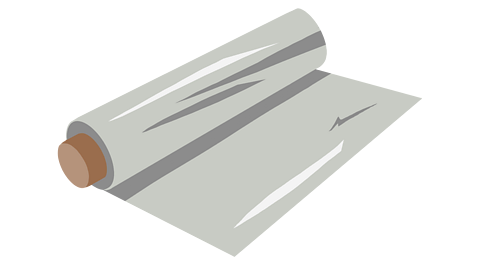
Materials can be natural, like wood, or man-made like plastic.
Glass is made from sand, heated up to over 1700°C.
Graphene is one of the strongestmaterials on Earth. It was developed at the University of Manchester.
Wool comes from sheep and some other animals such as alpacas and goats. Wool is warm, hard-wearing and absorbent, making it perfect for the jumpers, scarves and hats we wear when it's cold outside.
Most metals are solid and strong but some metals like mercury are liquids.
Seawater contains microscopic traces of gold, a metal which can be used to make jewellery.
Most medieval castles in the UK are made from stone. Stone was plentiful and strong for defence.
What are different types of materials?
Materials have different properties that make them useful for different jobs.
Metals
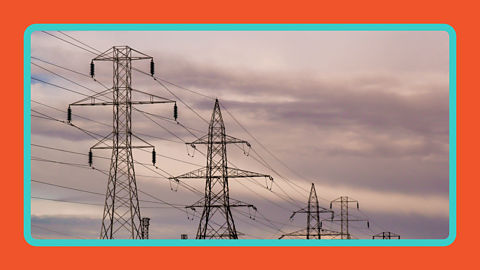
Most metals are strong, hard and shiny materials that can be hammered into different shapes without breaking. They are good conductors of heat and electricity and some are magnetic. Their properties make them useful for objects such as cutlery (knives and forks), saucepans, cars and coins.
Plastics
Plastics are materials made from chemicals and are not found in nature. They are often strong and waterproof. They can be made into any shape by applying heat. Plastics are not magnetic. They are good insulators and don't conduct heat or electricity. They're used to make things like bags, bottles and toys.
Glass
Glass is made by melting sand and other minerals together at very high temperatures. It is normally transparent and can be made into different shapes. Thick glass can be strong, but thin glass breaks easily. It’s used for objects that need to be transparent, such as windows and glasses.
Wood
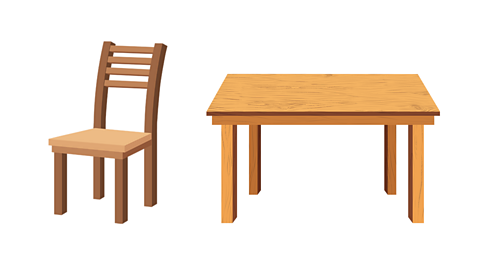
Wood comes from trees. It is strong, flexible and long-lasting. It is an insulator of heat and electricity. It’s used to make furniture such as tables and chairs.

Fabrics
Fabrics are made from thin fibres woven together. Different fabrics have different properties. They can be stretchy (a pair of tights), insulating (a woollen coat) or absorbent (a towel). Fabrics are used to make clothes as they are flexible, warm and do not wear out easily.
What are the properties of materials?
Properties describe how a material behaves, and explain why it is well suited for a particular use.
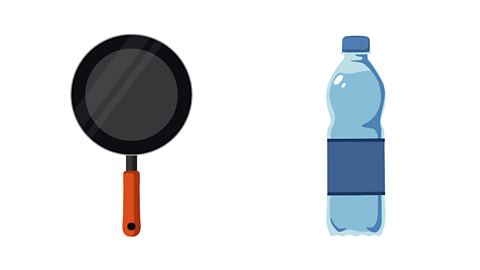
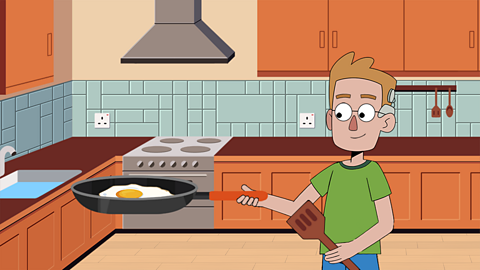
For example, metal has a high melting point (this is a property of most metals) so it is good to use to make a frying pan (this is the use of the material).
How to identify materials
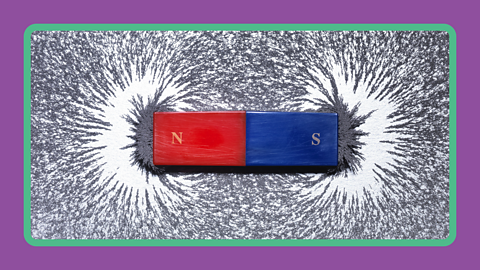
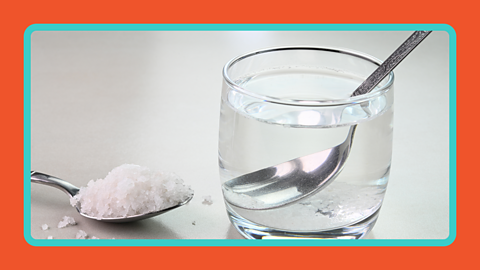
Image caption, Magnetism
Specific metals like iron and steel are magnetic because they can be attracted to a magnet.


1 of 6

Did you know?
Most of the elements found on Earth are metals, many of which can be made into all sorts of useful things.
Most metal objects can be recycled after we have finished using them. This saves water and energy used in manufacturing processes, and prevents waste.
The most recycled material is steel.
Important words
Absorbent – Materials that soak up or absorb liquids are absorbent.
Conductors – A material which allows electrical charge or heat to move easily through it.
Identifying – To find out what something is.
Insulators – A material which does not allow electrical charge or heat to move through it.
Materials – What an object is made from.
Object – Something that you can touch and feel.
Properties – The strengths and weaknesses of a material.
Transparent – A material that we can see through, like glass, is transparent.
Activities
Activity 1 – Quiz
Activity 2 – Spotting objects and materials
You will need a paper and pen for this activity.
- Make a list of some objects you can see around you.
- Write down what material is used to make each object.
- Explain why that material is used, think about the properties of that material.
Activity 3 - Junkateers game

Activity 4 – Design a boat

New game! Horrible Science: Stinky Space. game
Join Pipette on her epic mission and learn some revolting facts about space along the way.

More on Properties and change of materials
Find out more by working through a topic
- count2 of 5
- count3 of 5
- count4 of 5
- count5 of 5