Key points about holiday destinations

Use the Are used to communicate that something must be done without specifying who should do it, where there is no natural subject (like I, you, he, etc.).hay to talk about what holiday attractions.
Use the Words that replace nouns such as he, she, it, they. se with a verb in the he/she form to turn it into an impersonal verb.
A word such as at, for, with, into or from which is usually followed by a noun or pronoun. Prepositions are used to show where something is in place or time. of time in Spanish relate to when something happens and are useful for describing previous and future holiday plans.
This guide contains reading practice and a video comprehension.
Useful vocabulary for countries, languages and nationalities includes:
| Name of country (English) | Name of country (Spanish) | Nationality/language |
|---|---|---|
| England | Inglaterra | inglés, inglesa |
| Scotland | Escocia | escocés, escocesa |
| Wales | Gales | gales, galesa |
| Ireland | Irlanda | irlandés, irlandesa |
| Great Britain | Gran Bretaña | británico, británica |
| Spain | España | español, española |
| Italy | Italia | italiano, italiana |
| Germany | Alemania | alemán, alemana |
| France | Francia | francés, francesa |
| Chile | Chile | chileno, chilena |
| Mexico | México | mexicano, mexicana |
| China | China | chino, china |
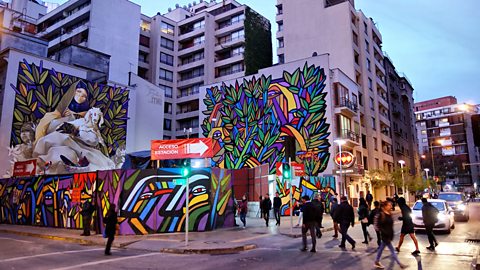
Holiday destinations
Useful nouns for describing different holiday destinations include:
| Spanish | English | Spanish | English |
|---|---|---|---|
| Check your connection, refresh the page and try again. | beach | Check your connection, refresh the page and try again. | island |
| Check your connection, refresh the page and try again. | village, small town | Check your connection, refresh the page and try again. | mountain |
| Check your connection, refresh the page and try again. | city, large town | Check your connection, refresh the page and try again. | countryside |
| Check your connection, refresh the page and try again. | region | Check your connection, refresh the page and try again. | country |
| Check your connection, refresh the page and try again. | coast | Check your connection, refresh the page and try again. | view |
Grammar - How to use impersonal verbs
Impersonal verbs in English include verbs such as ‘one does’ or ‘one goes’. Although these sound very formal in English, they are used a lot more commonly in Spanish.
The most common impersonal verb in Spanish is Check your connection, refresh the page and try again. which means ‘there is’ or ‘there are’.
For example:
Hay un hermoso pueblo en la montaña. - There’s a pretty village in the mountains.
Hay que followed by the infinitive is an impersonal way of saying ‘One has to do something’.
For example:
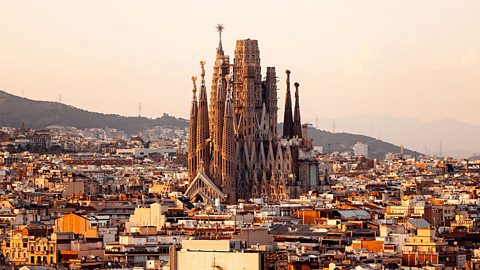
Hay que visitar la Sagrada Familia en Barcelona. - One has to visit the Sagrada Familia in Barcelona.
Using the impersonal pronoun 'se'
To turn any Spanish Word used to describe an action, state of being or an occurrence. into an impersonal verb, use the pronoun se and the he/she form of the verb.
For example:
Se necesitan euros. One needs euros.
If there is a The person or thing doing the action or being described. in the sentence, use the singular verb ending (the he/she ending) for a single subject, and the ‘they’ verb ending for plural subjects.
For example:
Se habla español en México. - Spanish is spoken in Mexico.
Las tiendas se abren a las nueve. - The shop opens at nine.
Modal verbs with the impersonal 'se'
The following Shows possibility, intent, ability, or necessity. Used alongside the infinitive form of the main verb of a sentence. Common examples of modal verbs include can, should, and must. often are used with the impersonal se:
se puede – one can
se debe – one must
se necesita – one needs
For example:
Se puede ir al restaurante. -One can go to the restaurant.
Se debe ver el castillo. - One must see the castle.
Se necesita su pasaporte. - One needs one’s passport.
Impersonal verbs - Mini quiz
Complete the following sentences.
__________ ver Paris porque es increíble.
One must see Paris because it’s incredible.
infinitive = deber
Se debe ver Paris porque es increíble.
Use the impersonal se with the he/she form of the verb which is debe.
En Italia ________ ir a muchas playas.
In Italy you can go to lots of beaches.
infinitive = poder
En Italia se puede ir a muchas playas.
Use the impersonal se with the he/she form of the verb which is puede.
En México ______ se necesita pesos.
In Mexico you need pesos.
infinitive = necesitar
En México se necesitan pesos.
As the subject of the verb - pesos - is plural, use the impersonal se with the they form of the verb which isnecesitan.
Find out more about impersonal verbs in the Impersonal verbs in Spanish guide.
Reading practice
Read what four people say about going on holiday and answer the questions below.
1. Alba
Lo que me encanta de las vacaciones es el sol y la playa. No me gustan las vacaciones de invierno porque hace demasiado frío.
What type of holiday does Alba prefer?
| A | Skiing holidays |
| B | Holidays at home |
| C | Beach holidays |
The answer is C
Translation:
What I love about holidays is the sun and the beach. I don’t like winter holidays because it is too cold.
2. Diego
El año pasado fui a Francia, pero este año voy a Italia.
Where did Diego go on holiday last year?
| A | France |
| B | Chile |
| C | Italy |
The answer is A
Translation:
Last year I went to France, but this year I'm going to Italy.
3. Karima
Soy deportista por eso prefiero las vacaciones en la costa con actividades como voleibol en la playa o la vela.
What type of holiday does Karima prefer?
| A | Restful holiday |
| B | Active holiday |
| C | Long holiday |
The answer is B
Translation:
I am sporty so I prefer holidays on the coast with activities like volleyball on the beach and sailing.
4. Javier
Mis padres se quedarán en casa durante las vacaciones este año, pero yo me iré a España con mi colegio. Va a estar genial.
Where is Javier going on holiday this year?
| A | On a school trip |
| B | Abroad |
| C | Staying at home |
The answer is A
Translation:
My parents are staying during the holidays at home this year but I am going to Spain with my school. It’s going to be great.
Vocabulary - Talking about the weather
Useful vocabulary to describe the weather in different tenses includes:
| Spanish present tense | English present tense | Spanish preterite tense | English past tense |
|---|---|---|---|
| Hace sol | It’s sunny | Hizo sol | It was sunny |
| Hace calor | It’s hot | Hizo calor | It was hot |
| Llueve | It’s raining | Llovió | It rained |
| Hace viento | It’s windy | Hizo viento | It was windy |
| Hace frío | It’s cold | Hizo frío | It was cold |
| Nieve | It’s snowing | Nevó | It snowed |
| Hay tormentas | It’s stormy | Hubo tormentas | It was stormy |
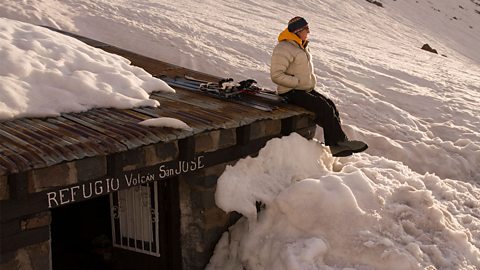
For example:
Normalmente hace sol en España. – Normally it’s sunny in Spain.
Nevó mucho en las montañas. – It snowed a lot in the mountains.
Hizo calor ayer por la mañana. – It was hot yesterday morning.
Useful adjectives for describing holiday destinations
Useful adjectives for describing holidays include:
| Spanish | English | Spanish | English |
|---|---|---|---|
| animado/a | lively | favorito/a | favourite |
| antiguo/a | old, ancient | genial | great |
| barato/a | cheap | gratis | free (of charge) |
| caro/a | expensive | increíble | incredible |
| cómodo/a | comfortable | hermoso/a | beautiful |
| conocido/a | well-known | histórico/a | historic |
| cultural | cultural | limpio/a | clean |
| divertido/a | fun, enjoyable | precioso/a | beautiful, precious |
| emocionante | exciting | sucio/a | dirty |
| estupendo/a | wonderful, marvellous | tranquilo/a | calm, tranquil, relaxed |
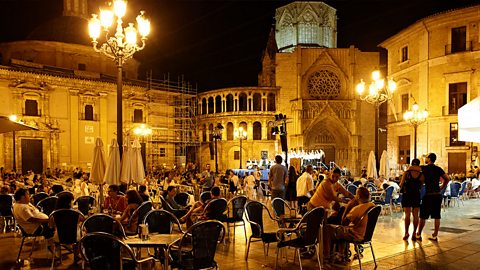
For example:
La ciudad es animada por la noche. – The town is lively at night.
La comida fue muy barata. – The food was very cheap.
Desgraciadamente las calles son sucias. – Unfortunately the streets are dirty.
El hotel fue caro, pero fue increíble y hermoso. – The hotel was expensive but it was incredible and beautiful.
Mi lugar favorito fue la playa conocida. – My favourite place was the well-known beach.
Grammar - Prepositions of time
Preposition of time in Spanish relate to when something happens.
Common prepositions of time include:
| Spanish | English |
|---|---|
| Check your connection, refresh the page and try again. | to/at |
| Check your connection, refresh the page and try again. | from |
| Check your connection, refresh the page and try again. | from/since |
| Check your connection, refresh the page and try again. | for/since |
| Check your connection, refresh the page and try again. | ago |
| Check your connection, refresh the page and try again. | from |
| Check your connection, refresh the page and try again. | up to/as far as/until |
| Check your connection, refresh the page and try again. | during |

For example:
Voy de vacaciones desde el 2 de agosto hasta el 9 de agosto. – I go on holiday from 2 August until 9 August.
Durante mis vacaciones me gusta tomar el sol. – During my holidays I like sunbathing.
Fui a España hace dos años. - I went to Spain two years ago.
Desde hace is used with the present tense to say how long you have been doing something, or how long something has been happening.
For example:
Llueve desde hace tres horas. - It's been raining for three hours.
When used in a question, desde hace often comes at the start.
For example:
¿Desde hace cuánto tiempo vives en España? - How long have you been living in Spain?
Prepositions of time - Mini quiz
Complete the following sentences.
Estoy de vacaciones _____ la semana próxima.
I’m on holiday until next week.
Estoy de vacaciones hasta la semana próxima.
_________ sus vacaciones prefiere descansar.
During her holidays she prefers to relax.
Durante sus vacaciones prefiere descansar.
No he visitado España _______ 2018.
I haven’t visited Spain since 2018.
No he visitado España desde 2018.
Find out more about prepositions of time in the Prepositions of place and time in Spanish guide.
Video comprehension
María is trying to decide where to go on holiday. Watch the video then answer the questions below.
Maria is deciding where to go on holiday
Hola, soy Maria. ¿Qué tal?
Bueno, me gustaría ir de vacaciones este verano. Pero no sé dónde ir. ¿Me ayudas a decidir?
Me gustaría nadar, leer, tomar el sol, pero más que nada, descansar…Por eso, me gustaría ir a la playa…
Barcelona tiene playas preciosas, pero Valencia también.
En mi opinión, Barcelona es más animada que Valencia, pero también más cara.
Y creo que Ibiza tiene algunas de las playas más bonitas de toda Europa…
¡Ay! ¡Es tan difícil escoger!
Barcelona… Hmmmm… Lo bueno es que es una ciudad con mucha cultura y mucho ambiente.
Por otro lado, siempre hay muchísima gente en verano, mucho turismo…
Valencia… Hmmm… Siempre hace mucho calor en Valencia en verano, pero a veces hay tormentas.
Vale, pues Ibiza entonces porque me encantan sus playas. Sí, me voy a Ibiza este verano.
¡Cómo mola! El vuelo a Ibiza desde aquí tarda una hora y media. ¡Eso no es nada!
Pero ahora tengo que planear mi viaje. Lo primero - tengo que reservar un sitio donde alojarme.
En Ibiza hay diferentes tipos de alojamiento. Hoteles, campings… La opción más barata es una habitación compartida en un albergue juvenil.
Una ventaja es que puedes conocer a otros viajeros y hacer amigos…
Una desventaja es que mucha gente ronca…. Mi perro ronca todas las noches. ¡Lo odio!
Entonces creo que para mi, la mejor opción es una habitación individual.
Voy a llamar al albergue juvenil para hacer la reserva…
Hola, quiero reservar una habitación individual para cuatro noches, por favor. Del cuatro hasta el ocho de agosto.
¿Y las habitaciones tienen ducha?
De acuerdo.
¿A qué hora es el check in?
A partir de las dos. Vale, perfecto. Gracias.
¡Tengo muchas ganas! ¡Voy a empezar a hacer la maleta ahora mismo!
Bueno, muchas gracias por ayudarme. ¡Hasta luego!
Translation
Hello. I'm Maria. How are you.
OK, I would like to go on holiday this summer. But I don't know where to go. Can you help me decide?
I would like to swim, read, sunbathe, but more than anything, rest… Therefore I would like to go to the beach.
Barcelona has beautiful beaches but so has Valencia.
In my opinion, Barcelona is more lively than Valencia but also more expensive.
And I think that Ibiza has some of the most beautiful beaches in all of Europe.
Oh! It is so difficult to choose.
Barcelona… Mmmm… The advantage is that it is a city with a lot of culture and a lot of atmosphere.
On the other hand, there are always a lot of people in the summer, a lot of tourism.
Valencia… Mmmm… It is always very hot in Valencia in the summer but sometimes there are storms.
Well then Ibiza as I love its beaches. Yes, I am going to Ibiza this summer.
That's so cool. The flight from here lasts an hour and a half. That's nothing!
But now I have to plan my journey. Firstly, I have to book somewhhere to stay.
In Ibiza there are different types of accomodation. Hotels, campings… The cheapest option is a shared room in a youth hostel.
An advantage is is that you can meet other travellers and make friends.
A disadvantage is that a lot of people snore… My dog snores every night. I hate it!
So I think that for me the best option is a single room
Right I am going to call the youth hostel to book.
Hello, I would like to book a simple room for four nights please. From the 4th to the 8th August.
And do the rooms have showers.
OK.
And what time is check-in?
From 2. OK, perfect. Thank you.
I am so excited. I am going to start packing right now.
Right, thank you so much for helping me. See you soon!
Glossary: roncar = to snore
1. Which activity would María most like to do on holiday?
A) read
B) swim
C) rest
D) sunbathe
Answer
C - read
Maria says: 'Me gustaría nadar, leer, tomar el sol, pero más que nada, descansar…'
I'd like to swim, read, sunbathe, but more than anything, rest…
2. Complete the following sentence:
María says that Barcelona is livelier than Valencia but it's also _________.
Answer
María says that Barcelona is livelier than Valencia but it's also more expensive.
She explains: 'En mi opinión, Barcelona es más animada que Valencia, pero también más cara.'
In my opinion, Barcelona is livelier than Valencia, but also more expensive.
3. Which two details does María give about the weather in Valencia in summer?
Answer
it's very hot.
sometimes there are storms.
She says: 'Siempre hace mucho calor en Valencia en verano, pero a veces hay tormentas.'
It's always hot in Valencia in summer, but sometimes there are storms.
4. Give one advantage and one disadvantage of sharing a room in a youth hostel, according to María.
Answer
Advantage - you can meet other travellers/ you can make friends.
Disadvantage - lots of people snore.
She says: 'Una ventaja es que puedes conocer a otros viajeros, hacer amigos… Una desventaja es que mucha gente ronca…'
One advantage is that you can meet other travellers, make friends… A disadvantage is that lots of people snore…
5. Complete the following sentence:
María books a __________ room for ______ nights from the 4th to the ____ _________.
Answer
María books a single room for four nights from the 4th to the 8th August.
When she rings the hostel, she says: 'Hola, quiero reservar una habitación individual para cuatro noches, por favor. Del 4 hasta el 8 de agosto.'
Hello, I want to book a single room for four nights please. From the 4th to the 8th August.
Vocabulary sheet
Click or tap on the image below for a list of useful vocabulary to use when talking about holiday destinations.

Higher Tier - Grammar - Impersonal verbs
Parece que is an impersonal verb that means ‘it seems that’.
For example:
Parece que es interesante. - It seems to be interesting.
Vale la pena means ‘it’s worth it’.
For example:
Aprender español es difícil pero vale la pena. – It’s difficult to learn Spanish but it is worth it.
Vale la pena followed by the infinitive means ‘it’s worth doing something’.
For example:
Vale la pena ir a Argentina. – It’s worth visiting Argentina.
Now you have revised the important vocabulary and key grammar points for talking about holiday destinations, why not have a look at the Describing school subjects in Spanish guide?
Careers advice and tips from BBC Bitesize
Future careers, further studies and the world of work - we're here to help with advice from experts and from young people who've found their path.

More on Travel and tourism, including places of interest
Find out more by working through a topic
- count2 of 4
- count3 of 4
- count4 of 4