How did women's jobs change?
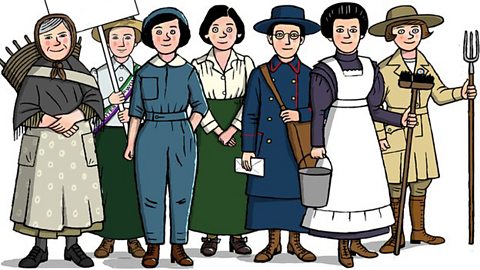
Life for women changed a lot because men were away at war.
Many women took paid jobs outside the home for the first time.
By 1918 there were five million women working in Britain.
The money they earned helped the family's budget and they made new friends in the factory, office or shop.
Watch: What jobs did women do at home?
Watch our video to find out more about women's work on the home front.
[SNARE DRUMS]
MRS JOHNSON: With this war on, everyone’s got to do their bit. A bit makes it sound like something small, something easy.
With so many men away to fight, us women have got to do way more than a bit.
We’re doing bloomin’ everything and a day off work ain’t a day off.
I’m Mrs Johnson. Pleased to meet you.
Normally the girl next door helps me out but she ain’t turned up today.
Lilly! You in? You couldn’t give us a hand could you? Lilly!
LILLY’S FATHER: She’s not ‘ere!
MRS JOHNSON: That’s Albert. He’s Lilly’s father.
LILLY’S FATHER: She’s been sent to do some war work.
MRS JOHNSON: She could’ve told me.
LILLY’S FATHER: I’m sorry Vicky but she was out early this morning.
Trying out at the Post Office. Don’t think the early starts will suit her.
MRS JOHNSON: Oh! Fancy a cuppa tea? It’s been non-stop this morning.
LILLY’S FATHER: I’ll join ya. I got a postcard from Judith. I’ll read it to ya.
NARRATOR: Judith’s his wife. She joined the Women’s Land Army.
LILLY’S FATHER: Dear Bertie and my lovely girls. My back’s still killing me and the work’s never ending…
JUDITH: … on the plus side, had some excitement when the army came to take my horse.
Horse made its feelings clear on the matter.
Looks like me and Horsey will be pals for a bit longer…
LILLY’S FATHER: …can’t wait to get home to you all, J.
So how’s ammunitions factory? Or is it all top secret?
MRS JOHNSON: Work’s turning me blonde. Wouldn’t be so bad but if affects my skin as well, all those chemicals and explosives.
And we got the most awful fright the other day.
[BANG]
MRS JOHNSON: Oh I know, and this rash is right horrible!
[METAL ROLLS ON FLOOR]
[SIGH]
MRS JOHNSON: With all those explosives everywhere, we could’ve been blown to kingdom come!
LILLY’S FATHER: You should quit while you’re in once piece love.
MRS JOHNSON: And where would that leave my husband out in France? What’s he gonna throw at the enemy? Socks?!
[KETTLE WHISTLES]
MRS JOHNSON: Right, one cuppa tea and you’re outta here. I’ve got a ton of work to do.
[MUSIC PLAYS]
What jobs did women do in towns?
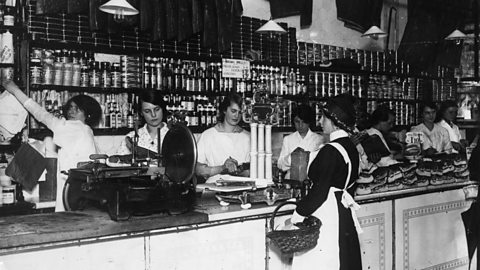
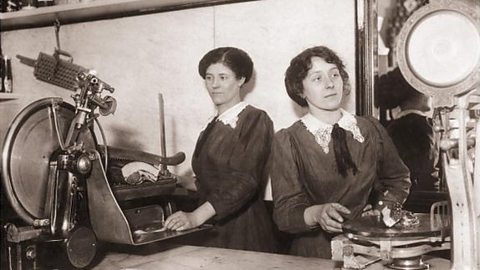
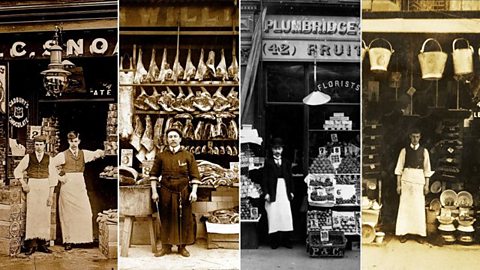
Lots of women took jobs in shops and offices.
Some women were so good at typing that they became known as 'typewriters' - named after the machines they used!
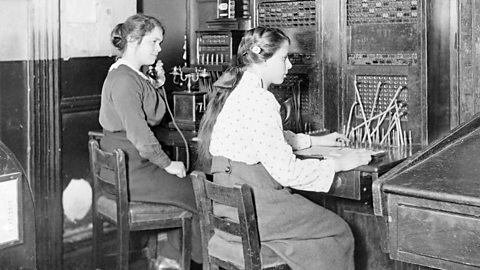
Image caption, Clerks dealt with letters, filing and typing
As more women started to work in offices, they were trained in tasks like bookkeeping (keeping a log of money) and working a switchboard (a telephone control centre).
1 of 3
What was the Land Army?
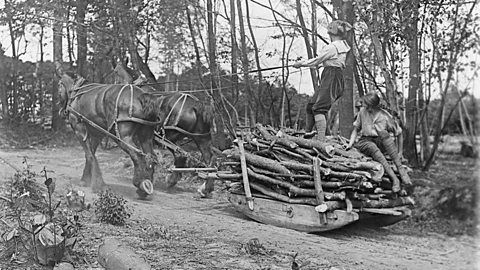
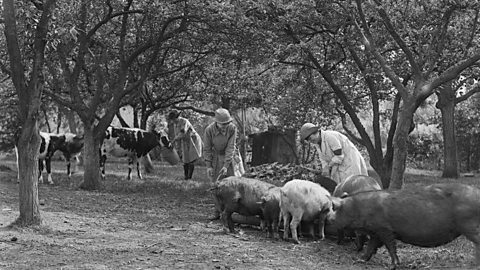
Women worked in all areas of farming, including operating ploughs, a large machine which prepares soil for growing crops.
Food production became very important due to shortages because of the war.
- Image source, © IWM Q 30687
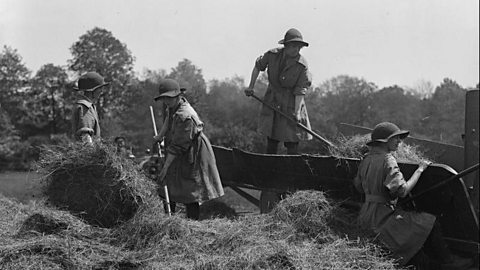
Image caption, Women's Land Army Forage Corps
By 1917 more and more women were working on farms as 'Land Girls'. In the Forage Corps women fed and stacked hay bales on British farms.
1 of 3
What jobs did women do to help the war effort?
Like the women who went to help on the front line, women in Britain also worked for the war effort.
The war created lots of new jobs. Other jobs focused on protecting people.
Many women were brought in to build munitions (weapons). By 1918 nearly a million women had jobs linked to munitions.
They worked with explosives which made some workers ill or their skin turn yellow.
- Image source, © IWM Q 108408
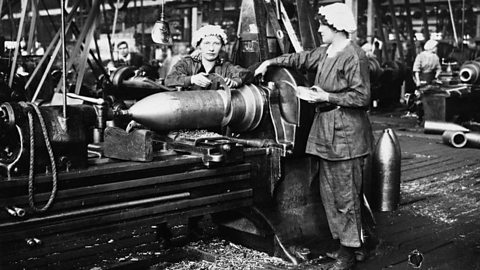
Image caption, Women worked in munition factories all over the country
One of their jobs was cutting copper bands on shell cases and oiling the machinery.
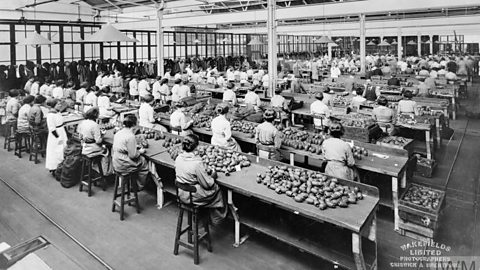
1 of 2
Unequal pay and voting rights
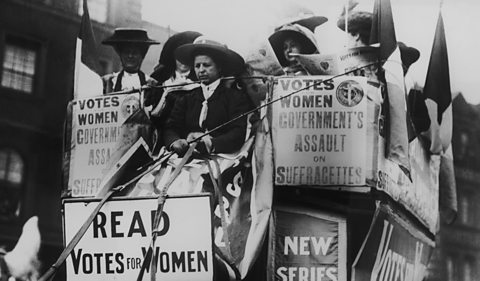
Despite doing the same jobs as men, women were paid less.
Shop workers were paid around half as much. Teachers earned less than 80 per cent of a man's salary.
Only British men were allowed to vote to choose a government.
This was unfair and lots of women protested to demand better rights.
Women's rights
In 1918 women with property over the age of 30 were given the right to vote.
In 1928 this was extended to all women over the age of 21.
Life on the home front during the war let women prove they could work as hard as men in a wide range of jobs. They deserved the same rights.
Activity 1: Quiz – Women on the home front
Horrible Histories: Raid and Trade game! game
Play Horrible Histories: Raid and Trade KS2 History

More on World War One
Find out more by working through a topic
- count18 of 43
- count19 of 43
- count20 of 43
- count21 of 43