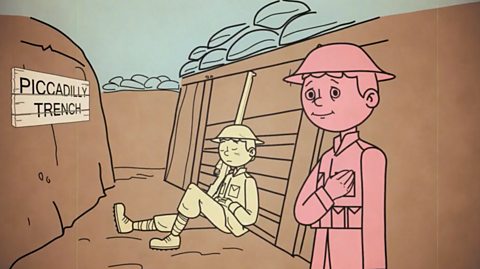
How was World War One remembered in 1919?
Many people felt it was wrong to celebrate at the end of the war because so many had died.
When the church bells struck 11 o’clock on 11 November 1919, one year after the war, people all over the country bowed their heads.
Buses and trains stopped moving.
Shopkeepers stopped serving.
The electricity was cut off to stop trams from running.
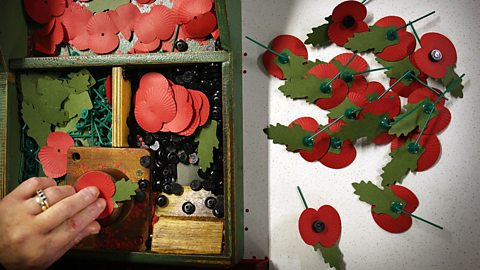
Ever since the first Remembrance Day, people have followed the same tradition. Every year on 11 November they stop for a short moment of reflection.
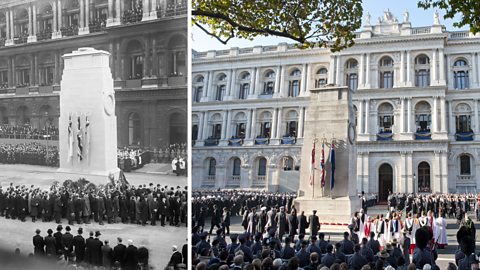
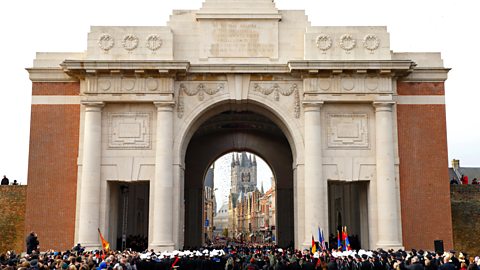
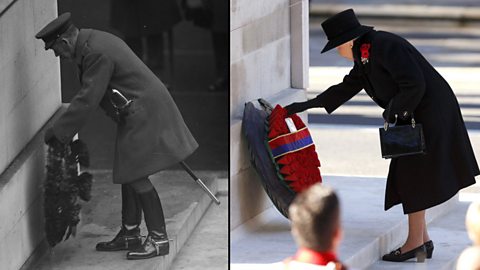
Image caption, Memorials
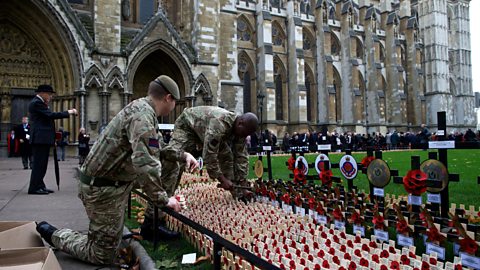
When the Cenotaph, a war memorial in London, was built in 1920, people laid flowers there in memory of loved ones. The tradition continues to this day. Every second Sunday of November, Remembrance Sunday takes place, where servicemen and women lay poppy wreaths.

1 of 7
How war poets wrote about the war
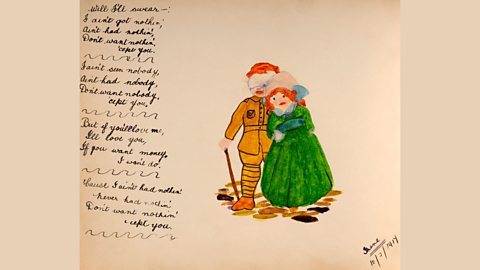
The war was so unusual and horrific that it inspired people, especially soldiers, to write poems.
They wanted to describe the war so that people at home could understand how it felt. They also wanted to make sure people never forgot.
Laurence Binyon was an English poet. In 1914, he wrote 'For the Fallen'.
He later travelled to France and helped wounded soldiers as a volunteer at a British hospital.
Watch: 'For the Fallen' by Laurence Binyon
Watch and listen to 'For the Fallen' by Laurence Binyon. The poem's fourth verse is known as 'Ode of Remembrance'. It is often carved into monuments and spoken at remembrance services.
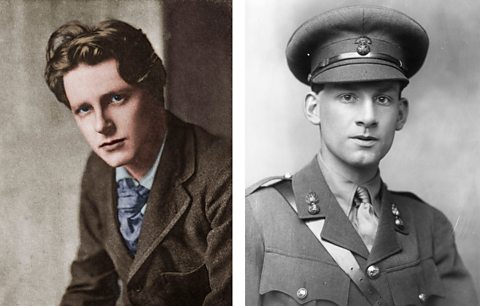
Rupert Brooke was one of the first British war poets.
He felt it was important to do your duty for your country.
His famous poem The Soldier said, "If I should die, think only this of me: that there's some corner of a foreign field that is forever England".
Siegfried Sassoon was another British soldier poet.
He thought it was wrong for humans to fight each other.
He wrote in a poem called A Letter Home that "war's a joke" and described it as "hell".
Wilfred Owen was another war poet who agreed with Siegfried's feelings.
Why do we wear poppies?
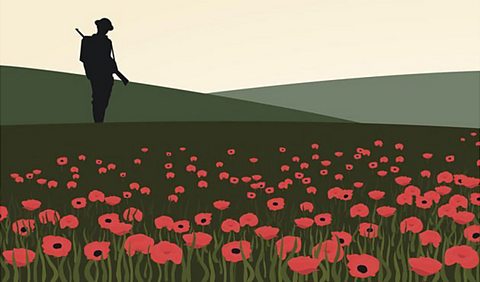
'In Flanders Fields' by John McCrae was a famous wartime poem. It says, "We shall not sleep, though poppies grow in Flanders Fields".
Many battles took place there. Soldiers got hurt and sometimes died, but the poppies still grew.
A French woman called Madame Guerin liked the poem so much that she started to sell poppies for charity in America. At the same time a lady called Moina Michael was promoting the poppy as a symbol for remembrance.
In Britain George Howson made a simple poppy design so that people who had been disabled by the war could make them. He said: "I do not think it can be a great success but it is worth trying".
The poppy is still worn by millions of people every November.
Then and now: how has life changed?
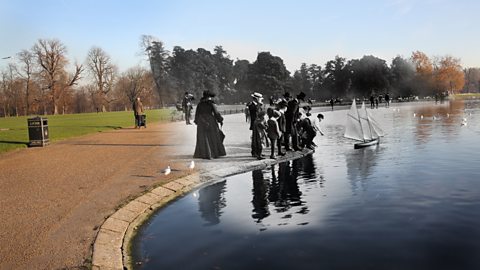
Image caption, People in the early 1900s enjoyed the green open spaces of parks and countryside, as they do today. These children are sailing a model yacht. It’s before the war so their fathers are with them.
1 of 10
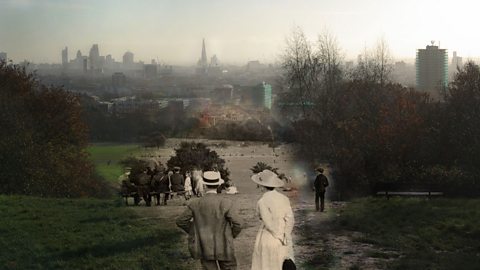
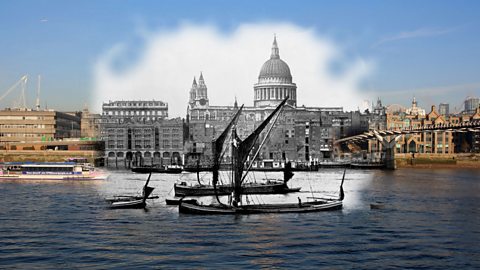
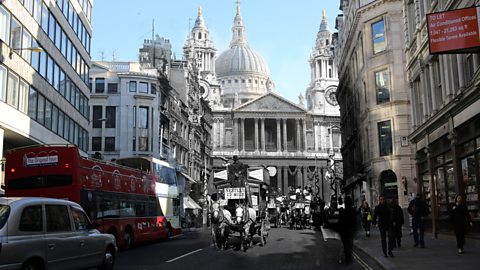
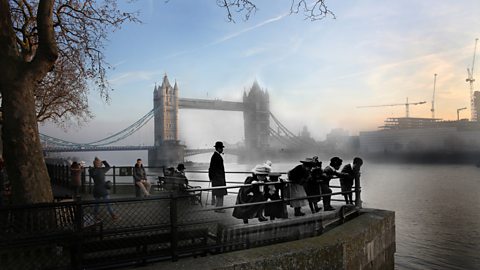
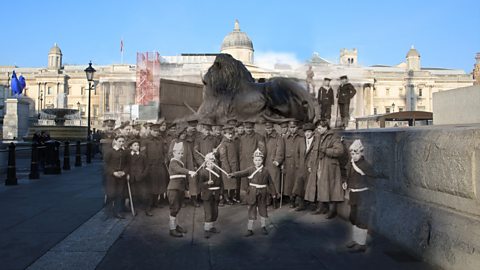
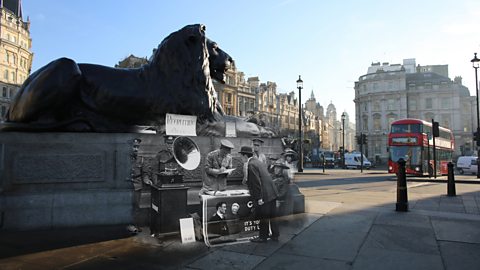
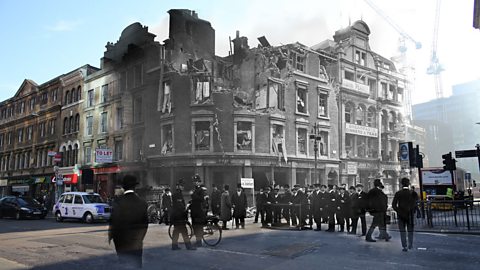
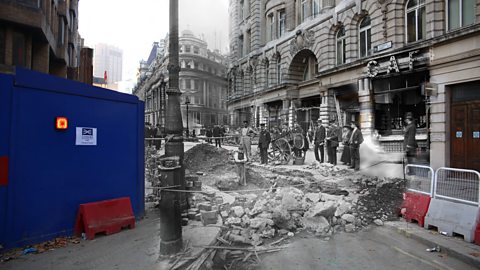
Photographs can tell us all kinds of things about people’s lives. They capture moments of history from years gone by.
The pictures in our slideshow mix the modern day with life in the early 1900s. You can see that some things stay the same, other things are very different.
Activities
Activity 1: Quiz – Remembering World War One
Activity 2: History Explorer game
Play this game to test your knowledge and learn even more facts about World War One.
History Explorer: Secrets through time
History Explorer: Secrets through time: KS2 History
Horrible Histories: Raid and Trade game! game
Play Horrible Histories: Raid and Trade KS2 History
More on World War One
Find out more by working through a topic
- count22 of 43
- count23 of 43
- count24 of 43

- count25 of 43