What were trenches?
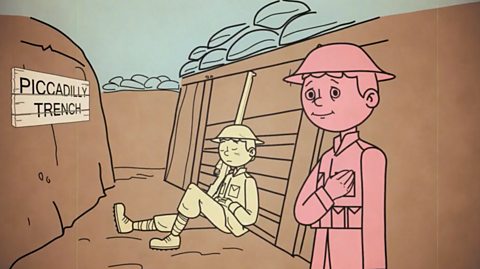
On the Western Front, soldiers on both sides lived in trenches.
Trenches were long, narrow ditches dug into the ground.
They were very muddy.
Some soldiers developed a problem called trench foot.
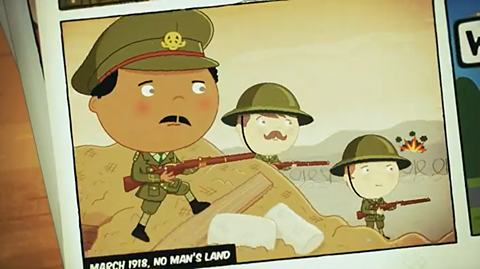
In the middle was no man's land. Soldiers crossed this to attack the other side.
What were the trenches like?
Watch our video to learn more about life in the trenches.
[SNARE DRUMS]
JACK: I don’t mind the rainy weather.
I quite like playing in the mud.
But I’d probably feel different if I was a soldier in the trenches during World War One.
WW1 SOLDIER JACK: Mud? Oh, we know all about mud here on the Western Front.
We’re living in it.
We’ve dug hundreds and hundreds of miles of these trenches.
They’re full of water in the winter.
Full of flies in the summer.
And full of rats all year round.
But they’re very important.
These trenches are the only thing stopping the enemy advance and, when we’re posted here, they become our home.
It’s like an entire town here.
We have operations dugouts to plan attacks.
We’ve built observation points to spy on enemy movements.
And if you’re injured you can treated at the medical post.
We get lunch from a cooking shelter.
It’s supposed to be meat and vegetable stew but my mate reckons we should fill the sandbags with it.
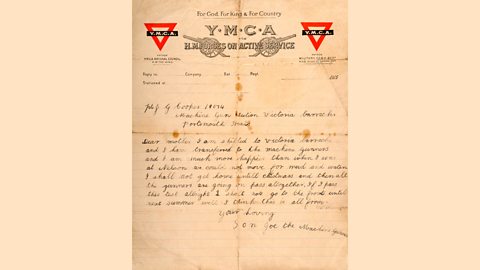
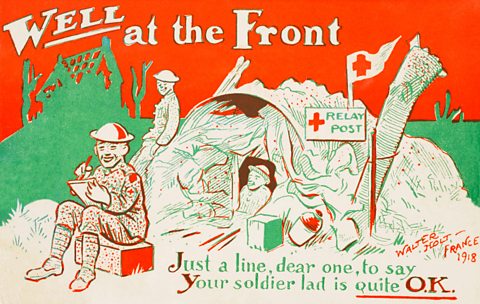
After repairing and cleaning the trenches in the afternoon we get the chance to grab some sleep or to read letters from home.
Reading them makes me feel happy and sad all at once.
But we can’t rest for long.
Soon it’s back to the firing trench because most attacks start at the end of the day, and we must be ready and alert.
I can see the enemy from here.
Imagine the length of a football pitch – that’s how close they are sometimes.
We watch each other as the sun goes down and all through the night.
And we think of home, our real home.
JACK: I can get out of the mid and the rain any time I want, but those soldiers couldn’t.
And lots of them never did get the chance to go home.
What happened in an average day?
| Time | Activity |
|---|---|
| 5am | 'Stand-to' (short for 'Stand-to-Arms', meaning to be prepared for enemy attack) half an hour before daylight |
| 5.30am | Rum ration |
| 6am | Stand-down half an hour after daylight |
| 7am | Breakfast (usually bacon and tea) |
| 8am onwards | Clean selves and weapons, tidy trench |
| Noon | Dinner |
| After dinner | Sleep and downtime |
| 5pm | Tea |
| 6pm | Stand-to half an hour before dusk |
| 6.30pm | Stand-down half an hour after dusk |
| 6.30pm onwards | Work all night with some time for rest (patrols, digging trenches, putting up barbed wire, getting stores) |
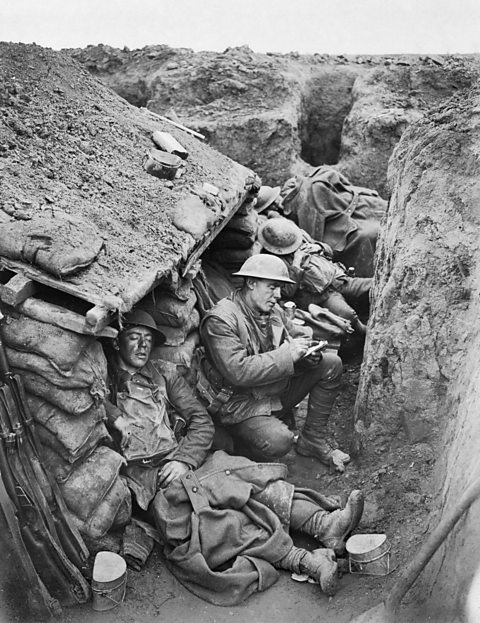
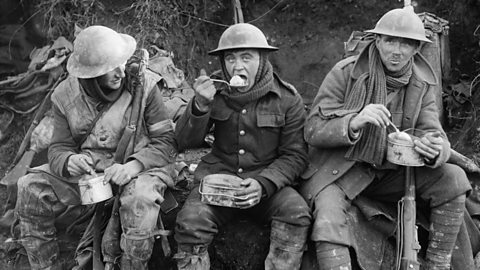
Soldiers only got to sleep in the afternoon during daylight and at night for an hour at a time. During rest time they wrote letters and played card games.
What did the soldiers have with them?
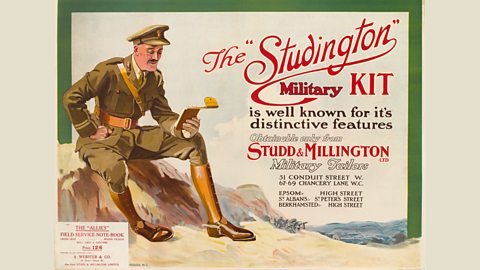
Image caption, Soldiers carried lots of equipment
This included a gas mask; weapons and ammunition; protective clothes like boots and a helmet; ‘webbing equipment’ which contained personal items like shaving kits and water bottles; and a shovel.

1 of 4
Christmas presents and a football match
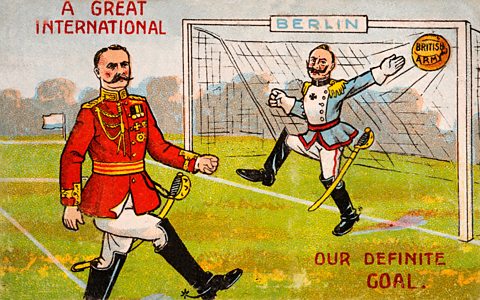
During the first Christmas of the war, soldiers from both sides stopped fighting and met in no man's land. They sang carols together and gave each other food as presents.
On Christmas Day, a British soldier kicked a football out of his trench and the Germans joined in. It was said that Germany won the match 3-2.
Activities
Activity 1: What things were in a trench?
Explore our interactive trench scene and click on different objects to find out more about them.
There are ten different objects to find. You can use the question mark button to highlight them all.
Activity 2: Quiz – Life in a trench
Activity 3: History Explorer game
Play this game to test your knowledge and learn even more facts about World War One.
History Explorer: Secrets through time
History Explorer: Secrets through time: KS2 History

Horrible Histories: Raid and Trade game! game
Play Horrible Histories: Raid and Trade KS2 History
More on World War One
Find out more by working through a topic
- count26 of 43
- count27 of 43
- count28 of 43
- count29 of 43