What is this poem about?
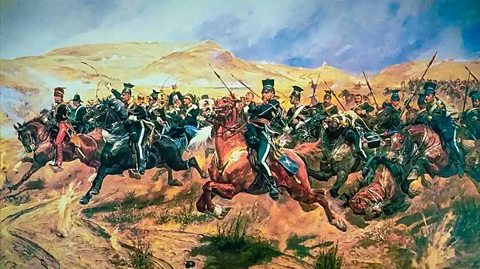
The Charge of the Light Brigade was written by Alfred, Lord Tennyson and published in 1854.
It tells the true story of a When something has not been understood correctly. order which led to the unnecessary deaths of many British soldiers in the Battle of Balaclava, during the Crimean War.
The Charge of the Light Brigade is a narrative poem, consisting of six stanzas, and written in the form of a A type of poem traditionally set to music. Ballads usually tell a story – sometimes based on historical events..
Tennyson uses a regular rhythm and repetition to mirror the relentless motion of the soldiers charging on horseback.
Comparing poems: 'The Charge of the Light Brigade' and 'Poppies'
Listen to a podcast comparing 'The Charge of the Light Brigade' by Alfred, Lord Tennyson and 'Poppies' by Jane Weir.
ANNOUNCER: BBC Sounds: music, radio, podcasts.
TESTAMENT: Hello and welcome to the Bitesize poetry podcast. I'm Testament, a writer, rapper and poet. In this series I'm gonna tell you how to write about poetry in your exam. It's a good idea to start at the beginning and listen to the first three episodes in this series, so make sure you check those out. In this episode I'm comparing two poems. Make sure you've got a pen handy because it's really useful to make some notes and write down some quotes as we go.
TESTAMENT: We're talking about 'The Charge of the Light Brigade' by Alfred Lord Tennyson and 'Poppies' by Jane Weir. Victorian poet Tennyson wrote 'The Charge of the Light Brigade' in 1854, so he's not around to answer my questions. But luckily Jane Weir is here with me to talk to you about her beautiful poem 'Poppies'. Hello, Jane.
JANE: Hi, Testament.
TESTAMENT: We're going to talk about three key points today: context – when and why the poems were written; form – how they are written; and theme – remembering those who were lost. While these poems are about commemorating, honouring, and remembering those who've died in war, they're very different. We'll start with ‘Charge of the Light Brigade’. Like I said, it's written in 1854. What's it about? Jane?
JANE: It's about a group of men riding into battle during the Crimean War. And it concentrates on the men and how they carried out their orders regardless of any kind of personal risk to themselves.
TESTAMENT: Right. So Tennyson wrote this to commemorate roughly six hundred men in battle in the Crimean War. And this battle was famously badly organised. It was a disaster. But Tennyson's point is that it doesn't stop these men being brave. I wanna turn now to your poem, Jane, 'Poppies'. Even though you wrote it, it's a bit more of a tricky question. What's happening in, in your poem?
JANE: Well, my poem isn't actually located in the battlefield like Tennyson's is. And it's about those people that are left behind. The child is remembered alive as well as possibly dead. That's important to say because you never really truly know in my poem. You could read the poem as a ghost poem or a premonition of a child's death. It's ambiguous.
TESTAMENT: That's an important point. Poems can be ambiguous. They can have more than one meaning or leave you with a feeling of uncertainty. So you the reader can decide what you think it's about. We want you to have your own opinions about poems, but you've always got to remember to back it up with a quote in the exam.
TESTAMENT: Okay, for our first key comparison, let's dig into the context a little more. Both these poems are about conflict and memory, and there's a really great quote you can use from 'The Charge of the Light Brigade'. This is a line from near the end of the poem, so it's a thought Tennyson wants to leave you with. And it says, "Honour the charge they made." It's like a command to the reader, isn't it? What do you think "honour" means here, Jane?
JANE: Er, meaning remember and respect. So for me when Tennyson talks of honour he's speaking of it in an impersonal way.
TESTAMENT: And if you can't remember the whole line, "Honour the charge they made," you can just remember the word "honour". Write it down, underline it, because honour is so central to this poem. Thinking about memory, Jane, your poem is called 'Poppies', and we wear poppies to honour and remember. Jane, is there a quote from your poem 'Poppies' that you'd like to talk about?
JANE: "I traced the inscriptions on the war memorial, leaned against it like a wishbone." I think that's a way of thinking about the dead, recording them in some way. I mean, it's an intimate moment for the mother. She walks up through the graveyard and she stands against – I call it the wishbone, which is specifically the war memorial, which often kind of looks like a wishbone if you-, if you know what one looks like.
TESTAMENT: What is a wishbone, for those who don't know?
JANE: You know when you get a chicken carcass? It sounds a bit bizarre.
TESTAMENT: It's like a roast chicken, yeah.
JANE: It's like a roast chicken. And you get that little bone at the back of it. We always used to take it out, pick it clean, and then I'd hold one end of it and my mum would hold the other, and then we'd pull on it and make a wish. And the wish in my poem is wishing the child back.
TESTAMENT: With multiple meanings.
JANE: Yeah.
TESTAMENT: So it looks like a wishbone. Also it-, it conjures up and it creates that image of pulling on a wishbone, a chicken bone, and making a wish for something better.
JANE: That's right. And it's an intimate act, something that connects people.
TESTAMENT: Okay, so now we've got some context we're now going to compare the form of these poems. Jane, your poem is a dramatic monologue. That means it's a poem where a character – the speaker – tells their story. Why did you choose this form?
JANE: I think dramatic monologues are… are brilliant because they're very, very direct and immediate, and you feel sometimes that you're actually completely inside the person or the character's head, and you can use a lot of creativity and play around with language and imagery and metaphor. So all those things are used in the line like, "I resisted the impulse to run my fingers through the gelled blackthorns of your hair." It's a sort of simple, tender act of play and love.
TESTAMENT: That's a really powerful one. I'm gonna repeat the quote again. "I resisted the impulse to run my fingers through the gelled blackthorns of your hair." Now, 'The Charge of the Light Brigade' is a ballade. A ballade is a really old poetic form and it tells a story. So, often, like in this case, it's a story of a real-life event. They were often used to commemorate historically significant events.
The interesting thing about this poem is that it just happened. And he wants to give this recent event significance and weight. He wants it to go down in history? Also important is that the poem is in six stanzas. A stanza is a group of lines in a poem. These can change length as the story changes, as it does here: as the men go towards danger, the final stanza is only two lines long – a short, sharp conclusion.
TESTAMENT: And for our last key comparison, let's dig more into a key difference between these poems. They both share a theme of remembering those who've died at war. Jane, your poem 'Poppies' is much more personal. We hear the word "you", whereas in 'The Charge of the Light Brigade' they're written about as "the noble six hundred." It's a really useful quote, isn't it?
JANE: And Tennyson repeats that: "the noble six hundred." I mean, I think he does it – in a weird way he's also trying to create maybe the sound of the battlefield? I think he's trying to create some kind of thunderous momentum in the poem.
TESTAMENT: With your poem, because it's so intimate we really feel that sense of loss that the mother has and what it means to her. There's no glorifying war here. There's a line in your poem, Jane, which I think shows this really well. Here it is. "Your playground voice." It's such a tender line.
JANE: A parent who loves and knows their child can often pick out their voice amongst a whole crowd in a playground. And I've tried to do that with the poem, to identify a single child out of a mass of other sounds and other voices, and to pick up on the softness of that. And I do that by using the language of textiles in my poems, both soft and hard textiles.
TESTAMENT: That's a massive contrast with ‘Charge of the Light Brigade’ where we've got the sounds of canons and flashing sabres – you know, which is a type of sword.
JANE: The missiles and the canon and the shot, they're also very hard s-, are kind of symbols of violence.
TESTAMENT: Okay, so we can go through the poems and find language that shows us the contrast between them. In 'Poppies' we've got the soft textile language. Words like "lapel", "blazer" and "hair" all support this intimate feeling of "your playground voice."
JANE: Mmm.
TESTAMENT: And we can contrast this with the impersonal line in Tennyson's poem: "noble six hundred." If we look through that poem, there are lots of hard metal words. Remember, just a word can be a good quote. So, you can use "guns", "canon", "shell". But Tennyson's poem can sometimes be seen as using this grand impersonal language to show that these men were heroes. However, there could be room for ambiguity here too. The men might be brave and noble, but the war ought not to be.
TESTAMENT: Okay, so let's quickly run through what we've learnt today to wrap this all up. 'The Charge of the Light Brigade' is a ballade written to commemorate the "noble six hundred." Why? Because…?
JANE: Someone had blundered.
TESTAMENT: While 'Poppies' is a dramatic monologue in which the speaker of the poem is a parent thinking about a child. The language is soft and personal. Quote?
JANE: "Run my fingers through the gelled blackthorns of your hair."
TESTAMENT: 'The Charge of the Light Brigade' is about, quote, "honour", while in 'Poppies' we're thinking more about longing for one specific person. Can you give us a quote, Jane?
JANE: "Traced the inscriptions on the war memorial, leaned against it like a wishbone."
TESTAMENT: Jane, thanks so much. You really helped to show what poetry can do. We've got two poems that are about the same thing, about remembrance, but are so different because of the intent of the poet and the meaning that is made with language, image and form. Thanks so much for listening to the Bitesize poetry podcast. Remember, you can check out the rest of our podcasts, and you can subscribe now on BBC Sounds.
In the poetry section of your English Literature exam, you will be asked to compare two poems. Listen to this podcast to hear an example of how you could approach this task.
In this episode, writer and rapper Testament and poet Jane Weir, compare the context, form and themes of the poems The Charge of the Light Brigade by Alfred, Lord Tennyson and Poppies by Jane Weir.
Listen on BBC Sounds
What is 'The Charge of the Light Brigade' about?

Context
Tennyson was inspired to write The Charge of the Light Brigade because of a real-life event that happened during the Crimean War.
The Crimean War was fought between Russia and a group of countries including the Ottoman empire, Britain, France and Sardinia from 1853 to 1856. The war started over disputes between Russia and the Ottoman Empire about protection and the power of specific religious groups.
The Crimean War is often described as the first media war. For the first time in history, newspapers carried eye-witness reports, detailing not just the triumphs of war, but the reality – the horrors and mistakes as well.
The poem
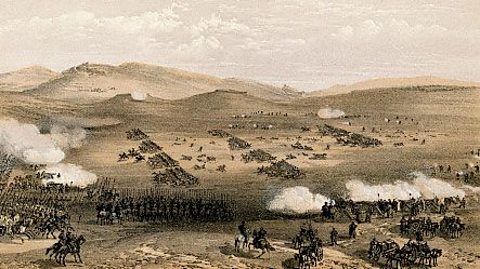
The Times newspaper's correspondent William Howard Russell used the then-modern technology of electric telegraph to send messages from the front line. Russell reported on an event during the Crimean War where around 600 soldiers from the A lightly armoured cavalry unit of the army. charged at a heavily defended position due to a misunderstood order. Many died or were wounded and there was never a definite answer as to whose fault the mistake was.
Tennyson wrote The Charge of the Light Brigade shortly after this happened, so the shock and frustration felt by many at the unnecessary deaths of the soldiers would have been very fresh.
Tennyson wanted to draw attention to the horrors that soldiers faced during the Crimean War and to the futility of war in general. As he was the A poet selected by royalty or the government who is asked to write poems for the organisation who selected them. at the time, he would have been expected, and often asked, to write about topical subjects and current events.
The poem tells the story of the soldiers charging, despite knowing that something is wrong.
Interactive activity
Themes
The reality of war
Information which is spread that is usually false or misleading. is often used during war to stoke Support and love for one’s country. and make soldiers and the public believe that they are fighting with honour for a worthy cause.
Before the Crimean War, there were limited ways to communicate with soldiers on the front lines, so the public didn’t know what the reality of war was truly like.
Developments in media and communication meant that the Crimean War was different, and reporters were able to comment on events more quickly and accurately. Rather than glamorise warfare, people wanted to show the realities faced on the battlefield.
Tennyson describes the horror of Fighting when physically close together. in The Charge of the Light Brigade. He describes how soldiers:
“Plunged in the battery-smoke” (smoke caused by the cannons)
“Reeled from the sabre stroke” (sabres are long swords with curved blades)
Were “Shattered and sundered” (broken in two)
This paints a more realistic and horrific picture of warfare than the more heroic portrayals which the public would have been used to at the time.
Patriotism
The Light Brigade were, as their name suggested, only lightly armoured and were not intended to advance into heavy battle. When the misunderstood order was given however, the Light Brigade obeyed blindly.
“Theirs not to make reply,Theirs not to reason why,Theirs but to do and die”.
Tennyson makes it clear that the soldiers were following their orders dutifully when they rode into the “Valley of Death” – demonstrating their unswerving patriotism and keeping their honour. In the final stanza, he uses the imperative “Honour the charge they made” and repeats that we should “Honour the Light Brigade” for their loyalty and bravery in the face of certain death.
Death and fear
The word "Death" is repeated throughout the poem.
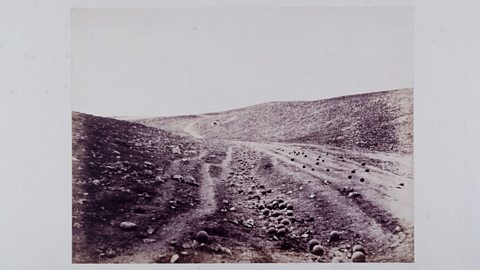
First Tennyson writes about the “Valley of Death”, suggesting the inevitability of the soldiers dying once they charge.
He then To make something sound like it is human. it when he writes “the jaws of Death”. Personifying death in this way likens it to an animal or monster, capable of devouring the soldiers. It seems to be alive and waiting for them – with no chance of their escape.
Despite the almost certain death that they face, the soldiers do not show fear. Their patriotism compels them to follow orders, even if futile. Tennyson uses the rhetorical question “Was there a soul dismayed?” asking whether any of the soldiers were upset by the command, but the response is no – even though they must have known a mistake was made and they were riding into certain death.
The soldiers’ certainty and belief in their commanders, contrasts with the response back home. Tennyson says that “All the world wondered” and states the accusation that “Someone had blundered” suggesting that the reality of war was becoming apparent and that attitudes were starting to turn.
Mini quiz
Language
In poetry, language relates to anything in connection with words and the way they are used.
Personification
Tennyson uses personification throughout the poem to highlight the danger that the soldiers are charging towards.
The phrase “the jaws of Death” creates the image of death as an animal or monster, capable of devouring the soldiers. It seems to be alive and waiting for them – with no chance of their escape.
Similarly, “mouth of hell” could also be interpreted as personification suggesting that the soldiers are going to be swallowed up into hell (war) and never seen again.
Semantic field
Semantic field refers to groups of words which have similar meanings or are about a similar topic.
In this poem, there is a semantic field of violence and death. For example, Tennyson repeats words like “Death” and “Hell”. Words such as “die”, “guns” and “sabres” are also used to paint a picture of the violent reality of the war.
Tennyson’s verb choices also sit within a semantic field of violence. For instance, verbs like “thundered”, “stormed”, “flashed” and “plunged” which, again, all highlight the horrors of the battlefield.
Structure
In poetry, structure relates to anything in connection to the layout and organisation.
Repetition
Repetition is used to represent the charging motion and the Something that is certain to happen. of the danger waiting for the soldiers.
| Example | Times repeated | Interpretation |
|---|---|---|
| “Half a league” | 3 | A league is a distance of around one and a half miles. Repeating this highlights the distance that the Light Brigade are covering, all while knowing they are heading towards danger. |
| “valley of Death” | 3 | A valley is a low area between hills or mountains. Repeating this emphasises that they are riding into a vulnerable position and will be easily surrounded. |
| “six hundred” | 7 | Repeating the number of soldiers in the Light Brigade encourages the reader to reflect on the awful consequences of the misunderstood order whilst keeping the rhythm of the poem as they’re charging. |
| “Cannon” | 6 | This focuses the reader on the contrast between the Light Brigade – lightly armoured and on horses – versus the cannons and artillery of the enemy. It reinforces how unprepared they were. |
| “Death” | 5 | Death is foreshadowed throughout the poem and its repetition suggests that the soldiers cannot possibly escape their fate because death is everywhere. |
Question
What else could be said about the phrase “valley of death”?
Answer
“Valley of Death” refers to Psalm 23 in the Bible: "Yea, though I walk through the valley of the shadow of death, I will fear no evil”.
This biblical A quick reference - often to an image, character or place - from a work of literature or music or mythology. gives Tennyson’s poem as sense of familiarity for his readers, who would know the psalm. It could also mirror the soldiers’ prayers, and their sense of futility, as they advance into battle.
Stanzas
A stanza is a series of lines arranged together in a poem.
In The Charge of the Light Brigade there are six stanzas to represent the 600 soldiers in the Light Brigade. This reinforces Tennyson’s message that the 600 soldiers should be remembered for their bravery.
Stanzas four and five are longer than the other stanzas. Stanza five, in particular, describes the Light Brigade at the height of their battle and the length of the stanza perhaps reflects the intensity of their fight.
The final stanza is the shortest and serves to summarise and reiterate Tennyson’s message – that we should remember the “noble six hundred”.
Rhyme and rhythm
There is no consistent rhyme scheme in The Charge of the Light Brigade. Tennyson may have done this for various reasons, for example, to imitate the unpredictability of warfare or to mimic the uncertainty of the soldiers.
The metre, or rhythm, of the poem isn’t consistent either. The syllables on each line vary between 5 and 7, again suggesting unpredictability.
Form
In poetry, form is the type of poem that the poet has chosen to write.
Narrative poem
The Charge of the Light Brigade is a narrative poem because it tells a story and does not follow a set pattern of rhyme or rhythm.
It also features aspects of the ballad. A ballad is a poetic form, traditionally used in narrative poetry. Ballads normally feature repetition and rhyme, and were written to be remembered, read or sung aloud, often to music.
The repetitive nature of The Charge of the Light Brigade makes it particularly memorable, supporting Tennyson’s aim of encouraging his audience to remember and honour the Light Brigade.
Mini quiz
Top tips (AQA)

Remember
Read the question carefully. Highlight the key words and focus of the question.
Make a plan. Annotate the poem or create a short list of points you could make, supported by evidence. This will help you to stay focused and relevant.
Analyse features. When you identify a feature, always consider why it has been used and what effect it creates.
Reread your answer. Keep checking that you are on topic throughout the writing process.

Making comparisons
You will need to write your response using comparative connectives, such as:
- Similarly
- Likewise
- However
- In contrast
In the exam
This poem could be assessed in the anthology poetry part of the exam.
You will be asked to compare a named poem with a poem of your choice.
The choice must be from the cluster of poems you have studied. The named poem will be provided.
This question assesses AO1, AO2 and AO3:
| AO1 | AO1 assesses how well you read, understand and respond to the text. This includes exploring thoughtful and relevant ideas and backing these up with evidence. |
| AO2 | AO2 assesses your ability to explore the language, form and structure used by a writer to create meanings and effects. |
| AO3 | AO3 looks at how you link the contextual background of the poem(s) into your ideas. |
Quiz
Test your understanding of The Charge of the Light Brigade by taking this quiz.
More on Poems
Find out more by working through a topic
- count1 of 5

- count2 of 5
- count3 of 5