Key points
- Any number above zero is a A number greater than zero.. Positive numbers can either be written without a sign or with a + sign in front of them.
- Any number below zero is a A number less than zero.. Negative numbers are always written with a - sign in front of them.
- Always look at the sign in front of a number to see if it is positive or negative.
- Zero is neither positive nor negative.Learning about using a number line will help you to understand this concept.
Positive and negative numbers
It may be useful to use a A straight line on which numbers are marked at equal intervals. when representing both positive and negative numbers.
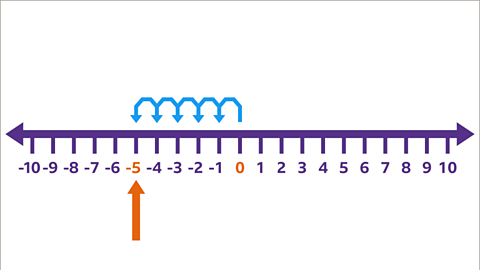
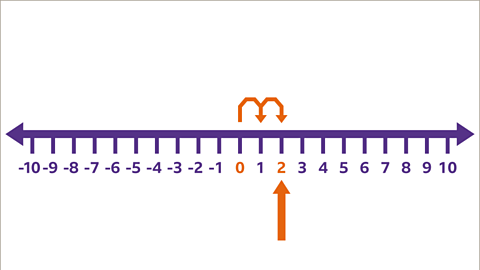
- Begin at zero.
- For positive numbers, count to the right of zero. Positive numbers get higher the further to the right, eg 6 is greater than 3
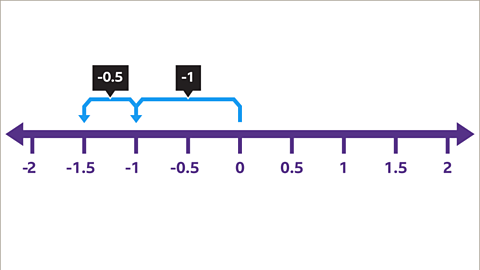
- For negative numbers, count to the left of zero. Negative numbers get lower the further to the left, eg -4 is less than -1
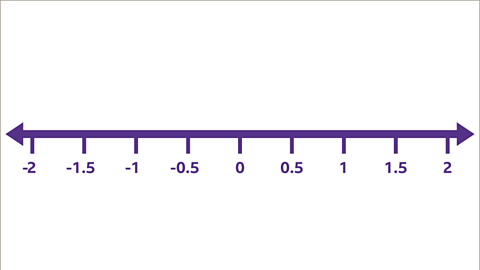
- A number line can be split into different size steps.
Example: positive and negative numbers on a number line
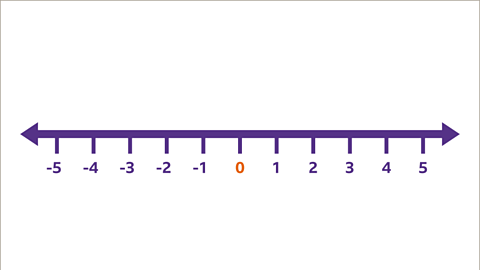
Image caption, When representing numbers, begin at zero.
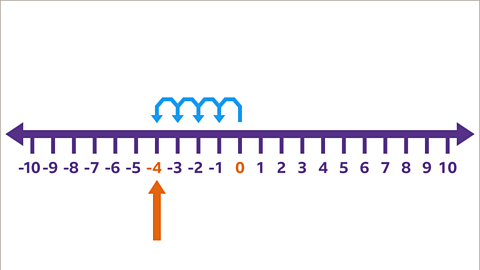
1 of 6
Question
Which numbers are negative?
1, 0, -3, -4, 0.23, -1003, 7.2, -0.35 and -⅝
Negative numbers have a - sign in front of the number, eg -3
-3, -4, -1003, -0.35 and -⅝
Video
Watch the video to hear how Kim, a textiles designer, needs to use negative numbers correctly in the work she does.
Bobby: We use positive numbers all the time, but it can be harder to think of when we would use negative numbers.
Bobby: What is your fashion business about?
Kim: So, we sell silk scarves that raise awareness for endangered species, and we sell them online.
Bobby: Is it only scarves, or are there other parts of your business?
Kim: At the moment, yes, but we are thinking about expanding into a range of kids' clothes that are suitable for summer and winter.
Bobby: Ah, so winter and summer - different seasons. So, do these involve different production processes?
Kim: Yes. For winter, we need to think about using different fabrics so that they are suitable for minus five, for minus ten degrees.
Bobby: Ah, OK, so you’re mentioning negative numbers when considering fabrics for different seasons, but do you think negative numbers appear in other parts of your business?
Kim: Absolutely. We need to think about negative numbers in finance. You don’t want to get into negative numbers because that would lead you into debt. But however, right now, we’re just thinking about negative numbers in temperatures for clothing.
Bobby: Because actually, negative numbers, I think, are really interesting when thinking about temperature. For example, if you’re comparing minus ten degrees to minus five degrees, the number ten is actually larger than the number five, but negative ten is smaller, or less than, negative five.
Kim: Yeah.
Bobby: And I think this shows that negative numbers can be in all facets of business, you know, when you’re considering temperatures for clothes, even finances and trying to make sure you stay out of debt.
Kim: Exactly!
Practise positive and negative numbers
Quiz
Try this quiz to practise positive and negative numbers and number lines.
Real-world maths
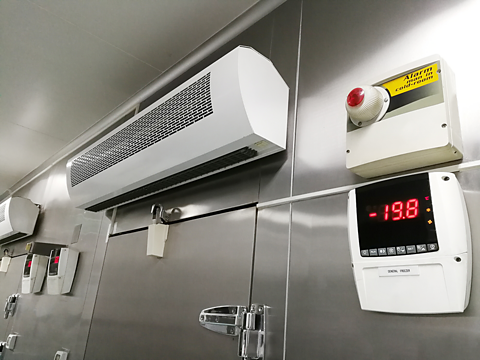
Positive and negative numbers are used in everyday life to compare values against zero.
- Negative numbers are often used to monitor the temperature when storing food in a freezer.
- Weather forecasters use negative numbers to demonstrate when the temperature drops below freezing (0°C).
Play Sudoku with BBC Bitesize!
Every weekday we release brand new easy, medium and hard Sudoku puzzles. Perfect for testing your skill with numbers and logic.

More on Positive and negative numbers
Find out more by working through a topic