Key points in robotics
robots can handle manufacturing tasks, assist in surgeries, plant and harvest; robotic vacuums clean and in space, Mars rovers collect data
robots boost efficiency, enhance safety, and are cost-effective
actuators move, sensors provide feedback, and controllers send commands
How robots are used in society
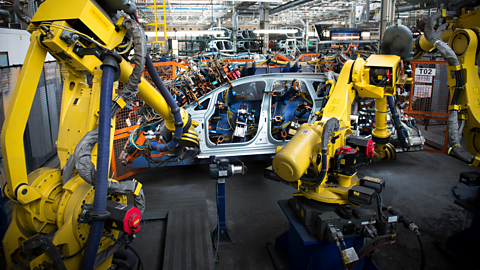
Robots welding a car body in a car factory
- Industry: robots are widely used in manufacturing, such as car production, for tasks like welding, painting, and assembly
Robots welding a car body in a car factory
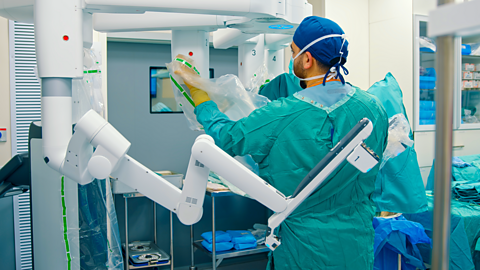
Nurse preparing a surgical robot
- Healthcare: surgical robots assist in precise operations, reducing recovery times and improving outcomes
Nurse preparing a surgical robot
 Image source, NASA/JPL-Caltech/MSSS
NASA’s Curiosity Mars rover selfie in front of Mont Mercou on Mars
- Space exploration: robots like the Mars rovers collect data and perform tasks in environments too harsh for humans
Image source, NASA/JPL-Caltech/MSSSNASA’s Curiosity Mars rover selfie in front of Mont Mercou on Mars
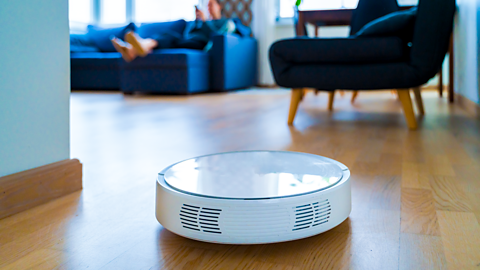
A robot vacuum cleaner working
Home: robotic vacuum cleaners and smart home devices automate household chores
A robot vacuum cleaner working
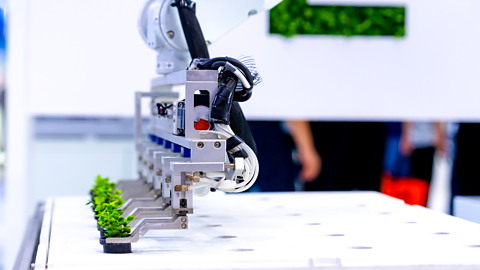
Agricultural robots planting seedlings
- Agriculture: robots help with planting, harvesting, and monitoring crops, increasing efficiency and reducing manual labour
Agricultural robots planting seedlings
Why use robots
- efficiency: robots can work faster and more accurately than humans, performing repetitive tasks without fatigue
- safety: robots can operate in dangerous environments, such as handling hazardous materials or exploring disaster zones, reducing the risk to human workers
- cost-effectiveness: although expensive to set up, robots can save money in the long run by reducing labour costs and increasing productivity
- precision: robots can perform tasks with a high degree of accuracy, which is crucial in fields like surgery and electronics manufacturing
How to control robotic movement
- actuators: devices like motors and solenoids that convert energy into movement.
- sensors: provide feedback to the robot about its environment, helping it to navigate and perform tasks accurately.
- controllers: the ‘brain’ of the robot, which processes information from sensors and sends commands to actuators to perform specific actions.
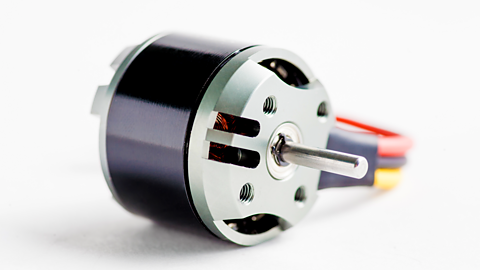
An electric motor actuator
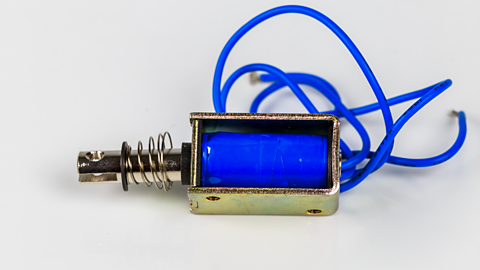
Small electric solenoid actuator
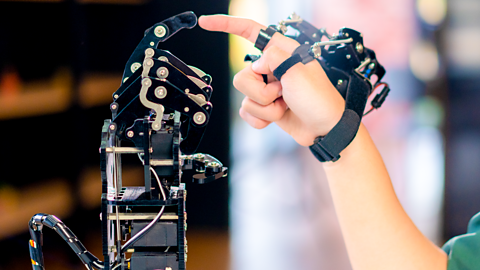
Robot hand controlled by wearable controller
Test yourself
More on Mechanical and pneumatic control systems
Find out more by working through a topic
- count2 of 7
- count3 of 7

- count4 of 7