What is a force?
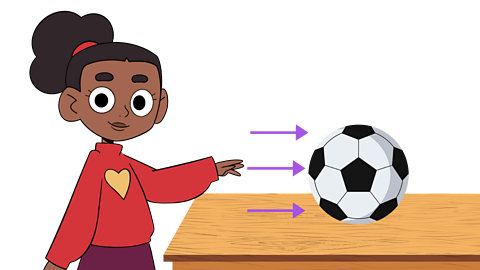
A force is a push or a pull that acts on an object.
We need forces to make things move. We can make things move faster, slower or even stop if the size of the force changes.
Different surfaces can also affect how forces act on moving things.
Watch: Moving on different surfaces
Fran: Forces make objects move.
Push forces.
And pull forces.
The floor in here is so nice and smooth, that meant my scooter moved easily across the surface.
But what happens if we change the surface we move objects across?
Does it make a difference?
Let's see what my investigator is learning about how objects move across different surfaces.
Out the way!
Child: The question is how does changing the surface affect the movement of an object?
Here is my object.
A toy car.
I have three surfaces to test: this wooden floor, this felt material and this bubble wrap.
I'm going to measure how far my toy car travels across each surface and record my findings in this table.
Okay, so from my results I can see that the bubble wrap had the biggest effect on the movement of the car and the wooden floor had the least.
Fran: What a great investigation.
So for some forces to act, there does need to be contact, like a hand opening a door or a head when you're heading a ball.
Now we call these contact forces, but other forces they don't need contact at all.
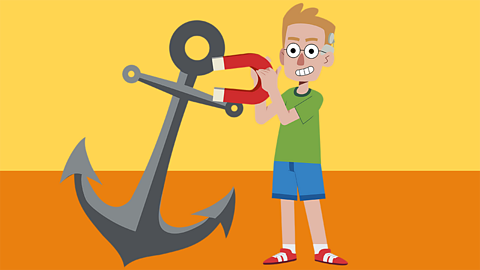
Like magnetic forces.
We call this a non-contact force, as if you look closely you can see that the magnet doesn't need to touch the paperclip in order to move it.
The next time you are skating, scooting or cycling, remember the surface you're on will affect just how fast you can go.
Aww.
What is friction?
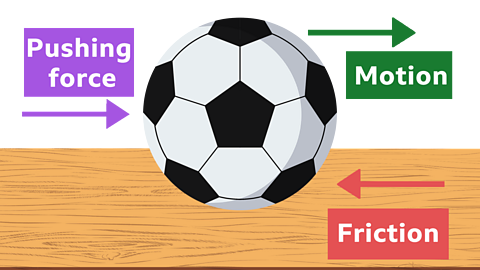
Friction is a force that is created when one surface slides over another.
Friction works in the opposite direction to the direction of the moving object.
Friction slows down a moving object.
Watch: The push and pull forces
Watch this video of a birthday party. There's a tug of war over a present and it shows how the push and pull forces work.
Watch the forces at play during this argumentative birthday party.
Narrator: Guys, guys, don’t fight!
This isn’t going to get you anywhere! You’re both pulling with the same amount of force.
Force – like a push or a pull and these forces are balanced.
Uh oh… No wait, you’re both pushing with the same strength! The forces are still balanced.
If you want something to move, you need unbalanced forces – one force must be stronger than the other.
Fascinating facts
Friction can be helpful, such as when a car slows down and stops.
Friction can be useful, because it prevents our shoes slipping on the pavement when we walk, and stops car tyres skidding on the road.
Friction can create heat, which is why if you rub two sticks together you can start a fire.
There are places where friction isn't very useful, such as inside a car engine. Putting oil onto the moving parts can reduce friction.
Air resistance is a type of friction between air and another material. Air resistance causes things to slow down like when a parachute is falling to the ground.
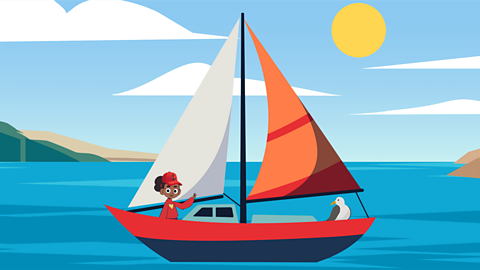
Water resistance is a type of friction between water and another material. Water resistance causes things to slow down like when a boat is moving through water.
The Greek scientist Aristotle (384 BC - 322 BC) was one of the first scientists in history to explore motion under a constant force resisted by friction.
What happens when the force is balanced?
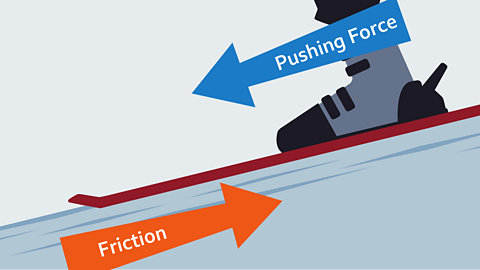
When forces are balanced, they cannot change the movement of an object.
The object is either stationary or moving at a consistent, unchanging speed.
When forces are unbalanced, the forces acting on an object at the same time are not equal in size.
This results in an object stopping, moving, changing speed or direction.
Moving on different surfaces
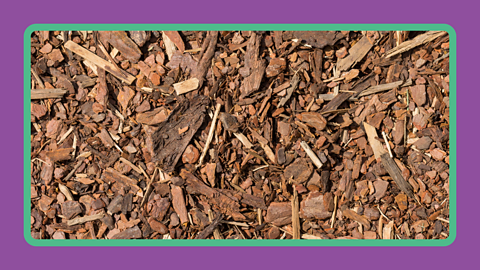
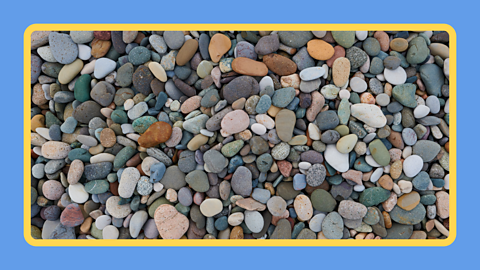
Image caption, Bark
Pushing an object on bark would be hard. Bark does not have a smooth surface and this produces more friction.
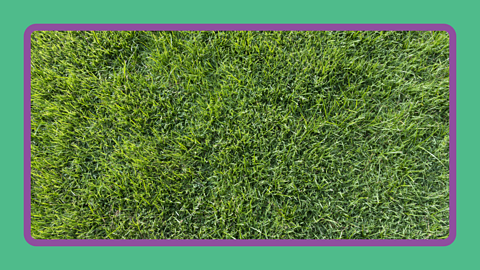
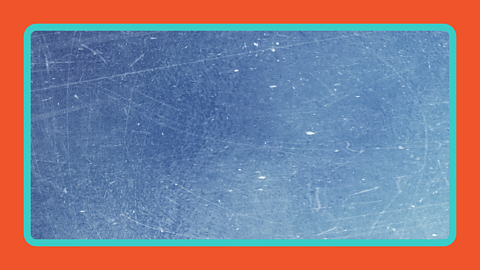
1 of 4
Rough surfaces
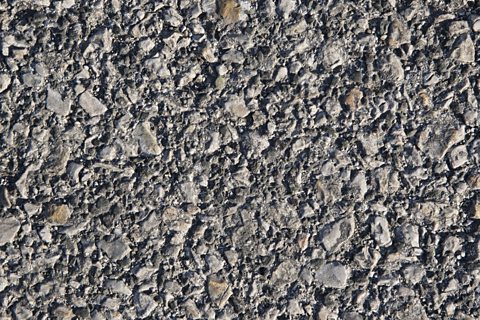
Would pushing a box on this rough road surface be easy or hard?
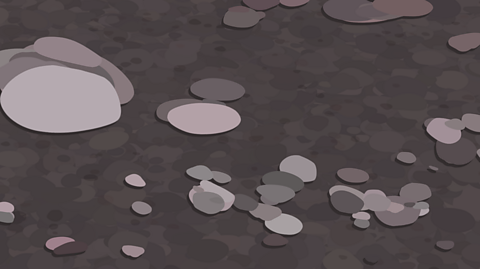
Pushing an object on a rough road surface would be hard. It does not have a smooth surface and has more friction.
Smooth surfaces
Would pushing a box on this shiny kitchen surface be easy or hard?
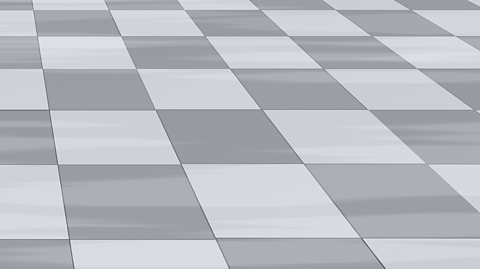
Pushing an object on a smooth surface like a kitchen floor is really easy. The plastic is very smooth and has less friction than a rough surface.
Did you know?
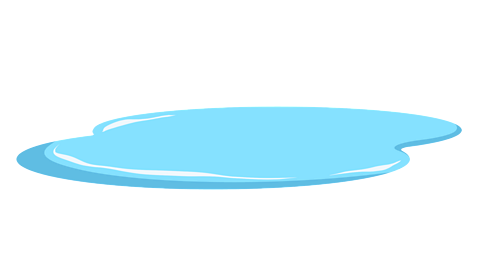
Water makes surfaces smoother and reduces friction.
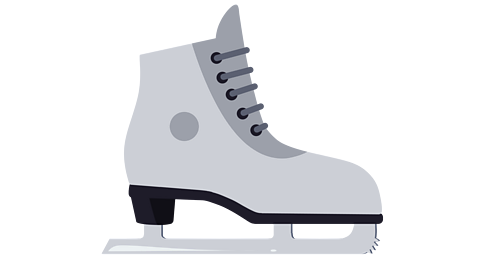
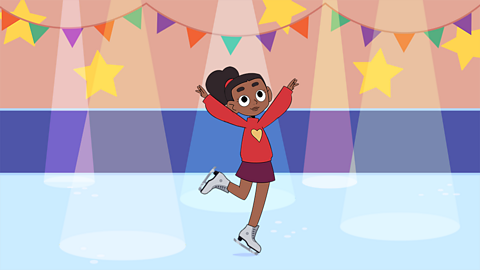
Ice skaters can skate really fast on ice because it doesn't have much friction.
When do you think this would be useful?
Important words
Balanced – Balance occurs when the forces acting against each other are equal.
Force – A force is a push or a pull that acts on an object.
Friction – A force that is created when one surface slides over another.
Pull – Using force to move something towards you.
Push – Using force to move something away from you.
Surface – The outside of an object or a material.
Unbalanced – When two forces are acting on an object and one of the forces is greater than the other.
Activities
Activity 1 – Order the surfaces – How much friction do they produce?
Activity 2 – Moving things quiz
Activity 3 – Solve this problem
Read this scenario and have a think about what may happen.
- Two children are pushing a box over a smooth surface and it is moving easily.
- What would happen if they try to push the box over this rough road surface?
They would need to push the box harder to make it move on this surface as rougher surfaces make it harder to move an object over it.
Activity 4 – Conduct an investigation
New game! Horrible Science: Stinky Space. game
Join Pipette on her epic mission and learn some revolting facts about space along the way.
More on Forces
Find out more by working through a topic
- count4 of 6
- count5 of 6
- count6 of 6
- count1 of 6