What is resistance?
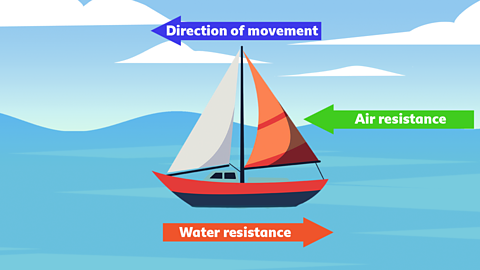
Resistance is a force that slows the movement of one object over another. It can occur in liquids, such as water and in air.
Air resistance is a type of friction between air and another material.
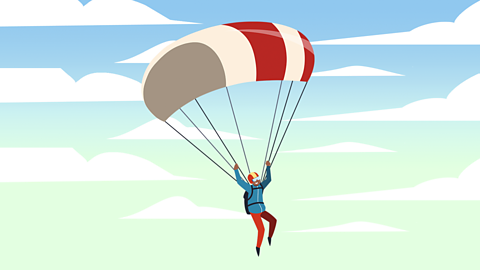
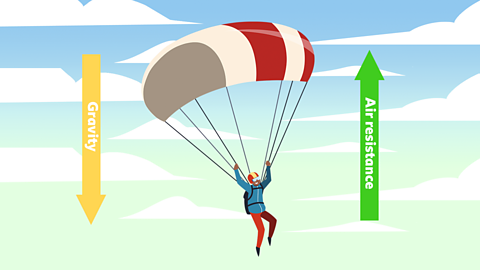
Objects with a large surface area create more air resistance so they move more slowly though air. That is why skydivers use parachutes.
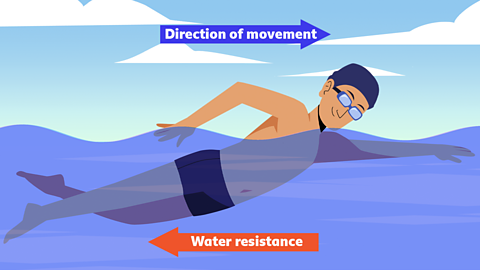
It's the same for an object moving through water. If you go swimming, there is friction between your skin and the water. This is known as water resistance.
Watch: Air and water resistance
Learn about water and air resistance.
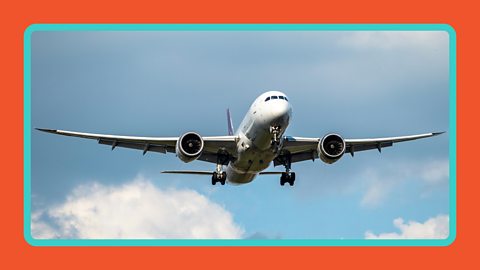
Why are aeroplanes always this long, thin, pointy shape?
Aaaah, so long and thin pointy objects travel through the air more easily than short and wide shapes? Hmmmm…
You're right! Long thin pointed objects really do move more easily through air than short and wide ones!
So your weight is the force pulling you down, but air resistance is another force acting upwards to make you move more slowly, because it's creating friction between the air and, well, you?
There's less air resistance for long, thin objects like you, the aeroplane and birds.
Wide objects like your friend, the cow or that umbrella have more air resistance.
What's happening? Why have you slowed down?
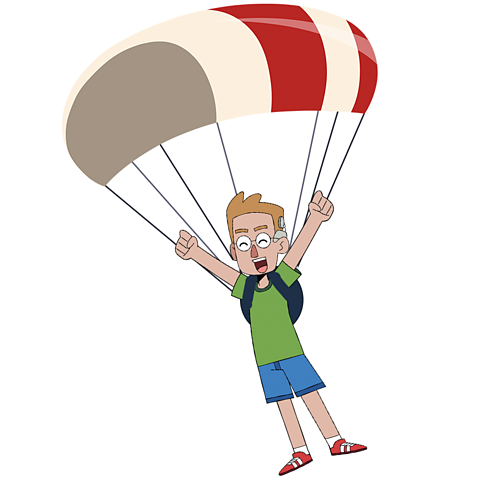
So, with the umbrella there's more air resistance, and that's why you're moving slower. Gotcha!
Look! Even in water, long thin objects travel faster because they create less resistance!
Wow, that shark really is the perfect shape to travel easily through water!
Fascinating facts

Smooth, shiny surfaces move through the water or air much easier than rough or bumpy surfaces. This is why swimmers often wear a swimming hat as this helps them move through the water faster than if they had their hair loose.
Air and water resistance is also known as drag.
Racing cars are designed to be as streamlined as possible to reduce air resistance and go as fast a possible.
Italian scientist Galileo Galilei discovered air resistance after dropping different objects from the Tower of Pisa in around 1590. He discovered that no matter the mass of an object, gravity moves things at the same speed.
The scales on a fish reduce water resistance and makes them more streamlined. This enables them to swim through seas and rivers more easily. It is also why sharks, dolphins and whales have smooth skin.
Parachutes can slow a falling skydiver down to around 12 mph, which is safe enough to land without being injured.
You can see air resistance in everyday life, from tress losing their leaves to the feeling of the wind blowing as your walk.
Slideshow: Air and water resistance
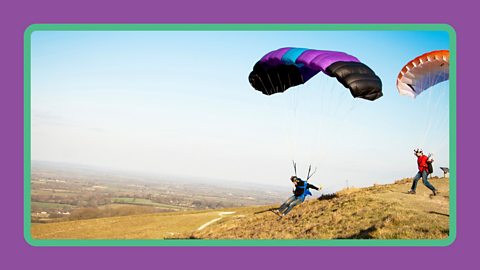
Image caption, Air resistance
Air resistance is a type of friction between air and another material. Parasails have a large surface area so they create a lot of air resistance.
1 of 4
Did you know?
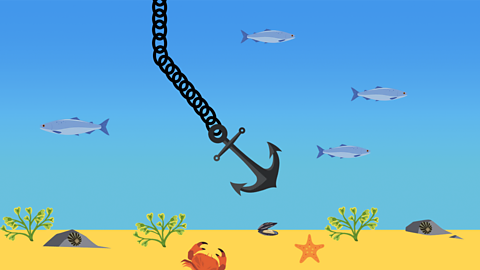
Water resistance is stronger than air resistance. This is because water is more dense than air.
Water particles are held together more tightly than air particles so they are harder to move through.
When are air and water resistance useful?
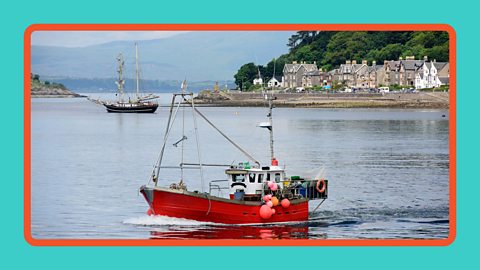
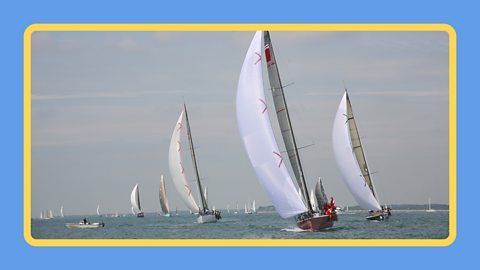
Air and water resistance slow things down. They work against the force that is moving an object, such as: gravity when something is falling, the motion of a swimmer kicking their legs, or an aeroplane being propelled by an engine.
Air resistance can be really useful to parachutists when they need to slow down after jumping out of an aeroplane. The parachute slows down their descent so that they don't hit the ground too hard.
Water resistance can be a really useful way of helping people or animals who need to strengthen their muscles.
The buoyancy of the water can help support their body so that they can do movements in water that they might find difficult on land. The water resistance means that their muscles are working harder.
When are air and water resistance not useful?
Air and water resistance make it harder to travel as fast as you can when you are in a race.
Cyclists try to reduce air resistance by adopting streamlined body positions, such as hunching over the handlebars; wearing tighter clothing; and using streamlined bikes.
Just like many sea creatures, swimmers make themselves as long and thin as possible so they encounter less water resistance and therefore move quicker through the water.
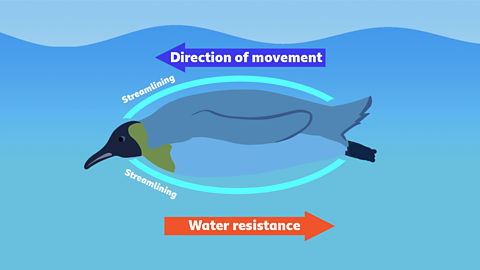
Penguins are well adapted to reducing water resistance when swimming. They make their bodies long and thin and tuck their flippers into their sides. This makes them streamlined.
Important words
Air resistance – A type of friction between air and an object moving through it.
Buoyancy – The upward force exerted by a liquid on an object which allows it to float.
Friction – Friction is a force that slows the movement of one object over another. It can occur in liquids, such as water and in air.
Gravity – A force that pulls things towards the ground on Earth. Gravity also holds planets, comets and asteroids in orbits around the Sun.
Streamlined – Having very little air or water resistance.
Surface area – The area of the surface of an object.
Water resistance – A type of friction between water and another object moving through it.
Activities
Activity 1 – Label the forces
Activity 2 - Resistance quiz
Activity 3 – Make a glider
Investigate how the shape of gliders and helicopters affects how they stay in the air with this activity in partnership with the Science Museum Group.
Make it fly
Discover how to make different gliders here.

Activity 4 – Is it water resistant?
New game! Horrible Science: Stinky Space. game
Join Pipette on her epic mission and learn some revolting facts about space along the way.

More on Forces
Find out more by working through a topic
- count6 of 6
- count1 of 6
- count2 of 6
- count3 of 6