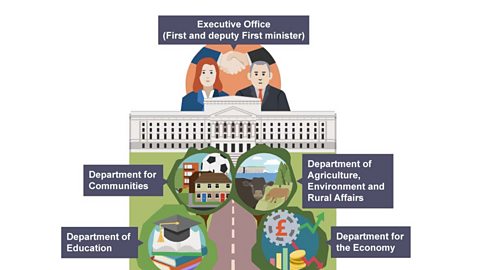
What is the Northern Ireland Assembly?
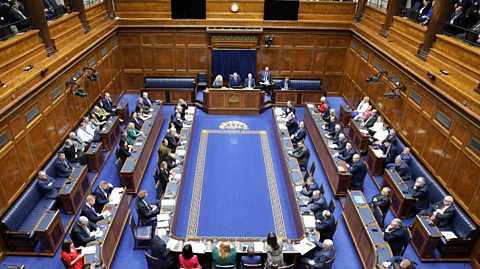
The Northern Ireland Assembly makes laws for Northern Ireland only.
Representatives from all parts of Northern Ireland sit in the assembly at Stormont in Belfast.
They are called Members of the Legislative Assembly, or MLAs. The people of Northern Ireland vote for these 90 politicians to represent them across 18 constituencies (voting areas) - who then take their seats in the Assembly.
The most powerful of these representatives are the First Minister and the Deputy First Minister.
How are the First Minister and deputy First Minister chosen?
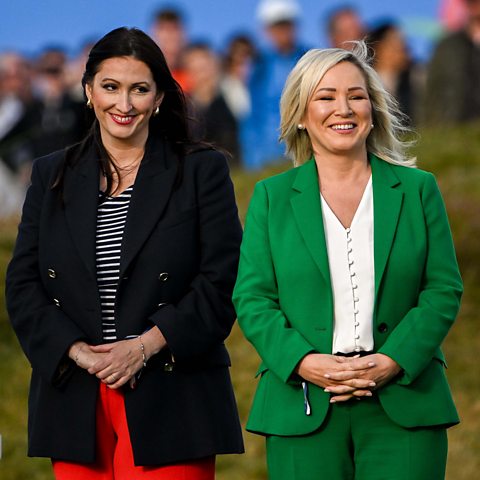
In Northern Ireland, the First Minister and deputy First Minister are appointed through a process which involves the following stages.
- After an Assembly election MLA's state which group they belong to Nationalist, Unionist or Other.
- The First Minister is nominated by the largest party within the biggest grouping and the deputy First Minister is then nominated by the largest party within the second-largest grouping.
- The First Minister and deputy First Minister hold office jointly and they have equal power, even if their titles are different. One cannot take office without the other.
What is the role of the NI Assembly?
The role of the Northern Ireland Assembly includes:
- making laws which will protect people, and promote equality and diversity
- representing the electorate’s views
- ensuring that there is high quality healthcare, education, housing and transport networks to meet the needs of the people
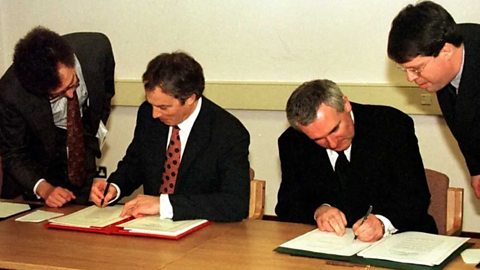
- working to ensure that the terms of the Good Friday Agreement are met
- developing strategies which encourage investment and help local businesses
- building relations with other countries
- educating and raising awareness about the role of the Northern Ireland Assembly
- showing leadership to the community
- promoting community relations
- scrutinising the work of the Northern Ireland Executive
How does the NI Assembly safeguard human rights and equality?
The NI Assembly safeguards citizens' human rights and equality in a number of ways.
- It ensures laws are in place to protect human rights — equality laws to ensure people are protected from discrimination and are treated equally.
- It supports the work of the Northern Ireland Human Rights Commission and Northern Ireland Equality Commission which work to safeguard and promote human rights.
- It raises awareness/educates people about human rights.
- It ensures young people are taught about human rights in schools.
- It promotes human rights through government policies and it ensures those policies comply with Human Rights legislation.
- It ensures authorities/public bodies with responsibility for promoting and complying with human rights laws do so.
What is the role of a Member of the Legislative Assembly (MLA)?
MLAs have a number of important jobs to do while in office:
- they must engage in dialogue and work with other political parties to make decisions about Northern Ireland
- they have to represent their constituents (the people who elected them)
- they need to listen to the electorate and make decisions
- they will make laws which will protect people, promote equality and enrich diversity
- they promote human rights and ensure that the terms of the Good Friday Agreement are met
- they promote community relations
What is the Northern Ireland Assembly Code of Conduct?
The Northern Ireland Assembly Code of Conduct is designed to help MLAs carry out their jobs in a way that is transparent and fair.
It is a set of rules that MLAs must follow. For example, it describes how an MLA must handle:
- expenses
- claims
- salaries
- donations
A breach of the code might be considered corruption and lead to serious legal problems for the offending MLA.
More on Democratic institutions
Find out more by working through a topic
- count4 of 5
- count5 of 5