Unit 2: Further chemical reactions, rates and equilibrium, calculations and organic chemistry
Metals and the reactivity series
What is the reactivity series? How does a more reactive metal displace a less reactive one from its compound? Why does reactivity decide how a metal can be extracted from its ore?
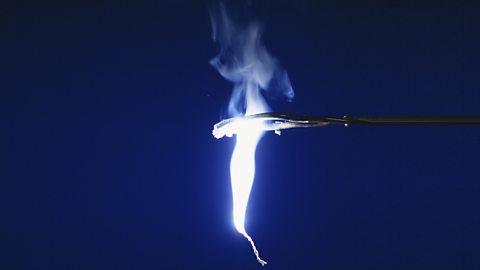
Redox, rusting and iron
Why does iron rust? How can rusting be prevented? What are redox reactions? How is iron extracted from its ore?
Rates of reaction
How do concentration, temperature, surface area and catalysts influence the rate of reaction? How is the rate of reaction be measured?
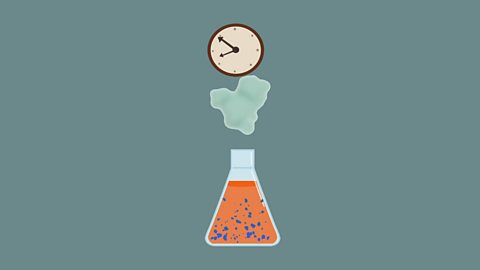
Equilibrium
How is dynamic equilibrium reached in a reversible reaction? What is Le Châtelier’s principle used to predict? What is the Haber process?
Organic chemistry
What are organic compounds? How are they grouped into homologous series like alkanes, alkenes, alcohols and carboxylic acids? How are they obtained from crude oil?
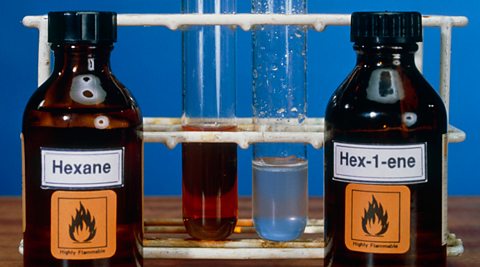
Quantitative chemistry (2)
How is concentration calculated from moles and volume? What is titration used for? What does Avogadro’s Law tell us about gas volumes? What is atom economy a measure of?

Electrochemistry
What occurs during electrolysis? How is an electrolyte split at the cathode and anode? How is aluminium extracted from its ore using electrolysis?
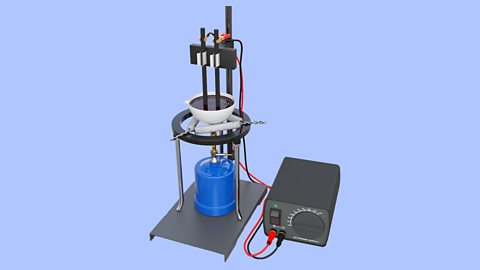
Energy changes in chemistry
What type of energy changes occur during chemical reactions? How are energy changes calculated? How does a reaction profile show these changes?
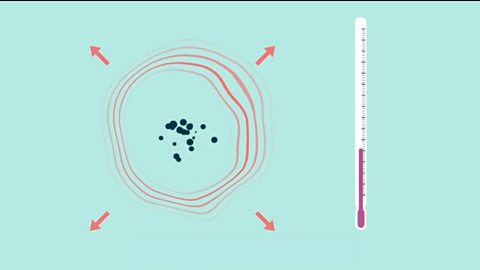
Gas chemistry
What type of gaseous elements and compounds are found in the Earth’s atmosphere? What are the key properties and uses of nitrogen, ammonia, hydrogen, oxygen and carbon dioxide?
Links
- External linkExternal link
- SubscriptionSubscription
- External linkExternal link
- External linkExternal link
- External linkExternal link
- SubscriptionSubscription
- External linkExternal link
